Yoga Alignment and Hands-On Adjustments
I believe in building every asana from a strong, correct foundation. Here is how I use hands-on guidance to help you move deeper and safer in your practice.
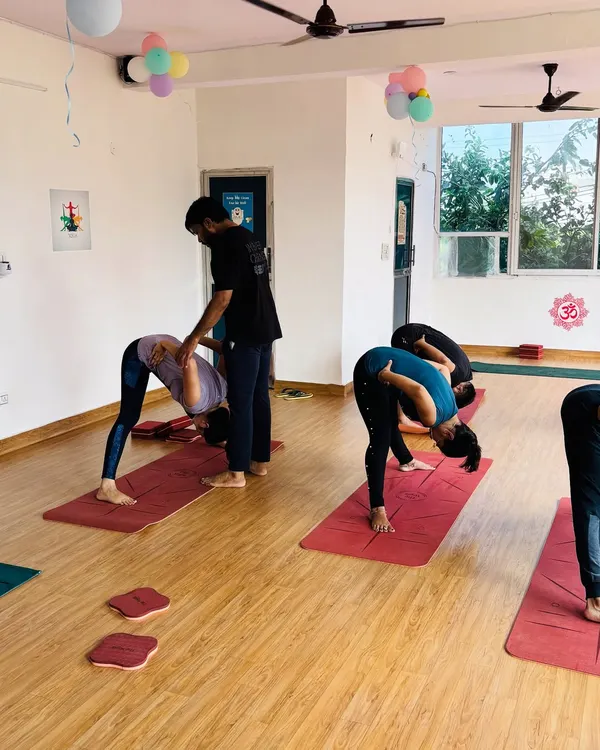
Correct alignment is the key to a safe and beneficial practice. I provide hands-on adjustments to help students understand the posture, such as deepening the twist in Parivrtta Trikonasana or aligning the hips in Parsvottanasana.
Here, I am assisting a student in Adho Mukha Svanasana to help them find more length in their spine and properly ground through their hands. The Sanskrit chant in the background is an invocation to the sage Patanjali.
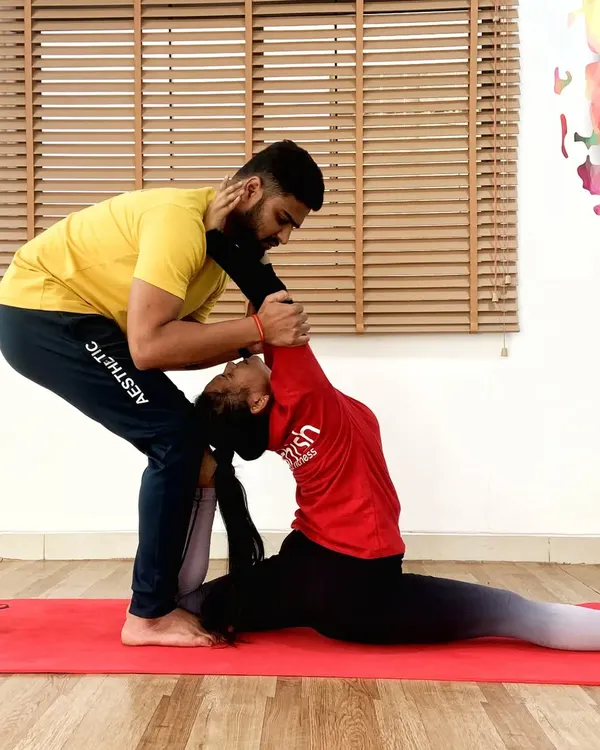
Assisting a student with a deep backbend. My hands guide them to open the chest and shoulders while ensuring the lower back remains supported and safe.
In our Ashtanga intermediate series (Nadi Shodhana), I provide support to help students safely enter deep poses like Kapotasana. This hands-on guidance is crucial for progressing in advanced asanas.
Guiding a student into a deeper forward fold. My adjustments help them to release tension in the back and hamstrings, allowing for a more complete expression of the pose.
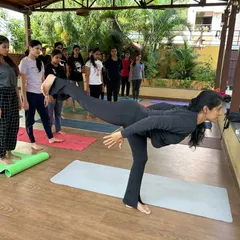
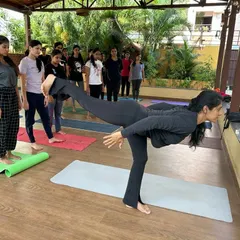
I am demonstrating the correct entry into Eka Pada Rajakapotasana, followed by guiding a student into the full pose. This shows the step-by-step process we follow in class to approach complex asanas.
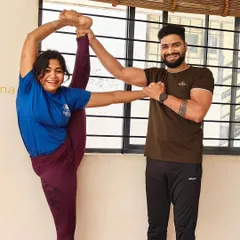
Even in simple stretches, proper form is important. Here, I am helping students with a side body stretch to ensure they are lengthening from the hip and not just collapsing into the side.
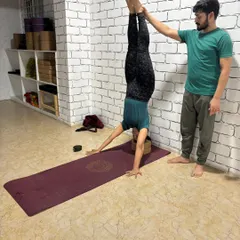
For students learning inversions, I provide support to ensure they are stable and can hold the pose without fear of falling. This builds confidence and correct muscle memory for poses like Sirsasana.
About Alignment and Hands-On Adjustments
In my classes, I use hands-on adjustments to help you find the correct foundation in every asana. Whether we are flowing through an Ashtanga sequence or holding a Hatha pose, I physically guide your body to ensure alignment is safe and precise. This reduces the risk of injury and helps you understand the mechanical truth of the posture, allowing you to progress from where you are today.
Alignment is the first step of a safe practice, but it is rarely intuitive. You might feel like you are in a pose, but your spine or hips may be misaligned. My approach is to bridge the gap between effort and effectiveness. When I provide hands-on adjustments, I am not doing the work for you. I am showing your body where it needs to go, using my hands to help you find the engagement in your muscles or the space in your joints.
The Role of Precision
I treat every asana as a technical exercise. For example, in Paschimottanasana, we learn how Uddiyana bandha helps in extending the spine. Without proper adjustment, it is easy to round the back and compress the discs instead of lengthening. I walk through the studio, correcting your drishti and the angle of your limbs, ensuring that your energy is flowing correctly.
Tools for Deepening
We do not just rely on body weight. In my shala, we use props as tools for learning. Iyengar ropes, wooden blocks, and straps are essential for students who need extra support to align their hips or shoulders. These props are not crutches. They are meant to help you access a deeper expression of the pose that you might not be able to reach on your own yet.
Consistent Abhyasa
Progress in yoga requires abhyasa, which is dedicated, consistent practice. I provide the corrections, but you provide the effort. Whether you are a beginner or an advanced student, the goal is the same: to move from chaos to sthira (stability). If you join my group sessions in DLF Phase 5, expect a space where we work hard, sweat, and focus on the integrity of the movement.
Similar work from other experts
Browse through Curated picks from other experts on mytribe
 33
33
Hands-On Yoga Adjustments for Safe Alignment
Personal Guidance and Pose Correction
Foundation & Alignment: Perfecting Your Yoga Poses
 8
8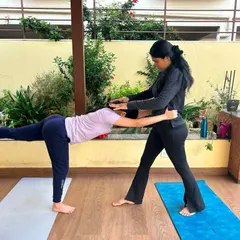
The Art of Alignment: Studio Yoga Classes
Guided Practice and Hands-On Yoga Adjustments
 25
25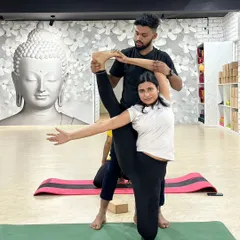
Hands-On Yoga Alignment & Personal Coaching
More from Group Yoga Classes by Devender Bhardwaj
More services by Devender Bhardwaj