Deepening Flexibility: Backbends and Forward Folds
True flexibility is a byproduct of consistent abhyasa. We use technical alignment, props, and breathing to safely deepen your backbends and forward folds in a disciplined group setting.
I am demonstrating a preparatory pose for backbends, followed by students moving into Urdhva Dhanurasana (Wheel Pose). We always prepare the spine properly before attempting deep backbends.
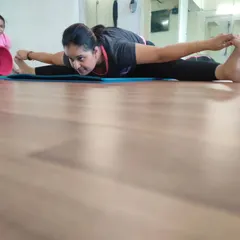
Students in Paschimottanasana (Seated Forward Bend), some using blocks for support. This pose provides a deep stretch for the entire back side of the body, from the heels to the neck.
Here I am demonstrating Eka Pada Rajakapotasana (One-Legged King Pigeon Pose). This advanced backbend requires open shoulders and flexible hip flexors.
A group of students practicing Urdhva Dhanurasana (Wheel Pose). This powerful backbend strengthens the entire body and opens the heart center.
Students working on Eka Pada Rajakapotasana, a deep backbend that stretches the thighs, groin, and abdomen.
Students moving into Wheel Pose, focusing on lifting the chest and pushing through the hands and feet to create a strong, even arch in the spine.
The practice of Paschimottanasana in our group class. Consistent practice of forward folds helps to calm the mind and release tension in the hamstrings and lower back.
Students practicing Chakrasana (Wheel Pose) in our Gurgaon yoga shala. This asana is excellent for spinal flexibility and strength.
Students holding Supta Virasana (Reclining Hero Pose), a deep stretch for the quadriceps and a preparatory pose for more intense backbends.
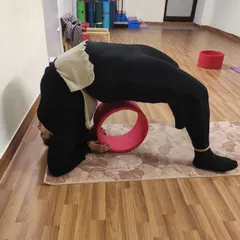
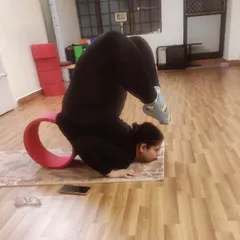
A student uses a block under their forearms for support in a variation of Dwi Pada Viparita Dandasana, an advanced backbend.
About Deepening Flexibility: Backbends & Forward Folds
We often rush into deep postures, which frequently leads to injury. In my sessions, we use props not as a shortcut, but to find the precise alignment required for the posture. Whether you are using a block in Paschimottanasana to ground your sit bones or using the wall to support your Ustrasana, the goal is to build structural integrity before depth.
Flexibility is a journey of patient work. Many students come to me thinking they need to force their body into a backbend, but that is the fastest way to strain the lower back. We work systematically. In forward folds like Paschimottanasana, we learn that paschim refers to the back of the body; it is not just about touching your toes, but about extending the entire posterior chain while keeping the spine long. In backbends like Urdhva Dhanurasana (Wheel Pose), we prioritize heart opening over lumbar compression. My classes at AumYogaShala incorporate hands-on adjustments to help you understand your body’s unique limits and potential. We do not compete; we observe and we adjust. Whether you are struggling to reach your feet or looking to refine your King Pigeon pose, the process is the same: steady breath, active engagement of the bandhas, and patience.
Similar work from other experts
Browse through Curated picks from other experts on mytribe
Mastering Backbends and Splits Safely
Advanced Backbends: Building a Flexible Spine
Master Deep Backbends and Spinal Flexibility
Deep Flexibility and Backbends Training in Rohini
Backbends & Flexibility: Safe, Prop-Based Training in Janakpuri
Advanced Asana: Deep Backbends & Spinal Flexibility
More from Group Yoga Classes by Devender Bhardwaj
More services by Devender Bhardwaj