Master Your Yoga Poses Safely With Props
Props are not crutches; they are the bridge between where you are and where you want to be. I use blocks, belts, and ropes to ensure your alignment is correct, making every pose accessible for every body.
Yoga blocks are incredibly versatile. This video demonstrates four ways to use them, from providing lift in arm balances like Bakasana to creating stability in standing poses and support in backbends like Ustrasana (Camel Pose).
A yoga block can be a bridge to new levels of strength. Here, a student uses blocks to practice L-sit (Brahmacharyasana), building the core and arm strength necessary for more advanced arm balances.
This is Tolasana (Scale Pose) with the support of blocks. Using blocks under the hands provides the necessary lift to raise the body, teaching the principles of balance and core engagement in a supported way.
A close-up showing the connection between hand and block. This firm foundation is key. You will learn how proper hand placement on a prop activates the forearm muscles and protects the wrists from injury.
A yoga belt is an extension of your arms. This video shows four different ways to use a belt, from improving shoulder mobility and lengthening hamstrings in Uttanasana to achieving deep backbends like Natarajasana safely.
Is a rounded back compromising your forward bend? I demonstrate how looping a strap around the feet in Paschimottanasana helps you maintain a straight spine, effectively targeting the hamstrings without strain.
Here is how props can work together. Using a chair and a strap, a student can safely work on their flexibility for Utthita Hasta Padangusthasana (Extended Hand-to-Big-Toe Pose), building balance and length over time.
The yoga wheel is a modern prop that offers unique benefits. This video showcases how it can be used as a roller to release back tension, a support for deeper backbends, and a tool to challenge your balance and core.
This video breaks down five ways to use a yoga wheel, including stabilizing warrior poses, deepening Dhanurasana (Bow Pose), and practicing core transitions that prepare you for headstands and arm balances.
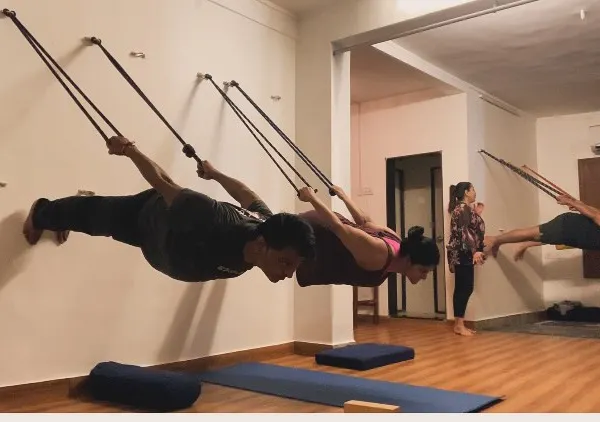
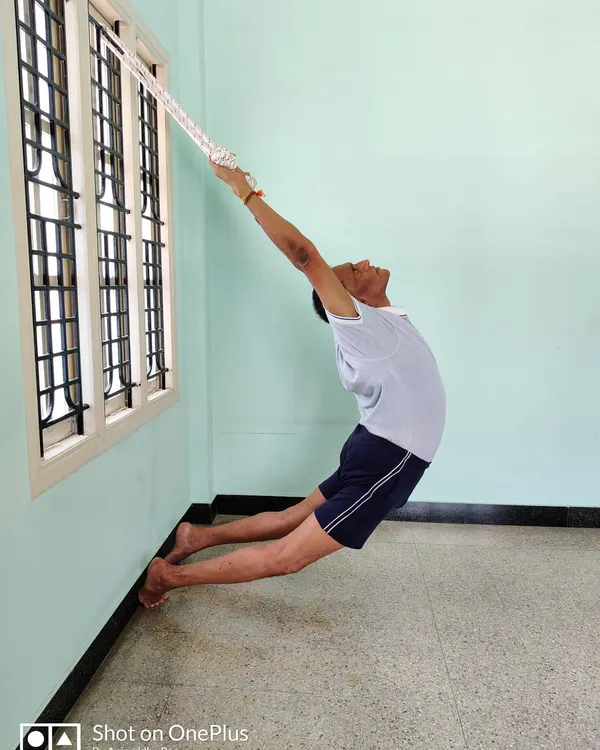
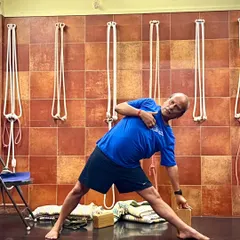
The yoga wall ropes are a hallmark of Iyengar yoga. I show how ropes can be used for deeper, supported backbends, creating stability in Adho Mukha Svanasana (Downward-Facing Dog) and opening the chest in Ustrasana.
About Tools for Transformation: Mastering Poses with Props
Most people struggle with forward bends because they focus on touching their toes, which leads to a rounded spine and potential neck strain. I teach you to loop a yoga strap around your feet instead. This simple adjustment keeps your spine straight and hamstrings engaged, protecting your back while allowing you to safely deepen the stretch in your hamstrings without overcompensating.
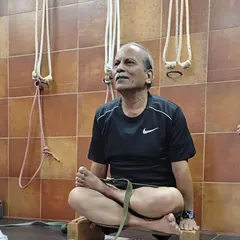
In my sessions, we demystify yoga props. Whether it is a block, belt, wheel, rope, or chair, each tool has a specific purpose to help you explore your body's potential without force. Drawing from my Ashtanga and Iyengar influences, I focus heavily on proper alignment because I want you to practice safely for years, not just for a season.
Why Props Change Everything
- Blocks: These are essential for creating lift. If you are practicing arm balances like Bakasana or standing poses, a block brings the floor closer to you, preventing the strain on your wrists and lower back.
- Belts & Straps: Think of these as an extension of your arms. In poses like Paschimottanasana, a strap allows you to maintain a straight back while targeting the hamstrings, rather than hunching over to force your hands to your feet.
- Yoga Walls & Ropes: We use ropes for traction. They help decompress the spine and allow for supported backbends, which are excellent for those with stiff thoracic regions or shoulder tightness.
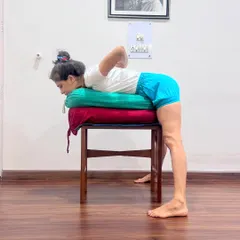
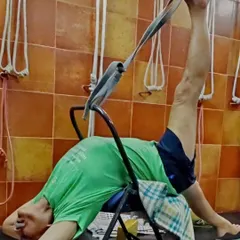
- Chairs: I find the chair to be one of the most versatile tools for students in Vile Parle or Hinjewadi who spend hours at a desk. It supports you in inversions like Salamba Sarvangasana and helps open the chest in Urdhva Dhanurasana.
My Philosophy on Props
I believe yoga should be accessible. If your anatomy limits a pose, the prop bridges that gap. My goal is to teach you how to use these tools until you eventually develop the strength and flexibility to move into advanced asanas with grace. You do not need to be flexible to start; you just need to be willing to learn how to move effectively. We practice in Mumbai and Pune, and I encourage you to join a session where we break down these movements step by step.
Similar work from other experts
Browse through Curated picks from other experts on mytribe
 11
11
Props & Alignment: Safe Yoga for Every Body
 4
4
Iyengar Yoga Props for Precision
 100
100
Precision Iyengar Yoga Classes with Props
Guided Yoga Practice with Props in Bandra
The Iyengar Method: Using Props for Precision
Yoga with Props: Precision, Support, and Alignment
More from Yoga Teacher Training Course (YTTC) by Asan Yoga
More services by Asan Yoga