Yoga Techniques for Stress and Anxiety Relief
Modern life demands constant performance, but our nervous systems need permission to reset. I teach specific yogic practices that shift your physiology from a state of fight-or-flight into deep rest.
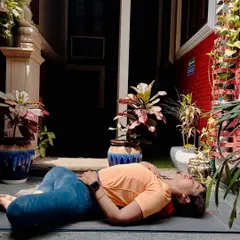
After a long day at the office, the mind often remains restless. I guide a student into a supported, restorative backbend to open the chest and encourage deep, smooth breathing. This pose activates the parasympathetic nervous system, telling the body and mind it's time to relax.
Your breath and your mental state are directly linked. When you are anxious, your breath becomes shallow. Here, I demonstrate Abdominal Breathing in Vajrasana, a simple yet powerful technique to control the breath, calm the mind, and immediately reduce feelings of anxiety.
This is Viparita Karani (Legs Up the Wall Pose) with chair and bolster support. This powerful restorative inversion calms the nervous system, reduces muscle tension, and improves circulation, making it an excellent practice for deep relaxation and stress relief.
This is the state of Yoga Nidra, or yogic sleep, at the end of a session. It is a state of conscious relaxation where you can silence inner anxiety and heal from within. This practice is fundamental for processing the day's events and restoring mental peace.
About Techniques for Stress & Anxiety
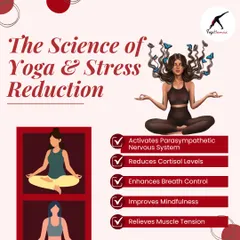
It is not just about stretching; it is about biology. When we perform restorative poses like Viparita Karani with proper prop support, we physically signal the parasympathetic nervous system to downregulate. This is not an abstract concept. It is a measurable drop in cortisol levels that you can feel, usually within your first session, as we move away from constant mental chatter.
The Science of Calm
Many students come to me thinking yoga is purely spiritual, but it is deeply anatomical. When you are stressed, your breathing becomes shallow, which tells your brain to stay alert. We break this cycle by using Pranayama (breath control) and restorative asanas that require zero effort. By using props like blocks and bolsters, we remove the strain from your muscles, allowing your nervous system to fully let go.
Why Props Matter
I often see people struggling to hold poses, which only increases their anxiety. At my studio in Sushant Lok, we use chairs, ropes, and blocks as essential tools, not shortcuts. These tools ensure your body is perfectly aligned, which is the only way to quiet the mind. If your body is fighting to stay in a pose, your mind cannot relax.
The Three Pillars: Aahar, Vihaar, and Vichar
I do not believe in quick fixes. Real change happens when we align three pillars:
- Aahar (Diet): Understanding how certain foods impact your inflammation and energy levels.
- Vihaar (Lifestyle): Adjusting your daily movement, especially for those with desk jobs in corporate Gurugram.
- Vichar (Mindset): Learning to process daily stressors so they do not accumulate as physical tension.
Whether you are dealing with chronic anxiety or just the exhaustion of a high-pressure office environment, we start with your physiology. We identify where you hold tension—be it the neck, lower back, or jaw—and use specific drills to release it. You leave the session not just tired, but restored.
Similar work from other experts
Browse through Curated picks from other experts on mytribe
Find Calm: Science-Backed Yoga for Stress & Anxiety
Yoga for Stress Relief and Mental Calm
Yoga for Stress, Anxiety, and Deep Sleep
 8
8
Yoga for Stress Relief and Mental Calm
Yoga for Mind & Stress Relief
 11
11
Stress, Anxiety & Mental Wellness
More from Corporate Yoga & Specialized Workshops by Arogyam Vardan
More services by Arogyam Vardan