Conceptual Architecture & Future Urban Research
We investigate the potential of misused spaces and temporary urban settings through rigorous academic research, informing our approach to future-forward architecture and planning.
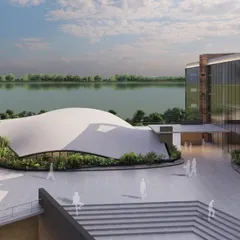
A conceptual image from our research presentation titled 'MISUSE-DISUSE-REUSE'. This visual proposes a museum suspended within a quarry, prompting a re-evaluation of how we can intervene in and assign new purpose to post-industrial landscapes.
An exploration of 'Make-shift Materialization' for spiritual tourism. This image depicts modular, mobile pods providing temporary accommodation for pilgrims, addressing the challenge of transient urbanization in sacred destinations.
A conceptual vehicle designed for mobility in pilgrimage sites. This work is part of our study into the complex crowd management and logistical needs of temporary cities that form during large-scale spiritual gatherings.
About Future-Forward: Research & Conceptual Design
Our research methodology often begins by identifying 'latency'—the hidden or untapped potential within a site. Whether we are theorizing how to convert a post-industrial quarry into a cultural landmark or developing mobile infrastructure for high-density pilgrimage sites, this conceptual work acts as a laboratory for our practical projects, ensuring our master plans are both visionary and grounded in systemic urban reality.
Our Research Framework
Architecture is never static. To keep our practice responsive to the evolving urban fabric of cities like Bangalore, we dedicate significant time to conceptual explorations. This work is rarely just about form; it is about addressing the ‘Misuse-Disuse-Reuse’ cycle of modern environments.
Adaptive Reuse and Ecological Intervention
We examine how to reassign value to neglected landscapes such as mines, abandoned riverbeds, and coastlines. In our presentation titled 'MISUSE-DISUSE-REUSE', we explored the possibility of suspending cultural institutions within these industrial scars, proposing that architecture can function as a healing mechanism for ecological disruptions. By visualizing these interventions, we challenge conventional briefs and urge a more proactive stance toward urban resources.
The Architecture of Temporary Urbanization
Our study into 'Make-shift Materialization' addresses the radical shift in populations during large-scale spiritual gatherings. With millions of visitors descending upon pilgrimage sites, the demand for mobility, shelter, and crowd management exceeds standard infrastructural capacities. We explore modular, mobile accommodation units and transit systems that can sustain this transient urbanism without imposing permanent, wasteful structures on sensitive landscapes. This focus on the temporary allows us to test design strategies—such as rapid deployment, material efficiency, and grid-less planning—that we later adapt for permanent residential and institutional master plans.
Bridging Research and Practice
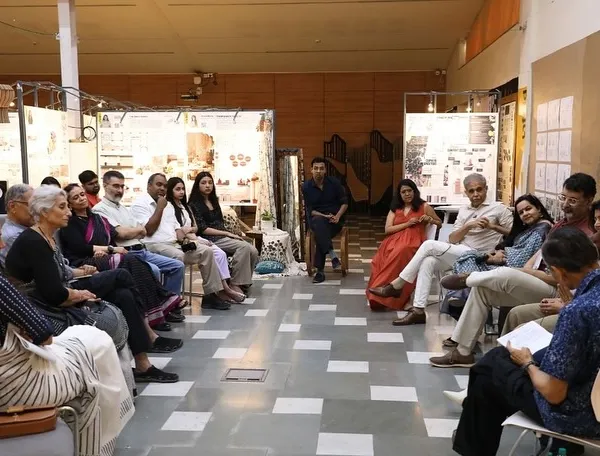
This conceptual work is the bedrock of our firm. It keeps our team sharp, questioning, and collaborative. By participating in academic forums and industry discussions, we invite peer review into our process, ensuring that the master planning and high-density residential projects we execute are informed by the latest in urban theory and sustainable practice.
Similar work from other experts
Browse through Curated picks from other experts on mytribe
 31
31
Future Forward Concepts and Competition Designs
 13
13
Visionary Urban Design & Master Planning Concepts
 8
8
Future Architectural Concepts and Upcoming Design Projects
 11
11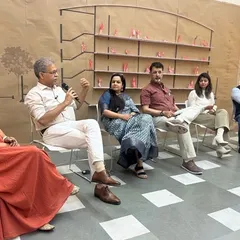
Our Architectural Insights and Industry Recognition
Future Visions and Sustainable Architectural Concepts
 23
23
Architectural Concepts and Future Vision
More from Urban Design & Master Planning by SDeG
More services by SDeG