Performance Coaching Based on Sports Science
I don’t work on guesswork. My training system is built on data, evidence, and rigorous testing to take traditional sports like Kabaddi to a professional level. If you want to stop training hard and start training smart, this is how we do it.
Kabaddi is a traditional sport, but it need not stay that way. I believe in making it a professional sport through the intervention of sports science, technology, and research. That's what we are trying to do.
Presenting on GPS-driven coaching at the NSCA India workshop. The focus was on translating raw data into real-world decisions for pre-season planning, game design, and return-to-play protocols.
An honor to be invited to speak at the National Strength and Conditioning Conference. I shared my work on speed and power training interventions for Pro-Kabaddi players, aiming to push the sport forward.
Injury prevention is a myth; injury reduction is a strategy. I explain my injury reduction architecture, which includes optimal warm-ups, building physical capacity, and smart loading to keep athletes available.
I explain the French Contrast method, a powerful technique we used in the preseason. By stacking high-force and high-velocity exercises, we train the entire force-velocity spectrum to build stronger, more explosive athletes.
Individualizing endurance sessions is key. I break down how we use Yo-Yo test scores to calculate each player's maximal aerobic speed (MAS) and create personalized intermittent running programs.
In a team of 20+ players, how do we individualize strength training? I explain our method of using predicted 3-Rep Max (3RM) to create individual lifting charts for every player, ensuring optimal loading.
Monitoring athlete well-being is critical. I discuss how we use an Athlete Monitoring System (AMS) to track data on stress, fatigue, and sleep, which shapes our decisions on recovery and training load.
This research review highlights the link between adductor strength asymmetry and groin injuries in soccer players. This is why we prioritize isometric strength testing and targeted exercises to prevent such injuries.
Dehydration impacts decision-making more than reaction time. I break down a study showing how even a 2.5% reduction in body weight from dehydration can impair an athlete's cognitive performance on the field.
About The Science of Performance
When I coach a team of 20+ athletes, we don't just use one plan for everyone. I predict every athlete's 3-rep maximum (3RM) to create individual lifting charts for the entire squad. This means the 50kg squat for one player is calibrated differently than for another, ensuring we are training for peak velocity and proper loading, rather than just moving weights for the sake of it.
Building the Foundation
Performance is not an accident. It is a systematic process. Whether you are a professional Kabaddi player or an athlete looking to make a serious leap, the methodology remains the same: identify the gaps, measure the output, and implement the science.
Why Data Matters
We often rely on intuition, but data provides the truth. I use GPS tracking and Athlete Monitoring Systems (AMS) to track variables like stress, fatigue, and sleep quality. This is how we distinguish between being 'ready' and being 'at risk.' If the data shows an athlete is under-recovered, we adjust the load before an injury happens. We don't guess.
The French Contrast Method
To build explosive power, we utilize the French Contrast method. This is a stack of four exercises: one heavy compound lift (like a front squat) followed by a plyometric movement (box jump), a speed-strength movement (dumbbell jump), and an assisted or overspeed exercise. By stacking these, we touch upon the entire force-velocity spectrum, training the nervous system to generate power more efficiently.
Injury Reduction Architecture
I am clear on this: you cannot prevent every injury. But you can drastically reduce the likelihood of them occurring. We build an injury reduction architecture that focuses on reactive stability, mobility, and eccentric strength. This includes standardized warm-up protocols like RAMP (Raise, Activate, Mobilize, Potentiate) and targeted exercises like Nordic curls or Copenhagen planks to protect the kinetic chain. It is about keeping you off the bench and on the field.
Similar work from other experts
Browse through Curated picks from other experts on mytribe
The Science of Athletic Performance
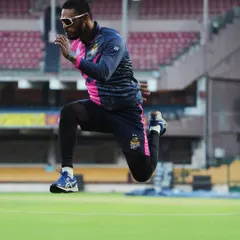
High Performance Athlete Coaching & Sport Science
 6
6
Science-Based Athlete Coaching and Performance Training



My Journey: From Exercise Physiology Lab to Athlete Coaching

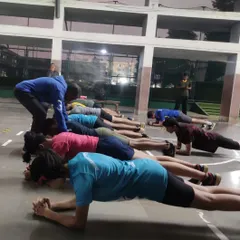
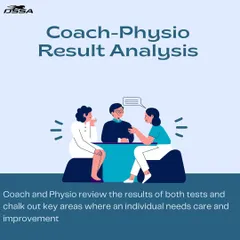
Our Scientific Approach to Athletic Training
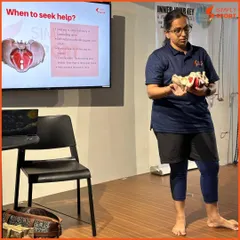
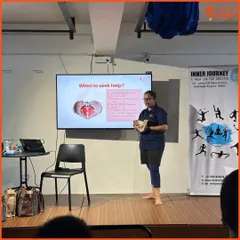
High-Performance Athlete Assessments and Elite Trial Protocols
More from High-Performance Coaching for Athletes & Teams by Ranjit Nahak
More services by Ranjit Nahak