Injury Reduction & Athlete Body Armouring
The best ability is availability. We don't just train for power; we train to keep you off the bench. My protocols focus on mobility, reactive stability, and eccentric strength to bulletproof your joints for the long haul.
Spinal safety isn't just about strong muscles; it's about how fast they react. This reactive core drill trains the deep core to respond to sudden shear stress, building reflexes that protect the spine.
Floating heel exercises are a staple for building a more robust, injury-resistant ankle complex. My primary goal here is resilience; performance is a byproduct of that foundation.
How to make the shoulder joint bulletproof. It requires a multi-faceted approach: improving mobility, strengthening rotator cuffs, building pushing and pulling strength, and working on force absorption.
Recovery is a trainable skill. We drill diaphragmatic breathing to teach athletes how to switch on their parasympathetic nervous system, which reduces stress markers and leads to faster recovery.
Building a stronger Achilles tendon is essential for explosive movements. This video shows key exercises like weighted calf raises and elevated split squats to enhance tendon resilience and reduce injury risk.
Unlocking the power of the adductors. This video showcases four moves, including banded side steps and Copenhagen planks, to enhance stability, prevent injury, and improve athletic performance.
Nordic curls are a challenging but valuable exercise for developing eccentric control of the hamstrings. This is a key component in programs designed to reduce the risk of hamstring injuries.
Foam rolling is most effective as a warm-up tool. This video demonstrates a full-body routine targeting key areas like the thoracic spine, lats, glutes, and hamstrings to improve flexibility before a session.
With a tightly packed match schedule, joints can stiffen up. A dedicated mobility session is crucial to maintain range of motion, prevent injuries, and ensure performance doesn't suffer.
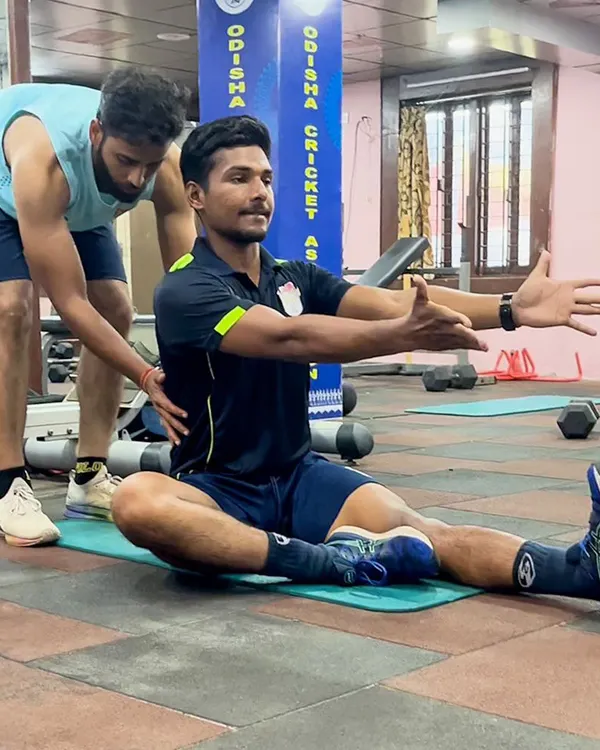
Staying true to the process. Here, I'm assisting an athlete with a wall-facing shoulder mobility drill, a critical exercise for overhead athletes to maintain shoulder health and function.
About Injury Reduction & Body Armouring
Most people chase big lifting numbers, but true durability comes from what happens in the milliseconds between movements. I focus on reactive core stability and eccentric control—like Nordic curls for hamstrings or reactive drills for spinal safety—to make sure your body absorbs force instead of breaking under it. It is not about avoiding training; it is about training smarter to stay on the field. Theek hai?
Building Durability Through Science
I do not believe in bubble-wrapping athletes. I believe in making them tough enough that the field becomes the safest place they can be. My injury reduction programs are not generic 'mobility flows.' They are targeted, data-driven interventions designed to address movement leaks and physical weaknesses before they manifest as tears or strains.
Why Reactive Training Matters
Traditional strength training builds muscles. But in a sport like Kabaddi or football, you do not encounter predictable loads. You face sudden shifts, shear forces, and impacts. We train the nervous system to sense instability and react in real-time. By utilizing exercises like reactive core drills and eccentric-focused movements, we build an architecture of resilience.
The Toolkit:
- Eccentric Strength: Using protocols like Nordic curls to develop the hamstrings' ability to absorb force, which is the single most effective way to reduce the risk of strains.
- Ankle & Joint Complexity: Floating heel exercises and multi-directional stability work to fortify the joints that take the most abuse during agility shifts.
- Nervous System Regulation: Recovery is a trainable skill. We use diaphragmatic breathing to switch the body from a sympathetic (stress) state to a parasympathetic (recovery) state, ensuring that the work we do in the gym is solidified by how you recover at home.
Everything I prescribe has a purpose. We measure your baseline, identify the weak links in your kinetic chain, and systematically remove them. If you want to stop getting sidelined and start dominating your game, we follow the process. No shortcuts, just hard work and physics.
Similar work from other experts
Browse through Curated picks from other experts on mytribe
Injury Prevention & Mobility: Train Smart, Stay Strong
 6
6
Injury Resilience and Recovery Coaching
Strength and Conditioning for Peak Athletic Performance
Injury Prevention & Recovery
Athlete Recovery & Peak Performance Programs
Injury Prevention and Smart Recovery Coaching
More from High-Performance Coaching for Athletes & Teams by Ranjit Nahak
More services by Ranjit Nahak