Harvesting Your Home Compost: A Guide to Black Gold
You have been layering and feeding your bin for weeks. Now comes the most rewarding part: harvesting your "black gold." Here is how to tell when your compost is ready, whether you need to sieve it, and how to cure it for healthy plants.
After harvesting, you might find some materials like eggshells haven't fully broken down. This is perfectly fine. Sieving is only necessary if you have large clumps; otherwise, this semi-composted material can be fed directly to your plants.
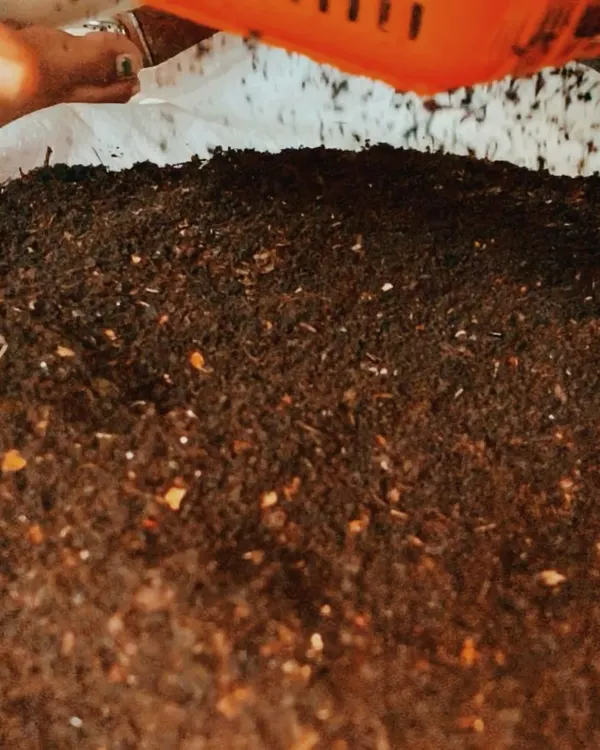
A successful harvest from my Eva home composter. The entire process happened over six weeks without any mess, smell, or fuss. This is proof that with the right ingredients and procedure, home composting can be a clean and silent process.
Here, my friend Vani Murthy harvests her Eva composter. The result is beautiful, crumbly, sweet-smelling compost. This is the "black gold" we aim for, and it's incredibly satisfying to produce it right in your own home.
Harvesting the Ebony composter is an easy affair. The lightweight fabric bags are simple to lift and empty. This batch had no maggots, no leachate, and a pleasant earthy smell, showing how effective 360-degree aeration can be.
Curing is a vital step after the main composting phase. Here, we aerate the semi-finished compost from the Ebony and moisten it slightly before letting it rest. This allows it to mature and stabilize, turning it into a high-quality soil amendment.
An evening in my garden, sieving a fresh batch of compost. I created a temporary sieve using some mesh. The fine, sieved compost is perfect for seedlings, while the coarser material is used as a nutrient-rich mulch for my mint plants.
About Harvesting Your "Black Gold"
Here is a truth many beginners miss: if you see a few eggshells or dry leaves in your final pile, do not panic. It does not mean your composting failed. If the pile smells earthy and is cool to the touch, it is ready. You do not always need to sieve it. Those coarser bits act as excellent mulch for your garden beds, adding structure to the soil while the fine compost feeds your seedlings.
Is Your Compost Actually Ready?
The golden rule of harvesting is sensory. Your compost should be dark, crumbly, and smell like a wet forest floor after rain. If it feels warm to the touch, the microbial activity is still high; let it stay in the bin a bit longer. If it has a foul, acidic, or putrid smell, it is not ready and likely has moisture issues or poor aeration.
The Importance of Curing
Many people skip curing, but it is the difference between "good" compost and "plant-ready" fertilizer. Once you harvest from your container, spread the compost out. Expose it to air and keep it slightly moist. This process stabilizes the pH and ensures no remaining heat damages delicate roots. Think of it as letting your tea cool down before drinking; your plants need the same care.
Sieving: To Strain or Not to Strain?
If you are growing delicate seedlings, a fine sieve is your best friend. A simple wire mesh frame will do. However, do not toss the "rejects," which are the larger, semi-composted bits. These are perfect as mulch for mature plants. They break down slowly, suppressing weeds and retaining moisture in your pots, effectively closing the loop in your urban garden.
Remember, composting is a cycle. Whether you are using our Excelerator culture or just starting your journey, the harvest is the reward. If you hit a wall, check your carbon-to-nitrogen balance or reach out for a consultation. Let’s get that black gold into your soil.
Similar work from other experts
Browse through Curated picks from other experts on mytribe
 8
8Harvesting and Using Your 'Black Gold'
Turn Your Kitchen Waste Into Black Gold: Home Composting Guide
 14
14
Organic Gardening and Composting Guides
 18
18
Composting with Chickens: Turn Kitchen Scraps into Garden Gold
 20
20
Your First Garden: Simple Step-by-Step Guides
Soil, Compost, and Fertilizers for Terrace Gardens
More from Composting Education & Consultation by Savita Hiremath
More services by Savita Hiremath