Delhi's Political Landscape: Memorials and Museums
These spaces are not just buildings. They are deliberate constructions of power, memory, and political legacy in Delhi. I analyze how our national memorials frame the narratives of figures like Gandhi, Shastri, and Indira Gandhi.
The expansive and symmetrical campus of Gandhi Smriti, formerly Birla House, where Mahatma Gandhi spent his last 144 days. The architecture of the building itself is part of the historical narrative, representing a site of both political importance and personal reflection.
The entrance to the Gandhi Smriti Museum, marked by a simple rock inscription. This understated entrance leads into a space that preserves the memory of Gandhi's life and final moments, offering a place for public homage.
The bronze statue of Mahatma Gandhi at the Gandhi Smriti complex. Such statues are a common feature in public memorialization, and I analyze their iconography and placement to understand how they shape the public's perception of historical figures.
Detailed terracotta figurines inside the Gandhi Smriti museum, depicting key moments from Gandhi's life, including the Dandi March. These dioramas are a powerful narrative tool, translating complex historical events into accessible visual scenes.
A collage of exhibits from the Gandhi Smriti, including a display of Gandhi's talisman and a sculpture of him with Kasturba Gandhi. These displays combine personal philosophy with artistic representation to construct a multi-faceted image of the Mahatma.
The site map of the Gandhi Smriti complex. A map like this is a document in itself, revealing the planned journey for a visitor and the hierarchy of spaces within the memorial, from the gallery to the Martyr's Column.
The preserved study and library of Indira Gandhi at the Indira Gandhi Memorial Museum, alongside a view of the residence's sprawling lawns. This juxtaposition of her intellectual private space with the public exterior offers a glimpse into the life of India's first female Prime Minister.
A collection of black and white photographs capturing various moods and moments of Indira Gandhi at her desk. This display personalizes a powerful political figure, showing her in moments of contemplation, work, and engagement.
A collage of newspaper front pages from the time of Indira Gandhi's tenure. The museum uses these archival media clippings to document major political events and public discourse during her time as Prime Minister.
Personal artifacts from the Indira Gandhi Memorial, including handwritten letters and journals. These items provide an intimate look into her personal relationships and formative years, adding a layer of biographical depth to her political story.
About Delhi's Political Landscape: Memorials & Museums
When you walk through a site like Gandhi Smriti or the Indira Gandhi Memorial, you are interacting with a selected version of history. My work here goes beyond documenting what is on the walls; it examines the silences and the intentional placement of artifacts that shape how we remember our past. I help you see the political decision-making behind these exhibitions.
Museums and memorials in the capital are not neutral spaces. They are active sites of memory where the state, political figures, and historians negotiate what should be remembered and what should be forgotten.
My analysis of Delhi's political museums involves a few key approaches:
- The Politics of Space: I look at how the former residences of leaders—like the Lutyens-style bungalows of Lal Bahadur Shastri or the Indira Gandhi Memorial—have been transformed into public museums. We examine why these specific locations were chosen and how the preservation of private study rooms or assassination sites serves a larger political function.
- Narrative Construction: Through examining displays like the terracotta figurines at Gandhi Smriti or the crystal-marked path at the Indira Gandhi Memorial, we discuss how historical events are translated into visual experiences for the public. It is about understanding the didactic intent behind every map, photograph, and artifact.
- Archives as Evidence: History relies on the archive. My work involves analyzing the letters, newspaper clippings, and personal documents on display to understand the difference between the public persona and the private individual. We move past the 'hero-worship' often found in these memorials to ask questions about the policies, ideologies, and contradictions that defined these leaders.
Whether for a university lecture, a panel discussion, or a research-focused session, I bring an evidence-based voice to these discussions. We do not just look at the artifacts; we interrogate the reasons they are displayed, ensuring that our understanding of India's political timeline remains grounded in critical analysis rather than simplistic storytelling.
Similar work from other experts
Browse through Curated picks from other experts on mytribe
 9
9
Landmark Institutional Architecture and Public Space Design
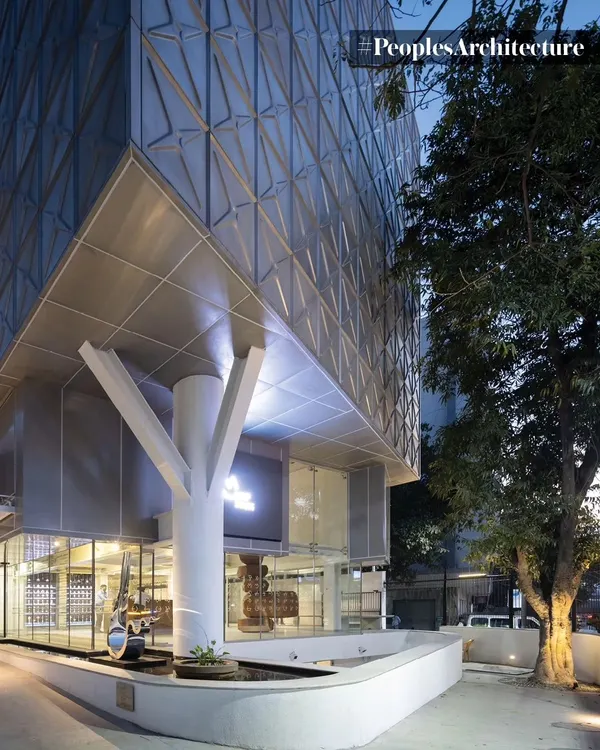 58
58
Public & Cultural Architecture: Creating Meaningful Landmarks
Cultural and Civic Architecture for Public Spaces
 12
12

Documenting Historical Sites in Delhi & Beyond
 21
21
Cultural and Exhibition Architecture in Bangalore
 8
8
Public & Cultural Architecture
More from Public Speaking & Academic Engagement by Kanika Singh
More services by Kanika Singh