Core Vocal Training: Scales and Technical Exercises for Kids
A strong voice is built on a solid foundation. We dedicate time to essential warm-ups and scales to improve your child's pitch, range, and control.
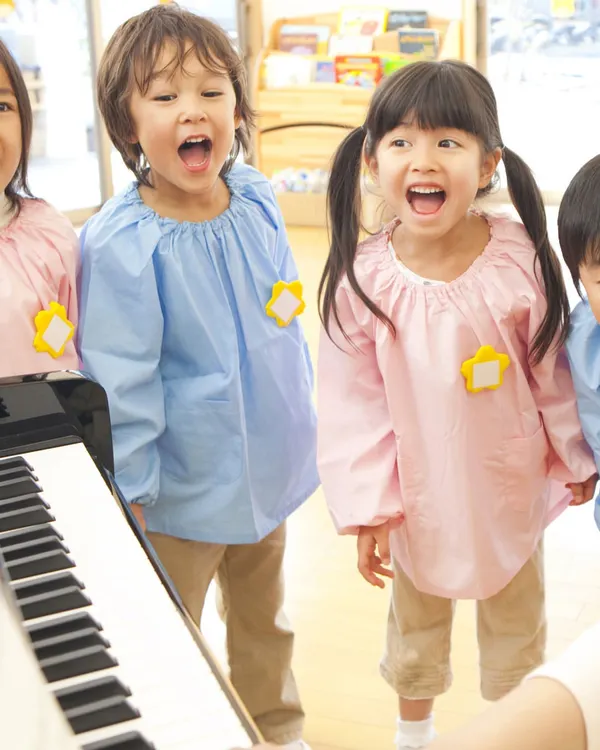
Two students practicing a 9-note scale together. I encourage them to open their mouths wide for better sound.
A young student confidently practices the chromatic scale, singing "Do Re Mi Fa So La Ti Do".
A group of older students working on an 11-note scale, focusing on hitting the high notes with power.
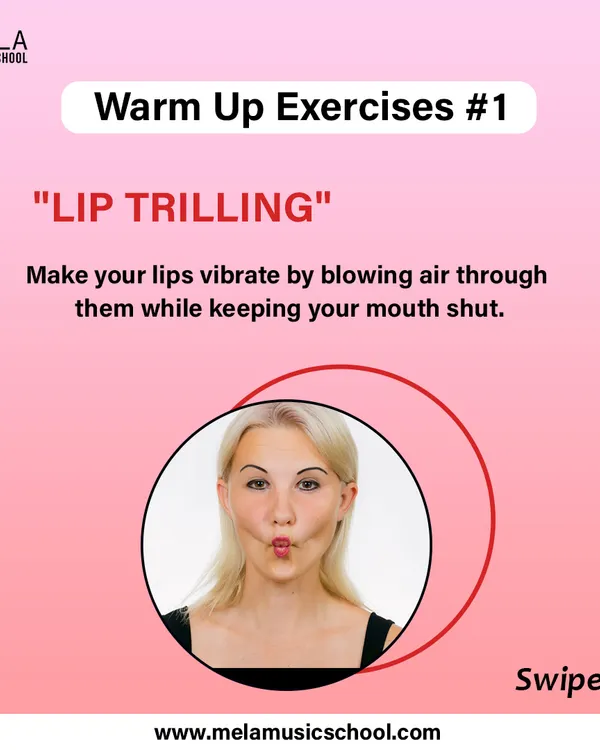
A fun and effective warm-up! The students are practicing lip trills to relax their vocal cords.
This young student is demonstrating her knowledge of various fundamental scales, from major and minor to pentatonic.
A group of my youngest students impressively singing through major, minor, pentatonic, and chromatic scales.
This little star is practicing her fundamental scales, including major, minor, and pentatonic.
My cute students showing off their knowledge of fundamental scales in this group practice.
We work on primary vowel sounds like "Mee, May, Maa, Moe, Moo" to ensure clear and open vocal production.
Two young students learning to identify and sing melodic major intervals, a key ear training exercise.
About Core Training: Vocal Scales & Exercises
In our studio, we don't just sing. We drill. If a voice sounds thin or tight, it is almost always a matter of posture or vowel clarity. That is why you will hear us saying 'Back straight' and 'Open your mouth wider' more than anything else. These exercises might feel repetitive, but they are exactly how we build the muscle memory required for a clear, resonant tone. It is hard work, but it is how we turn shaky beginners into confident performers.
Building a Singer's Foundation
Singing is a physical craft. Before we touch a microphone or tackle a song, we have to get the mechanics right. Our core training focuses on the 'boring' stuff—breath control, posture, and intonation—because that is what actually separates a hobbyist from a confident performer.
What We Practice
We don't believe in skipping to the final performance. Every class moves through a specific sequence:
- Breath & Posture: We start with grounding exercises to ensure the voice is supported from the diaphragm, not the throat.
- Scales & Arpeggios: We work through 3, 5, 9, and 11-note scales. This is how we map out the range. We use both Western Solfege (Do-Re-Mi) and Indian Sargam (Sa-Re-Ga) to ensure the ear is trained to recognize different melodic patterns.
- Vowel Clarity: We focus on primary vowel sounds like 'Mee, May, Maa, Moe, Moo' to ensure the sound is resonant and not 'swallowed' in the mouth.
- Ear Training: We practice melodic intervals, teaching students to identify and match pitch accurately. This is crucial for harmonizing and singing with a band later on.
Why It Matters
The goal here isn't just to make noise. By the time our students step onto a stage, they have developed the technical foundation to handle complex repertoire, from Adele hits to Trinity exam pieces. We keep the environment fun with stickers for the little ones, but the focus remains on the technique. Whether it is lip trills or chromatic scale work, we make sure the basics are perfect so the singing comes naturally.
Similar work from other experts
Browse through Curated picks from other experts on mytribe
Vocal Training & Singing Classes for Kids
 4
4

Vocal Lessons for Young Singers
Hindustani Vocal Classes for All Ages
Hindustani Classical Training: Build Your Foundation
 20
20


Vocal Health and Singing Techniques for Beginners
 4
4

Hindustani Vocal Classes in New Delhi
More from Vocal Coaching for Kids by Brilliance School of Music
More services by Brilliance School of Music