Rope Wall Yoga Classes for Deeper Flexibility and Alignment
Ropes, or Yoga Kurunta, let you go deeper into poses with safe, supported traction. See how we use them to build core strength and open the spine at our Rohini studio.
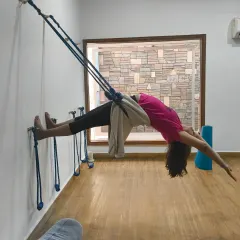
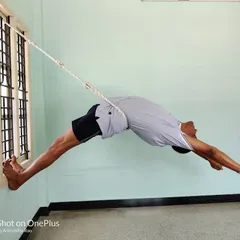
The rope wall is an incredible tool for therapeutic backbends. In this video, I guide a student into a deep, suspended arch, using the ropes to decompress the spine and open the shoulders without strain.
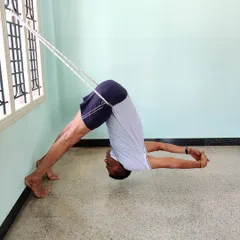
This video demonstrates a sequence of movements using the yoga ropes, including suspended inversions and leg stretches. This practice, known as yoga kurunta, builds upper body and core strength.
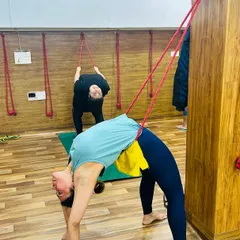
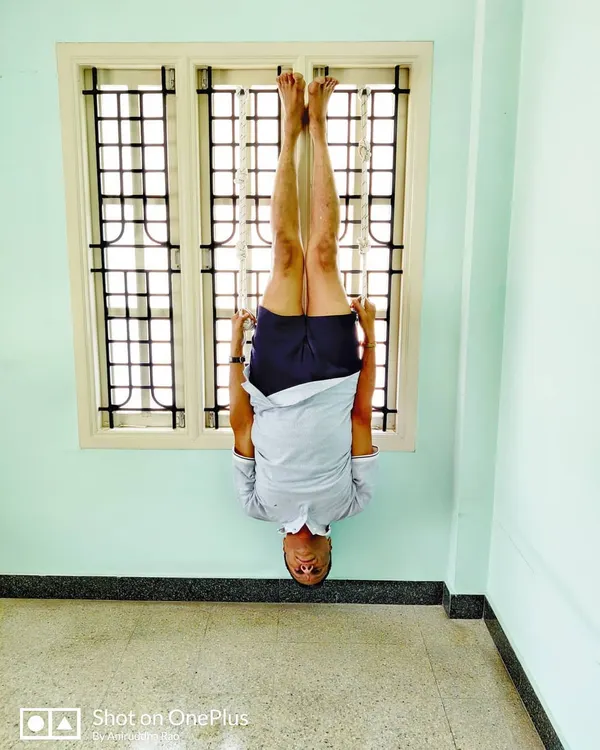
Two students perform synchronized inversions on the rope wall. This is a powerful way to build strength, improve circulation, and overcome the fear of going upside down.
This is a core-focused exercise using the rope wall for leverage. By pulling up from the floor, the student engages the entire abdominal wall, building functional strength.
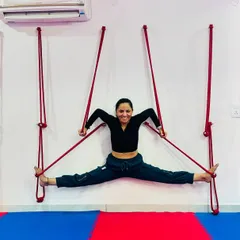
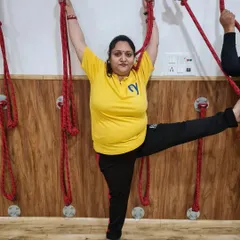
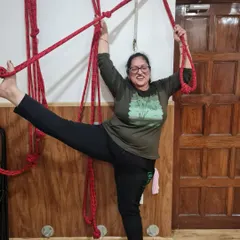
Here I am demonstrating a suspended full split (Samakonasana) using the rope wall. The ropes provide the necessary support to hold this deep stretch and work on hip flexibility.
A front-facing view of the suspended split on the yoga wall. This setup allows for precise control over the depth of the stretch, making it accessible for various flexibility levels.
A student uses the rope wall to assist with Dhanurasana (Bow Pose). The ropes help lift the chest and deepen the backbend, increasing spinal flexibility and opening the shoulders.
About Rope Wall Yoga (Kurunta)
The rope wall isn't just for advanced practitioners. Whether you are struggling with lower back tightness or want to safely attempt inversions, the ropes provide the tension needed to align your body, allowing you to hold postures longer than you could on a mat alone.
What is Yoga Kurunta?
Yoga Kurunta is the practice of using wall-mounted ropes to assist in asana practice. Think of it as an extension of your own arms and legs. By providing external support, the ropes allow for a degree of traction that is difficult to achieve purely through muscle effort.
Why Use Ropes?
- Spinal Decompression: Constant sitting leads to compression. Suspended poses allow gravity to gently pull the vertebrae apart, relieving pressure.
- Safe Inversions: Many students fear going upside down. With ropes, you have complete control over your weight, making headstands and other inversions stable and accessible.
- Deeper Backbends: If stiff shoulders or a tight mid-back hold you back from full backbends, the ropes provide the leverage to lift and open your chest safely.
Practicing in Rohini
At my studio in Amba Tower, DC Chowk, I integrate these ropes into our regular flow. It is not about just hanging around; it is a functional workout. You pull, you hold, and you engage your core. It is great for those of us dealing with chronic desk-job stiffness or anyone looking to break through a plateau in their flexibility training. We keep batches small, between 8 and 12 students, so you get the adjustment you need.
Similar work from other experts
Browse through Curated picks from other experts on mytribe
Wall Rope Yoga in Hauz Khas to Deepen Your Stretch
Wall Rope Yoga Classes in Gurgaon
Rope Wall Yoga: Build Strength & Decompress
 10
10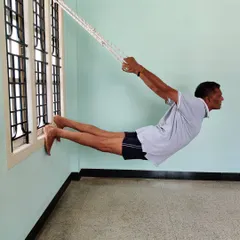
Rope Yoga Kurunta: Traction and Spinal Extension
Iyengar Rope Yoga: Spinal Alignment and Decompression
Rope Wall Yoga for Spinal Decompression
More from Personal & Group Yoga Classes by Arjun Singh Pundir
More services by Arjun Singh Pundir