Rope Yoga Kurunta: Traction and Spinal Extension
The yoga kurunta uses ropes to create precise traction, decompressing the spine and allowing for deeper, supported extensions. This is not about hanging; it is about building alignment through resistance.
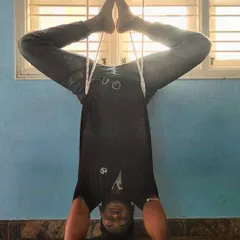
Rope Shirshasana (Headstand). Here, the ropes support the body's weight, allowing the head to hang freely. This variation, known as hanging headstand, creates traction in the cervical spine and is deeply therapeutic.
Rope Urdhva Mukha Shvanasana (Upward-Facing Dog). The ropes support the hips, allowing for a powerful opening of the chest and shoulders while the legs and spine are fully extended.
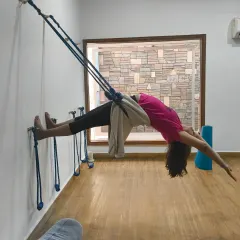
Viparita Dandasana (Inverted Staff Pose) in the ropes. This is an advanced backbend that creates a deep arch in the entire spine. The ropes provide the necessary support to hold the pose safely.
Adho Mukha Shvanasana (Downward-Facing Dog) with rope support. The rope around the hips pulls the pelvis back and up, teaching the correct action for lengthening the spine.
Dhanurasana (Bow Pose) using the wall and a rope. The rope helps to lift the chest and deepen the backbend, while the feet against the wall provide stability.
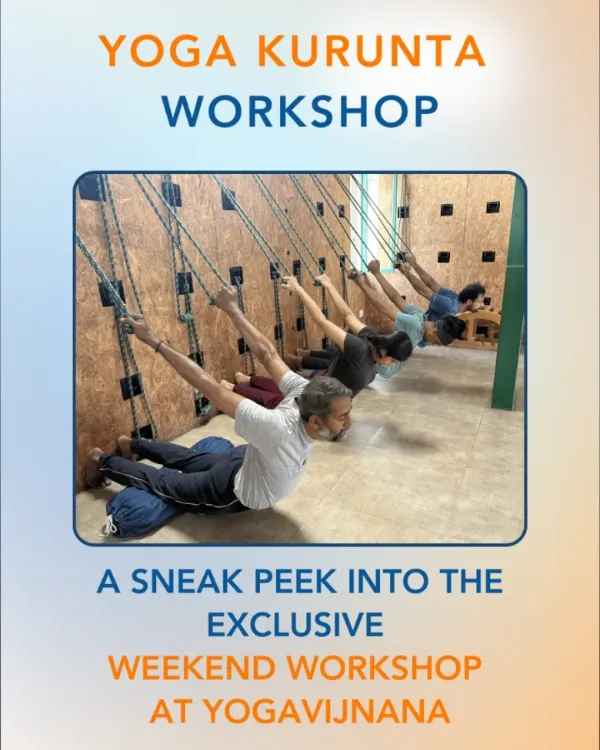
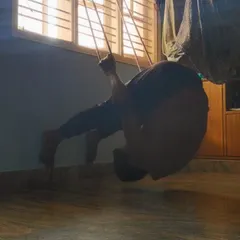
A simple spinal elongation using the rope. This stretch helps to decompress the spine and is an excellent way to prepare the back for deeper work.
A supported backbend using the rope. This variation helps to open the upper back and shoulders, areas that are often tight from sitting.
Another view of Adho Mukha Shvanasana with rope assistance. Notice how the rope helps to shift the weight back towards the heels, deepening the stretch in the hamstrings and calves.
A variation of Rope Shirshasana, moving into Baddha Konasana (Bound Angle Pose) legs. This combines the benefits of an inversion with a deep hip opening.
Side view of Rope Shirshasana, showing the alignment of the body against the wall. The wall and ropes work together to ensure a safe and effective inversion.
About Rope Work: Traction and Extension
When you use the ropes, you must be disciplined with your grip. If you do not hold the rope correctly, you do not get the traction. My instruction is direct because your safety and the effectiveness of the pose depend on your alignment, not on your effort alone.
The use of wall ropes, known as Yoga Kurunta, is a distinctive feature of the Iyengar method. It is not intended to make poses easier; it is used to teach the body the correct action. When I guide a student into a rope-supported Viparita Dandasana, the objective is to create space between the vertebrae. You are not just stretching; you are elongating the spine under controlled conditions.
Whether you are practicing Rope Shirshasana or a supported Adho Mukha Shvanasana, the rope acts as a teacher. It forces you to engage the right muscles. If you are struggling with chronic back stiffness or lack the depth for full inversions, these ropes provide the necessary support to hold the posture long enough to experience its benefits.
In my online classes, we focus on the mechanics of the grip. Hagga bittu hidibeku—you must hold the rope, and you must hold it well. This is how you build a body that can handle life’s knocks. We are not here for flashy movements; we are here for precision and alignment that lasts. Proper rope work demands attention to detail, so ensure you have a secure setup before beginning.
Similar work from other experts
Browse through Curated picks from other experts on mytribe
Rope Wall Yoga Classes for Deeper Flexibility and Alignment
 12
12
Yoga Kurunta: Rope Alignment Workshops in Bengaluru
Rope Wall Yoga for Spinal Decompression
Wall Rope Yoga in Hauz Khas to Deepen Your Stretch
Rope Therapy for Spinal Decompression
Safe Spinal Health & Backbending Yoga with Props
More from Online Iyengar Yoga Classes by Madhava R
More services by Madhava R