Educational & Institutional Architecture Design in Bangalore
I design learning environments that blend nature with academic rigor, turning courtyards into classrooms and corridors into spaces for discovery.
These renderings show the overall architectural vision for Urban Gurukul in Bangalore. The design uses organic forms and natural materials to create a K-12 school that feels rooted in its cultural heritage while providing modern, flexible learning spaces for students.
These renderings show the overall architectural vision for Urban Gurukul in Bangalore. The design uses organic forms and natural materials to create a K-12 school that feels rooted in its cultural heritage while providing modern, flexible learning spaces for students.
These renderings show the overall architectural vision for Urban Gurukul in Bangalore. The design uses organic forms and natural materials to create a K-12 school that feels rooted in its cultural heritage while providing modern, flexible learning spaces for students.
These renderings show the overall architectural vision for Urban Gurukul in Bangalore. The design uses organic forms and natural materials to create a K-12 school that feels rooted in its cultural heritage while providing modern, flexible learning spaces for students.
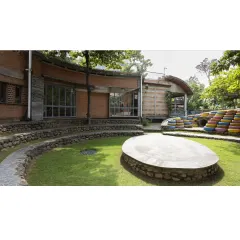
A closer look at the kindergarten courtyard at Urban Gurukul. I designed this as a safe and engaging central hub, with curved corridors and colorful details that encourage play and social interaction among the youngest students.
A closer look at the kindergarten courtyard at Urban Gurukul. I designed this as a safe and engaging central hub, with curved corridors and colorful details that encourage play and social interaction among the youngest students.
A closer look at the kindergarten courtyard at Urban Gurukul. I designed this as a safe and engaging central hub, with curved corridors and colorful details that encourage play and social interaction among the youngest students.
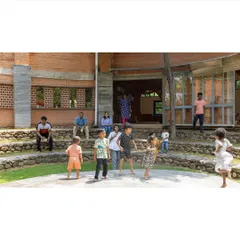
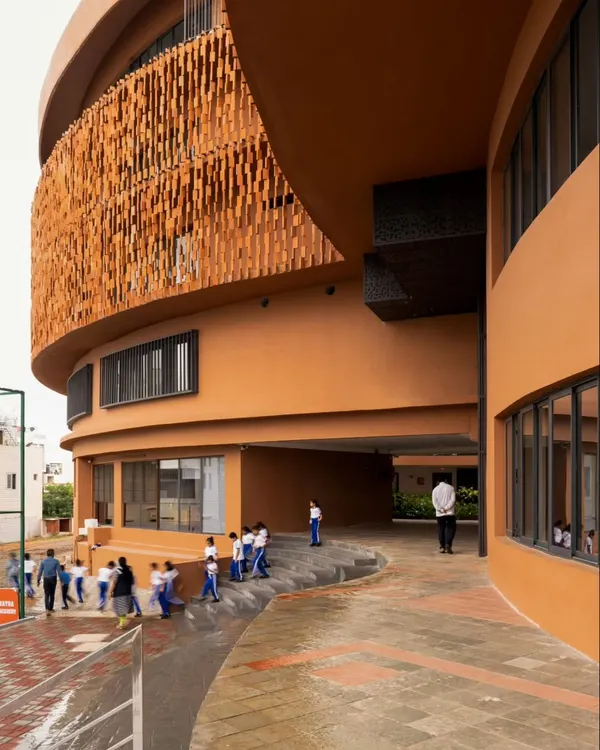
This view shows the multi-functional amphitheater staircase at Urban Gurukul, a key feature of my design for collaborative learning. It serves as a central point for student life, promoting interaction and community within the school.
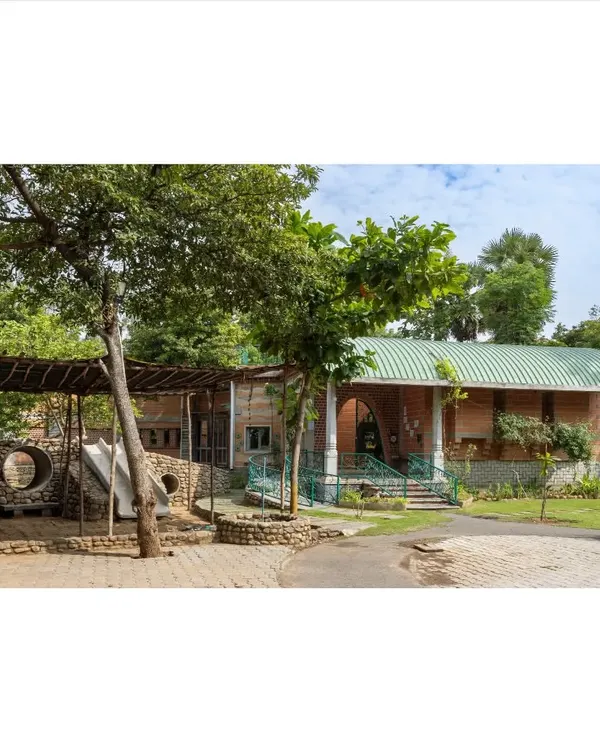
This is the Sensory Garden at Urban Gurukul, designed for hands-on, tactile learning. The space incorporates natural textures like sand and mud-plastered walls, along with play structures that allow children to explore shapes, sounds, and materials in an outdoor setting.
This is the Sensory Garden at Urban Gurukul, designed for hands-on, tactile learning. The space incorporates natural textures like sand and mud-plastered walls, along with play structures that allow children to explore shapes, sounds, and materials in an outdoor setting.
About Educational & Institutional Spaces
When I design for institutions like Urban Gurukul, my priority is passive climate control. Instead of relying on glass facades and heavy AC loads, I use site orientation and stack ventilation to keep interiors cool naturally. This is not just eco-friendly, it creates a significantly calmer, more focused environment for students compared to sealed, climate-controlled classrooms.
For educational buildings, my approach starts with the student experience. In projects like the Urban Gurukul, we move away from traditional, rigid classroom layouts. Instead, I integrate sensory gardens and tactile pathways where children interact with natural textures—mud-plastered walls and local stone—that are safe, non-toxic, and rooted in our vernacular building history.
Safety and circulation are the hidden backbones of any institutional project. I prioritize segregated traffic plans to keep children safe from vehicles, ensuring bus bays and drop-off points are completely separated from pedestrian zones. Every element, from the curved corridors that encourage social interaction to the multi-functional amphitheater staircases, is designed to support a holistic way of learning.
Whether it is a K-12 school or a specialized math lab, I focus on scalable zoning. This means planning layouts that allow for future expansion without disrupting existing classes or daily routines. We use natural rainwater harvesting and greywater recycling for landscape irrigation, treating the entire campus as a resource-efficient ecosystem.
Similar work from other experts
Browse through Curated picks from other experts on mytribe
 17
17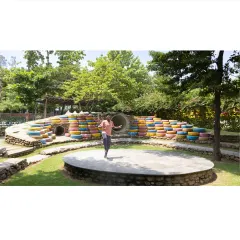
Eco-Friendly School and Learning Center Design
 61
61
Eco-Friendly School and Educational Campus Design
 43
43
Designing for Higher Learning
 15
15
Sustainable Institutional Campus Architecture Design
 9
9
Institutional and Community Architecture Services
 6
6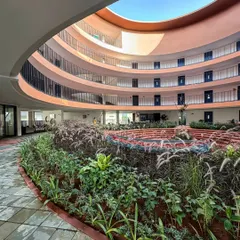
South Bangalore School: Fluid Design and Sustainable Learning Spaces
More from Sustainable Master Planning by Tropic Responses
More services by Tropic Responses