Community and Institutional Design: Function Meets Social Impact
We believe good architecture should serve everyone. Our community projects focus on creating joyful, safe, and highly functional spaces through clever planning and climate-responsive design.
For this Anganwadi, we designed a multifunctional L-shaped staircase using concrete for the lower steps and steel for the upper treads. The space underneath is cleverly used as a small garden and will eventually become a sunken sandpit, providing a shaded and engaging outdoor play area for the children.
The semi-open terrace at the Anganwadi, seen from the entrance. The design prioritizes safety with a high parapet wall and railing, while the open layout and durable terracotta flooring make it a perfect, low-maintenance space for communal activities and programs.
This render illustrates the exterior design of the Anganwadi. We used larger windows on the north side for morning light and smaller ones on the south to block harsh sun. A sandpit at the entrance and custom-designed windows with lower louvers for ventilation make the space both fun and practical.
A render showing the rooftop terrace designed for community activities. The space features a cool red oxide floor, a protective roof for shade, and built-in seating along the edges. This addition significantly increased the usable area of the school without a large expense.
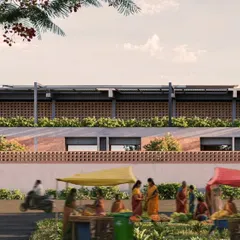
An overall view of the Anganwadi concept, showing how the building sits within its environment. The design includes a dedicated play area and easy access to the outdoors, demonstrating that thoughtful planning can create impactful spaces even with simple materials and a limited budget.
About Community & Institutional Projects
In our recent Anganwadi project, we didn't just build a staircase. We designed an L-shaped structure that doubles as a storage unit for outdoor toys, while the negative space underneath was repurposed into a sunken sandpit. It’s a perfect example of how thoughtful, multi-use planning creates more utility for a community without inflating the budget.
Designing for institutions like schools and community centers requires a delicate balance between safety, longevity, and cost-efficiency. Our approach starts with the site itself—studying sun paths and wind direction to ensure the building performs well passively. For the Anganwadi, this meant orienting larger openings to the north to capture soft morning light while minimizing south-facing windows to avoid harsh heat.
We prioritize materials that are durable yet low-maintenance. In this project, we chose red oxide for flooring because it stays cool underfoot and requires minimal upkeep, making it ideal for high-traffic communal areas. The inclusion of louvered salwood panes alongside standard glass windows was a deliberate choice for safety; it allows for continuous cross-ventilation even when the children are inside, keeping the air fresh without compromising security.
Institutional spaces shouldn't feel institutional. Whether it is a school, a lab, or a community plaza, our goal is to create environments that invite interaction and feel part of the surroundings. By integrating features like built-in masonry seating and green buffers, we maximize usable floor area and create natural shade, ensuring these spaces remain functional and welcoming for years to come. If you have an institutional project and want to see how clever spatial planning can make your budget go further, we are happy to walk you through our process.
Similar work from other experts
Browse through Curated picks from other experts on mytribe
 45
45
Educational & Community Spaces
 20
20
Architecture for Community and Social Impact
 58
58
Public & Community Architecture for Social Impact
 6
6
Designing for Education & Community: Spaces for Learning
Architectural Design for Community and Shared Spaces
 12
12
Community and Public Architecture: Designing with Purpose
More from Landscape & Urban Design by Studio Wight
More services by Studio Wight