Prop-Assisted Yoga for Precision and Alignment in Delhi
We use props like wall ropes, chairs, and yoga wheels as tools for deep investigation, not comfort. Learn how to use them to unlock your physical potential and master complex asanas with correct alignment.
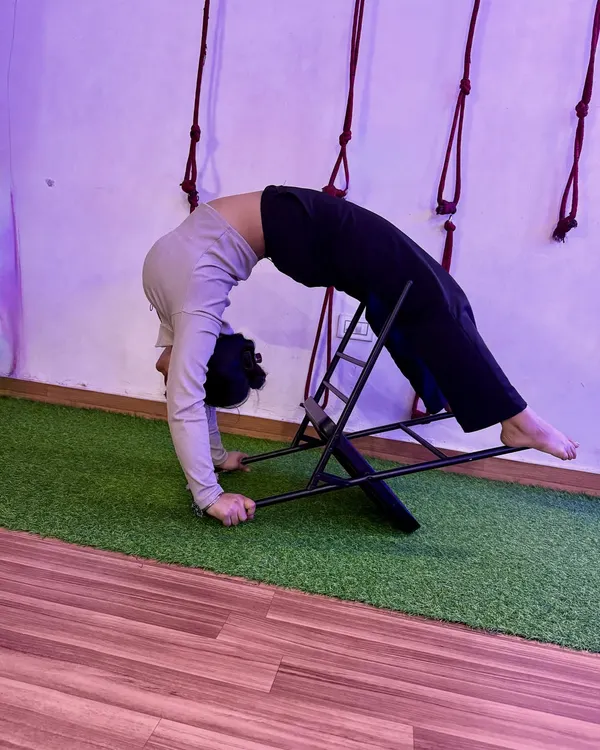
A student uses blocks and wall support to practice Chakrasana (Wheel Pose), focusing on opening the upper back. This method helps build strength and flexibility incrementally.
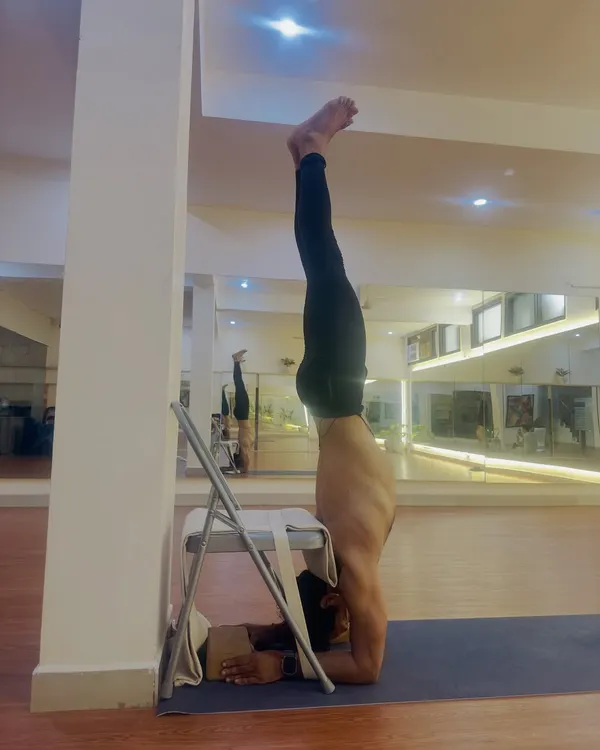
This video demonstrates how a chair and bolster can be used to support the body in Chakrasana, allowing for a longer hold and a deeper release in the spine and shoulders.
Students use yoga belts to assist with Eka Pada Rajakapotasana, helping to bridge the gap between hand and foot to achieve the full expression of the pose.
A demonstration of a chest-opening technique using a yoga belt. This simple tool helps to improve posture and increase flexibility in the shoulders and upper back.
A dynamic back-opening drill using a stability ball. This exercise helps build core strength and prepares the spine for deeper backbends.
Students use wall ropes to support and deepen their standing splits. This prop allows for greater control and a more profound hamstring stretch.
A student demonstrates incredible focus while balancing in Padmasana (Lotus Pose) on a yoga wheel, announcing our intermediate to advanced batches.
A student holds a toe-stand balance on a yoga wheel, showcasing the core strength and concentration developed in our classes.
A student practices a variation of Virabhadrasana III (Warrior III) while balancing on a yoga wheel, adding a significant challenge to a classic pose.
Using a stall bar for support, a student deepens their Anjaneyasana (Low Lunge), achieving a significant backbend and hip flexor stretch.
About Prop-Assisted Yoga: Alignment & Accessibility
Most people treat yoga props as training wheels, but here, they are diagnostic tools. When you use a wall rope to hold a standing split, you aren't making the pose easier. You are creating the necessary resistance for your muscles to actually adapt. This technique forces you to face where your body is rigid and gives you the leverage to push through that resistance safely.
In our studio, props are not optional; they are essential for mastering geometry. Whether it is using a yoga wheel to open the thoracic spine or chairs to practice inverted asanas, every prop serves a specific purpose in your anatomical training.
Why Props Are Necessary
If you want to move from beginner to advanced practice, you need to understand how your body reacts to gravity and tension. We use:
- Wall Ropes (Kurunta Yoga): These allow for traction, letting you create space in your spine that simple floor work cannot achieve.
- Chairs and Bolsters: These provide the support needed to hold therapeutic inversions longer, which helps in mastering balance and improving circulation.
- Yoga Wheels and Blocks: We use these to target specific tightness in the hips and upper back, ensuring you reach the full expression of a pose without risking injury.
Real Change Requires Effort
Props reveal the truth about your alignment. They show you exactly where you are holding back or compensating with wrong muscles. We don't use them to avoid hard work; we use them to expose your limitations so you can overcome them. If you are looking for a gentle, relaxing stretch, this is not the right place. But if you are ready to use technical tools to refine your practice, join us at our New Ashok Nagar or Mayur Vihar studios. We work hard, we use the right tools, and we demand discipline.
Similar work from other experts
Browse through Curated picks from other experts on mytribe
Supported Yoga Alignment with Props in Delhi
Master Your Practice with Yoga Props
 20
20Prop-Assisted Yoga Classes for Correct Alignment
Yoga with Props for Better Alignment and Flexibility
Yoga with Props: Precision, Support, and Alignment
 85
85
Yoga with Props: Deepen Your Practice with Better Alignment
More from Yoga Teacher Training by Sunil Yogi
More services by Sunil Yogi