The Power of Breath: Pranayama and Kriya
Your breath is your life force. This space is dedicated to the traditional practices of pranayama and kriya, designed to cleanse your system, regulate your nervous system, and prepare your mind for deeper states of meditation.
This video shows the practice of Kapalbhati, a powerful kriya or cleansing technique known as "skull shining breath." It involves forceful exhalations to purify the frontal region of the brain, energize the body, and prepare for pranayama.
You are breathing constantly but are rarely aware of it. I encourage you to take just five minutes every day to sit quietly and observe your breath. Simply watch the deep inhale and the slow, complete exhale. This simple act is the beginning of mastering your energy and your mind.
About The Power of Breath: Pranayama & Kriya
Learning techniques like Kapalbhati isn't about rushing to reach a goal; it is about the rhythm. In my sessions, we focus on the subtle mechanics of your inhale and exhale because that is where your prana (energy) actually shifts. Before you reach out, know that I do not treat breathwork as a quick fix for stress—it is a practice that requires you to sit with discomfort, observe your internal state, and consistently show up for yourself.
Understanding Breath as Practice
In the traditional method, we do not view pranayama (breath control) and kriya (cleansing techniques) as separate from asana. They are the bridge between the physical body and the mind. When you practice Kapalbhati—the 'skull shining' breath—you are not just exercising your lungs; you are purifying your frontal brain and energizing your entire being.
What Happens in Session
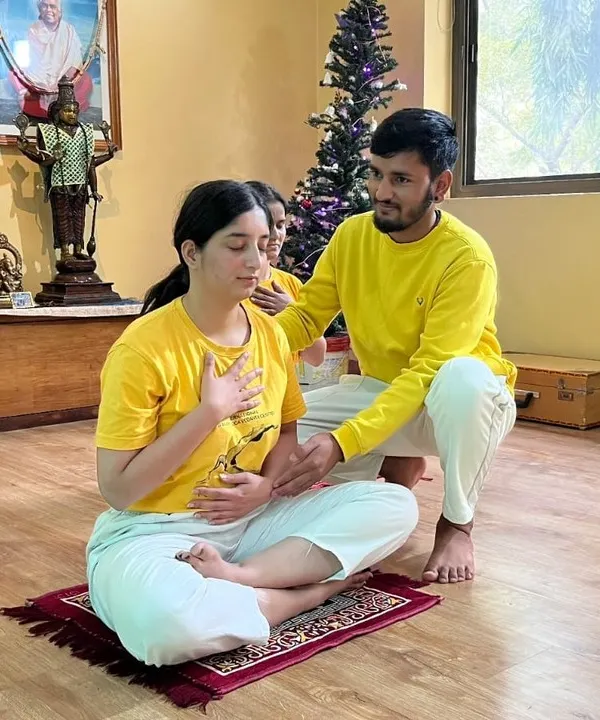
Whether you are attending a group class in Dwarka Sector 12 or a personalized Mysore-style session, we treat these techniques with care. We start with basic observation—simply watching the breath—before moving to controlled retention.
- Kriya: We use these techniques to cleanse the system, removing stagnant energy that accumulates from daily stress and poor diet.
- Pranayama: Once the body is cleansed, we introduce rhythmic breathing to regulate the nervous system. You will learn to use your Ujjayi breath as an anchor during movement and stillness.
- The Approach: There are no shortcuts, bhai. If you are new, we take it slow. You will get guidance on how to sit, how to align your spine, and how to maintain focus without strain.
Why It Matters
Consistent practice brings changes that go deeper than the surface. You will notice less mental chatter, improved digestion, and a steady sense of calm that carries over into your day. But you must practice daily. The mat is where we start, but the work happens inside.
Similar work from other experts
Browse through Curated picks from other experts on mytribe
Traditional Pranayama Techniques and Breath Control in Saket
 5
5
Pranayama Workshops for Breath Control and Energy
Pranayama & Meditation: Finding Stillness Within
 11
11

Pranayama: The Art of Conscious Breath
The Power of Breath: Guided Pranayama
Pranayama and Meditation Classes for Stress Relief
More from Ashtanga Yoga Classes by Nitesh Saini
More services by Nitesh Saini