Architecture of Care & Serenity in Healthcare
We design palliative care environments that prioritize dignity, emotional well-being, and a profound connection to nature, moving away from clinical sterility to create true sanctuaries of healing.
The canteen at the KIPCER building in Bengaluru, opening onto a tranquil water court. The design provides a calm, restorative space for staff and visitors, with stepping stones and a single tree creating a focal point.
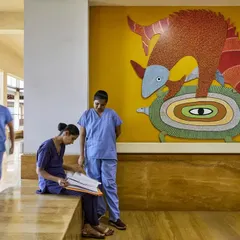
A wall mural at the KIPCER lobby, interpreting the theme of giving and receiving care. This artwork, depicting two hands reaching for each other, serves as a focal point and reinforces the hospice's mission.
A walkthrough of the Karunashraya extension, showing how natural light, water bodies, and earthy stone walls create a serene alternative to a typical hospital environment.
A view through a window-like opening at the Bagchi Karunashraya hospice in Bhubaneswar. The laterite stone walls frame a small, private courtyard, creating a moment of quiet connection with nature.
The entrance to a building at the Bagchi Karunashraya hospice, featuring a serene water body with a Buddha statue. The design uses these elements to foster a peaceful and contemplative atmosphere.
A water court at the KIPCER building, where a single tree grows from the water. The building's glass walls and open corridors look out onto this central feature, bringing nature into the heart of the structure.
The landscaped grounds of the Karunashraya extension, with wide, accessible steps leading through a garden of mature trees. The design carefully preserves the existing landscape.
The Karunashraya hospice at night, with lights from the wards reflecting in the large central waterbody. The view provides a sense of tranquility and peace.
A corridor at the Bagchi Karunashraya hospice overlooks a large water body, blurring the line between inside and outside. The design is intended to provide a serene atmosphere for residents.
The play of light and shadow on the steps and laterite walls at the Bagchi Karunashraya hospice. The use of local materials and open-to-sky spaces connects the building to its environment.
About Architecture of Care & Serenity
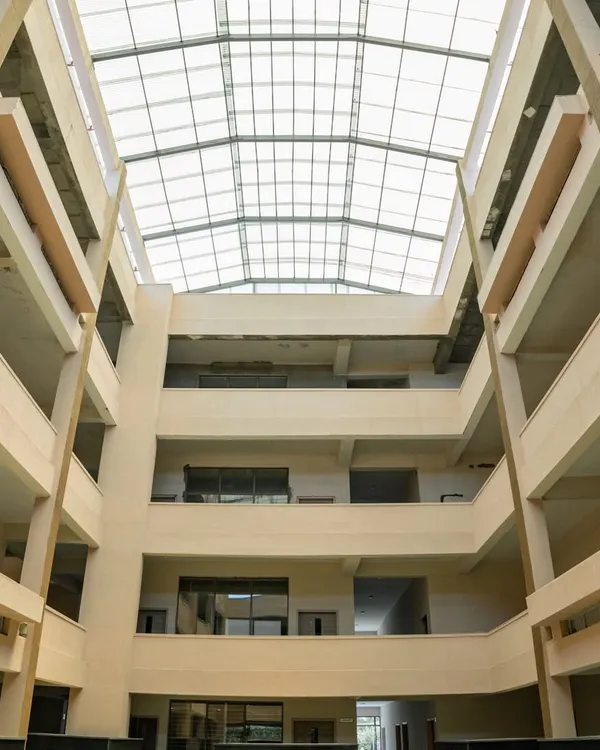
The serenity in our hospice designs is not accidental; it is achieved by balancing the weight of locally sourced grey granite and laterite stone with the fluid, shifting movement of water. We avoid the typical hospital layout, opting instead for interconnected courtyards, skylights, and double-height atriums that ensure daylight shifts constantly, keeping the interior feeling alive and deeply connected to the natural world.
Architecture as a Healing Instrument
Designing for palliative care requires a departure from traditional institutional architecture. Our approach, seen in projects like the Karunashraya extension and the Bagchi Hospice in Bhubaneswar, is rooted in the belief that space directly influences the state of mind of patients, families, and caregivers.
Instead of long, windowless corridors, we create permeable boundaries where the indoors merge seamlessly with landscaped gardens. The use of traditional materials—laterite stone and rough-hewn granite—provides a tactile, grounded experience, while strategically placed water bodies serve as the central visual anchors. These elements do more than decorate; they act as the lungs of the building, cooling the air naturally and providing a meditative focal point for those resting within.
Designing for Dignity
Every project we undertake in this typology follows a few core principles:
- Light and Shadow: We manipulate natural light to enhance the space, letting it diffuse through greenery to create moving patterns on the walls, softening the atmosphere.
- Human Scale: We avoid monolithic structures. By keeping buildings low-slung and integrated with the topography, the environment feels supportive rather than overwhelming.
- Transitions: We emphasize the journey between spaces. Covered walkways and pergolas create a gentle, rhythmic transition from open nature to the quiet privacy of individual care rooms.
Our Process
We start by listening to the site. In Bhubaneswar, we positioned the hospice on the edge of a former quarry, turning the rugged terrain into a defining feature of the landscape. By preserving the existing trees and respecting the land’s history, we ensure that the building feels like it has always belonged, allowing the architecture to recede and the patient's well-being to take center stage.
Similar work from other experts
Browse through Curated picks from other experts on mytribe
 12
12


Professional Healthcare Architecture and Medical Facility Design
 4
4

Designing Restorative Wellness Sanctuaries
 12
12
Specialized Cancer Care Centers
 9
9

Healthcare Architecture and Hospital Design Portfolio
 14
14
Healthcare Architecture: Creating Spaces for Healing
 8
8
Biophilic Architecture: Integrating Light, Air, and Nature
More from Educational & Institutional Architecture by Mindspace
More services by Mindspace