Architectural Interventions at IIM Bangalore
For over twenty years, we have been part of the evolving narrative of IIM Bangalore. Our work focuses on respecting the architectural language established by B.V. Doshi while introducing contemporary interventions that foster community and scale.
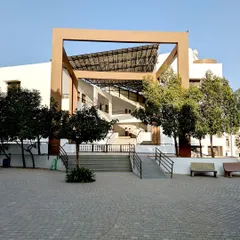
The entrance to the new hostel block at IIM Bangalore, showing how the G+4 structure is scaled down with a recessed upper floor and a stone-clad base to feel less intimidating and blend with the campus.
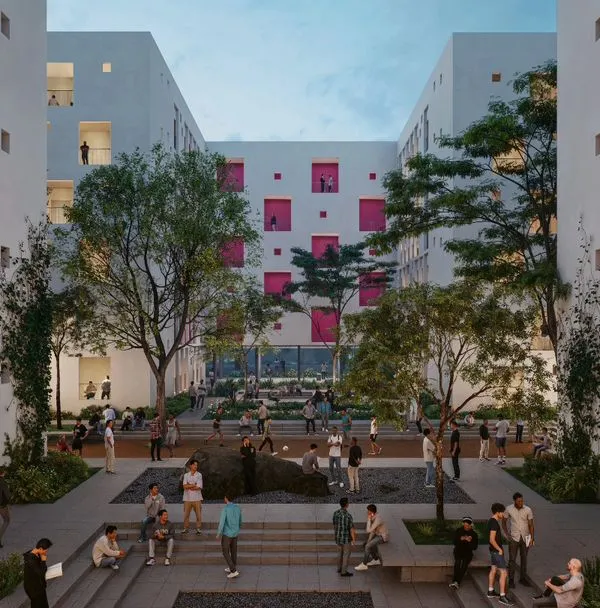
A view into the central courtyard of the new hostel from the entrance plaza. The design preserves existing trees, making them integral to the architectural experience and creating a tranquil green heart for the student community.
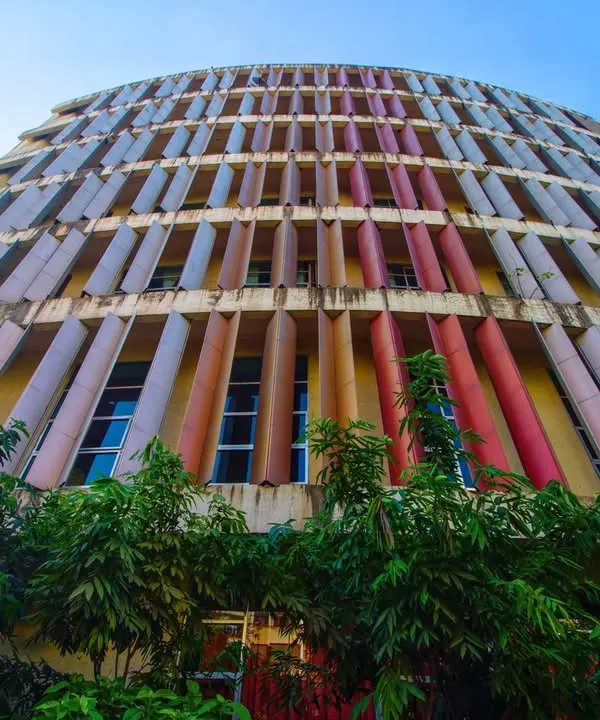
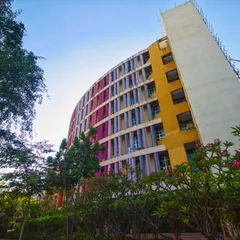
The cascading facade of the new IIM hostel, where higher floors are receded to reduce the building's perceived height. This design choice helps the four-storey structure sit comfortably within the predominantly low-rise campus.
The interplay of exposed concrete and stone masonry at the new IIM hostel. This material strategy was a deliberate choice to connect with the older buildings on campus while using contemporary construction techniques.
The central courtyard of the new hostel is a classic and successful design strategy for community living. It accommodates existing trees and is surrounded by rooms and common areas, creating a vibrant, interactive core.
A stone wall wraps around the new hostel building, responding to the prevailing design language of the IIM Bangalore campus. The main building uses exposed concrete and Tandur stone flooring for a neutral, modern palette.
The facade of the new hostel block, viewed through the campus's lush foliage. Large windows and balconies for every room were a key part of our design to ensure ample natural light and a connection to the outdoors.
The paved plaza and courtyard at the IIM hostel, designed to be a porous and inviting transition space. The integration of trees within the hardscape softens the area and provides shaded spots for students to gather.
A walkway along a sunken court at the new IIM hostel. The design uses split-levels and varied pathways to create a dynamic journey through the building, encouraging movement and informal interactions.
The interior of the IIM Bangalore classroom complex, featuring floating glass discussion rooms. These spaces overlook the central areas, allowing for a play of light and visual connectivity between different levels.
About IIM Bangalore: A Legacy Continued
Designing at IIM Bangalore requires operating under a high yardstick, where the primary challenge is to avoid sameness while ensuring new structures feel like they belong. We focus heavily on the junctions where our modern exposed concrete work meets the older, stone-clad legacy buildings. By using subtle design shifts, such as geometric light patterns instead of linear ones, we define our own era without disrupting the campus rhythm.
Our journey at IIM Bangalore has been one of continuous learning. We treat every project as an opportunity to breathe new life into the space while respecting its existing character. The goal is to avoid shouting with our architecture; instead, we aim for the 'Deewar' quality—a presence that is quiet but felt.
The Challenge of Continuity
When we began working on the new hostel block, the site had specific constraints. We chose a G+4 structure to maintain a human scale, ensuring it did not feel intimidating. By recessing the upper floors, we created a cascading effect that helps the building sit comfortably within the low-rise campus context. The choice of exposed concrete was deliberate, providing a neutral palette that allows the building to exist in conversation with, rather than competition against, the historic stonework.
Designing for Connection
In our classroom complex, the design serves as a bridge between the old and the new. We recognized that the central pergola was a cherished element, so we introduced a grand staircase in our design. This staircase serves as a vibrant spillover space for students, much like the pergola serves the original academic blocks. These spaces are not just functional; they are nodes of interaction where students share ideas and build community. We prioritize these transition zones, using split-levels and courtyards to encourage movement and informal gathering.
Materials and Light
We avoid blindly copying the past. For instance, in our later interventions, we introduced aluminum pergolas and square light patterns. These choices are specific indicators of the time they were built, distinguishing the new work from the original structures while maintaining a cohesive, overall identity. Sustainability is woven into this approach, with north-south orientations and natural ventilation strategies ensuring that our buildings remain comfortable and energy-efficient throughout the year.
Similar work from other experts
Browse through Curated picks from other experts on mytribe
 6
6
Featured Institutional Projects
 15
15
Architecture and Design That Tells Your Story
 4
4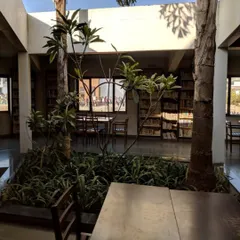
Institutional Architecture and Campus Design
 8
8
Featured Architectural Projects and Design Philosophy
 5
5
Designing for Learning & Community: Porous Architectural Campuses
 6
6
Institutional & Adaptive Reuse Architectural Design
More from Educational & Institutional Architecture by Mindspace
More services by Mindspace