Terrain-Responsive & Sustainable Design
We approach architecture as a dialogue with the natural landscape, where the site's topography serves as the primary driver for sustainable, context-driven design.
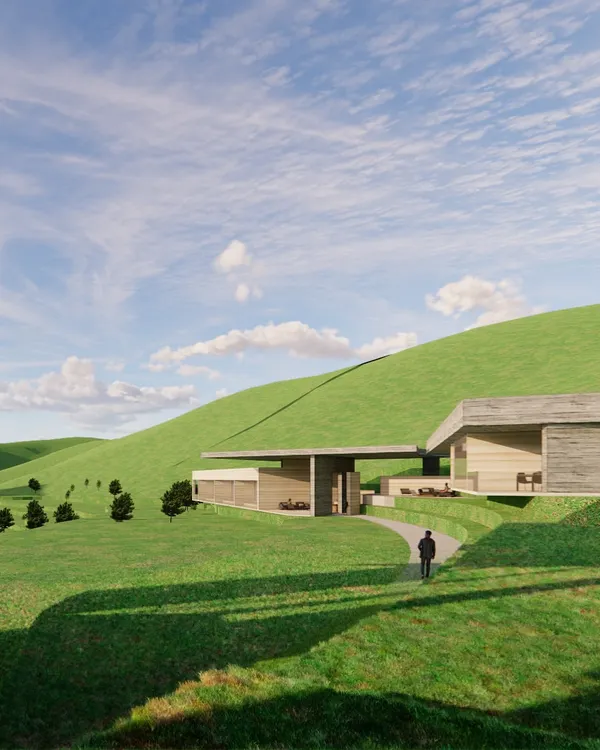
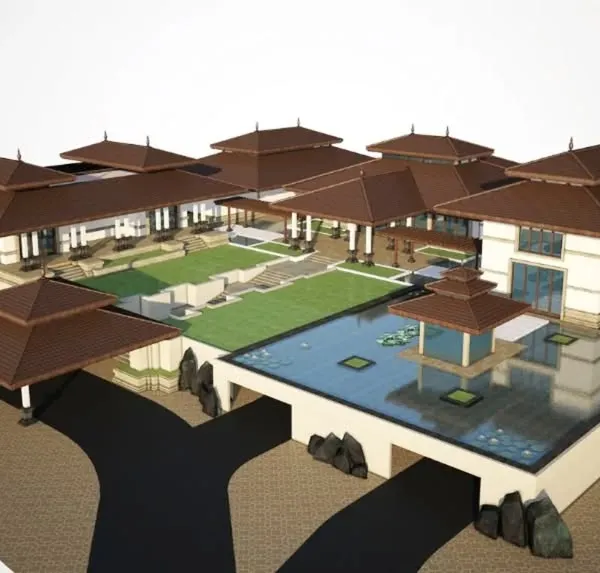
This clubhouse design creates harmony through contrast, juxtaposing nature and structure. The floating pavilion and terraced water features are crafted to create levels of peace without disturbing the land’s natural topography, offering a journey through a serene landscape.
A seamless spatial progression defines this clubhouse, where double-height volumes open to expansive outdoor views. The architecture is designed to integrate the built and natural environments, creating dynamic levels within a lush, green setting complete with a waterfall feature.
This video details the final zoning for the clubhouse project. The refined L-shaped volume enhances spatial transitions, while green roofs and walkable spaces reinforce sustainability. The design thoughtfully balances privacy and openness to create a dynamic, immersive experience.
Part one of the zoning process for the clubhouse shows the evolution of the design. The programmatic zoning led to an L-shaped massing, which was then stepped down into the terrain to create a semi-basement, seamlessly integrating the structure with the site.
Arte is a new multi-dwelling typology in North Goa featuring interlocking two-bedroom blocks. Ground floor units enjoy gardens and pools, while first-floor units have large terraces and rooftop pools, offering a diverse and layered living experience.
This diagram unveils the typology for Arte Apartments in Goa. The units are stacked like modules in a game, creating spacious, open layouts that redefine artful living while paying homage to Goa's architectural charm.
This exploded axonometric view shows the interlocking floor plans of Arte Apartments. Each unit is designed for a diverse experience, with living spaces and bedrooms distributed across levels to maximize both privacy and connection to shared amenities like gardens and pools.
Introducing Sea Sky Villa, a residential project on the evolving border of Maharashtra and Goa. Built on challenging terrain, the design focuses on sustainability while capitalizing on uninterrupted views of the sea and sky, showcasing how nature can shape the walls of a home.
An aerial view of the Sea Sky Villas construction site in Tiracol. The project is located where the land and sea combine, and the design responds directly to this unique ex-urban context, creating sustainable homes that are one with their environment.
This aerial shot captures the ongoing construction of the Sea Sky Villas. The design is deeply rooted in a respect for its natural surroundings, weaving inspiration from the environment into every detail of the space to shape a truly unique living experience.
About Terrain-Responsive & Sustainable Design
When we encounter challenging gradients, our strategy avoids the traditional approach of extensive excavation. Instead, we utilize techniques like stepped L-shaped massing and semi-basement configurations to nestle the structure into the land. This requires more precise early-stage planning, but it creates a built environment that feels naturally anchored to its specific topography rather than an imposition upon it.
Architecture is often treated as an object placed upon a site, but our practice views the site as a participant in the design. Whether working on coastal hillsides in Goa or dense urban contexts in Mumbai, our approach remains anchored in environmental responsibility and spatial efficiency.
Working with the Gradient
Our work, such as the Sea Sky Villas in Tiracol, relies on respecting the existing terrain. By adopting split-level sections and floating decks, we reduce the ecological disruption caused by site leveling. This method preserves natural drainage paths and minimizes the carbon footprint typically associated with heavy concrete retaining walls and soil stabilization.
Typologies for Contextual Living
In our residential master planning, specifically projects like Arte in North Goa, we explore modularity to improve living quality. By interlocking units, we ensure that every residence benefits from cross-ventilation and natural daylight, reducing dependence on mechanical climate control. These interventions allow us to create high-density living spaces that feel private, airy, and deeply connected to their surroundings.
The Functional Landscape
Sustainability is not merely an add-on; it is built into the form. We prioritize green roofs for their thermal mass benefits and use local materials to ensure the structure resonates with the region's climate. Our focus is on creating spaces that age with grace, minimizing long-term maintenance while maximizing the connection between the inhabitant and the natural environment. Each project is an exercise in restraint, aiming to reveal the latent potential of the land.
Similar work from other experts
Browse through Curated picks from other experts on mytribe
 7
7
Featured Architectural Projects: Buildings Rooted in Nature
Architecture in Nature's Embrace: Design That Resonates
 8
8
Architectural Designs in Dialogue with Nature
 9
9
Biophilic Architecture and Nature-Integrated Design
 10
10
Bringing Nature Into Your Built Spaces
 26
26
Sustainable and Biophilic Residential Designs
More from Urban Design & Master Planning by Jugal Mistri Architects
More services by Jugal Mistri Architects