Our Design Process: From Vision to Reality
Architecture is a dialogue, not a monologue. Our process turns your vision into a measurable, sustainable, and functional reality through rigorous collaboration and technical precision.
Every design evolves through dialogue. This video shows the transformation of a project from the architect's initial vision to the client's vision, demonstrating how collaboration and conversation reshape the design into its final, resolved form.
From render to reality. This short video shows the seamless transition of our design for the JSW Towncenter from a digital visualization to the final built structure, showcasing our ability to bring every detail of the vision to life on site.
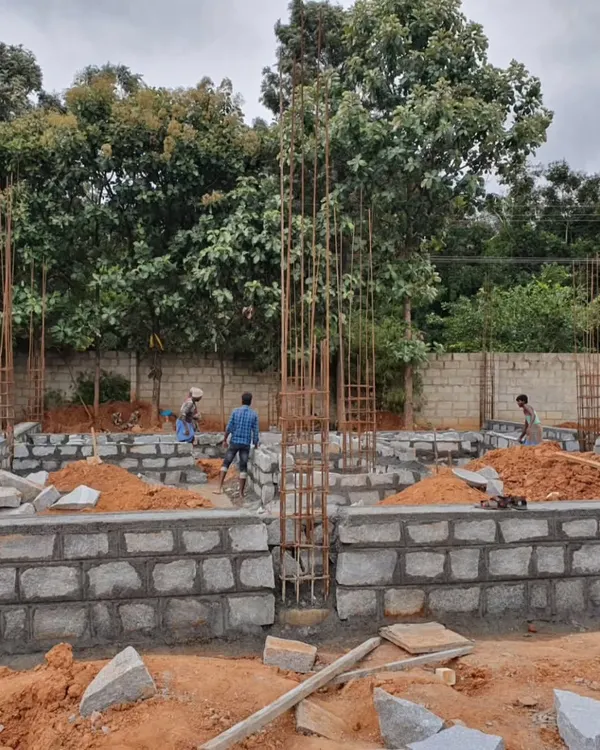
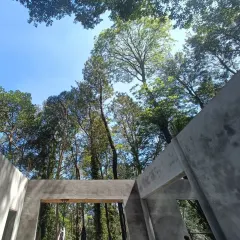
A glimpse into the construction journey of the RCL School. This video documents the site's progress, from laying out the ground lines and casting columns to the emergence of the first-floor structure, showing how learning spaces take shape.
A before-and-after sequence at JNMC Wardha, where an enclosed, underused space was cleared and transformed into an open, functional area. This highlights our process of revitalization and finding potential within existing structures.
The journey from visualization to the built space in the inviting lobby of JNMC Wardha. This comparison shows how the initial render, with its focus on light and openness, was faithfully executed in the final construction.
Another "From Vision to Completion" moment at JNMC Wardha, showing the transformation of a concept into a finished architectural space. The final lobby, with its clean lines and connection to the outdoors, perfectly matches the initial visualization.
This exploded axonometric drawing of the Sona University Library illustrates the layered spatial hierarchy of the building. It's a key tool in our design process for visualizing how diverse functions can be stacked vertically to create a cohesive whole.
An architectural elevation drawing of the Sona University Library. This type of drawing is crucial for studying the building's proportions, materiality, and overall visual impact before construction begins.
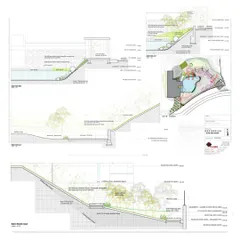
A section drawing through the academic building at Symbiosis International University. It details our sustainable design strategies, including terrace gardens and metal screens to minimize heat gain, and multi-level courtyards built in harmony with the site's contours.
This section drawing from Symbiosis University highlights key design principles: open staircases to increase interaction, deep projections for shaded corridors, single-loaded corridors for ventilation, and biophilic designs to connect occupants with nature.
About Our Process: From Vision to Reality
We utilize a structured 'SCRUM' design methodology to ensure total alignment before any construction begins. By combining stakeholder workshops, climate analysis, and feasibility studies, we validate your project's potential early on, preventing common pitfalls and ensuring that the final structure remains a true reflection of the initial agreed-upon vision.
Our journey from concept to built structure follows a disciplined, three-stage framework designed to manage risk and maximize human impact.
1. Feasibility and Concept 'Sprints'
Everything begins with alignment. We conduct intensive workshops where stakeholders vote on functional priorities and define the essential goal of the project. This is not just brainstorming; it is a technical exercise to check Development Control Regulations, perform block cost estimations, and create massing models that test height and shadow impacts. This phase delivers a final 'Go/No-Go' report, validating the project's viability before significant capital is committed.
2. Technical Resolution and Sustainability
Once the concept is locked, we move into detailed design. This is where architecture becomes engineering. Our team integrates biophilic strategies—such as vertical gardens and courtyards—with hard technical requirements like acoustic paneling for auditoriums and climate-responsive facade shading. We use sun-path and wind-direction studies to orient buildings for passive cooling, ensuring comfort without over-reliance on mechanical systems.
3. Execution and Coordination
Good design requires diligent oversight. We manage the integration of Structural, HVAC, Electrical, and Plumbing (MEP) consultants to ensure the project remains coherent. Our work includes producing full Good-for-Construction (GFC) drawing sets and periodic site observations at key milestones—plinth, slab, and finishing—to maintain design fidelity until the last detail is completed.
Similar work from other experts
Browse through Curated picks from other experts on mytribe
 14
14
Our Architectural Design Process: From Concept to Construction
Our Design Process and Architectural Concepts
 16
16
Our Architectural Design Process
Our Architectural Design Process: From Concept to Reality
Our Architectural Design Process: From Concept to Completion
Our Architectural Design Process: From Sketch to Structure
More from Institutional & Public Architecture by IMK Architects