Master Inversions & Arm Balances with Traditional Ashtanga
Building arm strength and balance takes patience, not just effort. Join us to learn the mechanics of inversions safely with traditional Ashtanga techniques, props, and hands-on guidance.
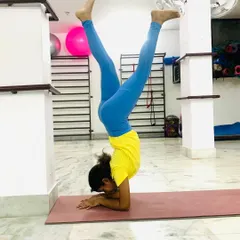
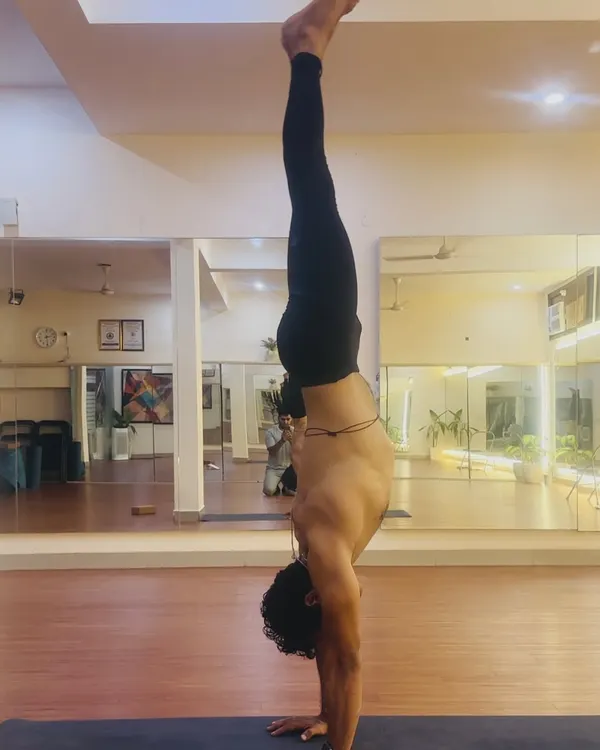
Live your life, do what gives you freedom. For me, that's finding balance in an arm balance like this Pincha Mayurasana. It's a practice of strength, focus, and liberation.
Padma Mayurasana, or Lotus in Peacock Pose, is an advanced arm balance. It requires great arm and abdominal strength, plus a keen sense of balance. We build up to poses like this with dedicated practice.
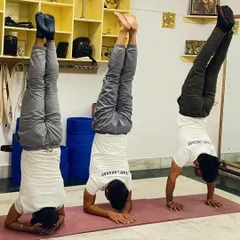
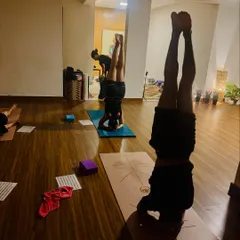
"Yog se he hoga." This is true for everyone, from beginners to advanced practitioners. Here, students are practicing different variations of inversions and arm balances during a group class.
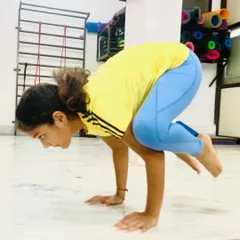
"Let's try." This is the attitude we encourage in class. Here, a student is preparing to practice an arm balance using blocks for support, building strength and stability step by step.
Age is just a number. This video shows a student demonstrating incredible strength and control in a forearm balance variation. Regular practice can truly do wonders for your body and mind.
To live a full life, you have to keep moving, no matter how. This clip shows a student practicing a challenging one-handed arm balance, a testament to her dedication and strength.
Taking care of my body, mind, and soul with some yoga in the park. Here I am practicing an arm balance on blocks, finding strength and stillness in nature.
About Inversions & Arm Balances: Finding Strength & Focus
Inversions like handstands and arm balances like Padma Mayurasana are not about brute force; they are about leverage, core control, and knowing how to use blocks for safety. We strip away the fear in our workshops by breaking down the anatomy of each pose, using Iyengar-style props to support your alignment, and following the traditional Sanskrit count to keep your breath steady and focus sharp.
Why Props Matter
We often see students rushing into poses, but that is where injury happens. Props like metal chairs, blocks, and straps are not shortcuts; they are tools that allow you to hold an alignment long enough for your muscles to understand what 'correct' feels like. Whether you are working on your first crow pose or refining a pincha mayurasana, we adjust the practice to your body, not the other way around.
Our Workshop Methodology
Our sessions are capped at 10 to 15 participants. This size is intentional. It allows us to provide real-time, hands-on physical corrections. You will hear us counting in Sanskrit—Ekam, dve, trini—to keep the rhythm of your practice consistent, which is crucial for building the endurance required for advanced arm balances.
What to Expect
- Anatomy Focus: We explain which muscles (core, shoulders, back) need to be active so you don't dump weight into your joints.
- Step-by-Step Progression: We don't just jump into handstands. We condition the wrists, shoulders, and core first.
- Community Vibe: Laughter is a core part of our practice. Even when the work is hard, we keep things lighthearted because, as we say, sabse acchi therapy hai hasna (the best therapy is to laugh).
If you are ready to move past the basics, come join us for a session at our Vikaspuri or Dwarka Mor studios. Yog se he hoga.
Similar work from other experts
Browse through Curated picks from other experts on mytribe
Advanced Inversions & Arm Balance Yoga in Paschim Vihar
Inversions and Arm Balance Yoga Workshops
 56
56
Advanced Inversions and Arm Balances Workshops
Mastering Advanced Arm Balances and Real Strength
Advanced Practice: Inversions & Arm Balances
Advanced Yoga Poses and Technique Workshops
More from Yoga Workshops and Retreats by Ashtanga Yoga Shala
More services by Ashtanga Yoga Shala