Advocacy for Women's Rights & Gender Justice
I use the law not just in courtrooms, but as a tool to dismantle patriarchal mindsets and secure dignity for women. Here is my work fighting for those who have been silenced.
I strongly condemn the regressive statement by actor Chiranjeevi about wanting a grandson to carry on his legacy. Such remarks from influential figures reinforce patriarchal norms, undermine progress in gender equality, and can even contribute to domestic abuse against women who do not produce sons.
In this TEDx talk at Oxford, I expose the grim reality of dowry deaths in India, where a bride is killed every hour. I highlight how police corruption often allows these murders to be misclassified as "accidental kitchen fires," preventing justice for the victims and their families.
On the "Meri Saheli" podcast, I share the shocking statistic that 23 married women die from dowry-related violence every 24 hours in India. The law, Section 498A, was created to prevent these tragedies, and it is the duty of law enforcement agencies to ensure it is not misused but applied to protect vulnerable women.
I discuss the failure of internal complaints committees for sexual harassment in the private sector. I share a case where the chairperson of an ICC was terminated after she found an executive head guilty, showing how these committees lack the independence to deliver justice.
The debate on criminalizing marital rape is complex, as it occurs within the four walls of a home with no witnesses. While I am a lawyer first, not just a feminist, I believe we must find a way to address this issue without creating a law that is impossible to prove and prone to misuse.
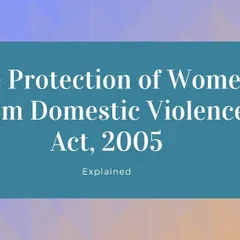
The Domestic Violence Act is a powerful tool that gives women the right to reside in their shared household. I have personally used this law to secure a protected space for abused women within their in-laws' homes, ensuring they can live with dignity.
Change begins at home. In this Humans of Bombay podcast, I stress that mothers must teach their sons to respect women and should never lie to protect them if they commit a crime, as seen in the Shakti Mill gang rape case.
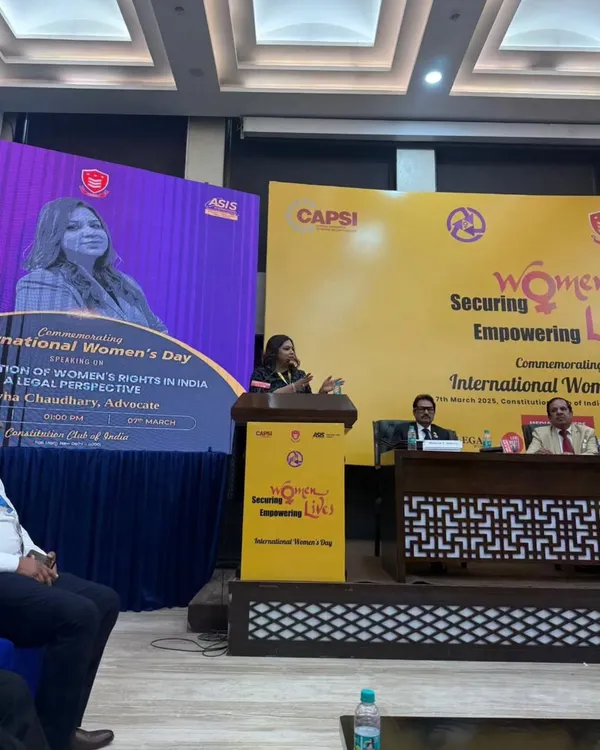
A poster for a panel discussion where I spoke on whether women's rights are just paper promises. My work is dedicated to ensuring these rights translate into real, tangible change on the ground.
An invitation for a Facebook Live session with Rajasthan Patrika, where I urged women to break their silence on crimes committed against them. Speaking up is the first and most crucial step towards justice.
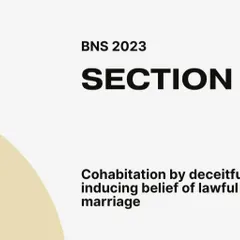
This graphic explains my stance on a Bombay High Court ruling regarding cruelty in marriage. It is crucial to distinguish between serious abuse and household disagreements to prevent the misuse of laws like Section 84 of the BNS, which were created to protect women.
About Advocacy for Women's Rights & Gender Justice
When we talk about domestic violence or workplace harassment, people often think the law will automatically protect them. It does not. I have seen countless cases where a lack of understanding regarding the Domestic Violence Act or the misuse of Section 498A leads to more harm than justice. You need to know how to document your situation, when to file, and why reacting only with emotion can weaken your standing in court. Approach the system with a strategy, not just a complaint.
My practice is built on a simple reality: the law is only as strong as the evidence you bring to it. Whether it is navigating the intricacies of the Domestic Violence Act to secure a share in a household or challenging the systemic bias in internal complaints committees, I operate with a focus on ground truth.
Beyond the Courtroom
I do not just litigate; I educate. You will see me dissecting legal loopholes on national media or speaking at law schools. This is about making justice accessible and removing the shroud of secrecy that surrounds legal proceedings.
Addressing the Misuse of Law
We must be honest. Laws like Section 498A were designed to save women from dowry violence, yet they are often used as tools for personal vendetta. My role is to fight for the victim, not the noise. I emphasize that clear documentation and following due process is what wins cases, not just anger. I am a lawyer first, and I fight for what can be proven.
Systemic Change
From challenging regressive comments by public figures that normalize domestic abuse to pushing for accountability in the corporate sector, my work is about changing the societal framework that allows these issues to fester. We must stop protecting the aggressors, whether it is a family member or a colleague. If you are facing a violation of your rights, consult a professional who understands that the law is not just paper—it is a weapon for those who know how to wield it.
Similar work from other experts
Browse through Curated picks from other experts on mytribe
Advocating for Women: Legal Rights & Equitable Justice
 12
12
Advocacy for Women's Rights and Legal Safety
Legal Support for Protecting Women's Rights
The Fight for Gender-Neutral Justice


Championing Women's Rights and Legal Support

Protecting Your Legal Rights: Guidance for Men and Women
More from Public Speaking & Media Advocacy by Abha Singh
More services by Abha Singh