Learning by Doing: The Montessori Way
We believe children learn best when they explore, touch, and discover at their own pace. See how our hands-on Montessori method turns natural curiosity into real understanding.
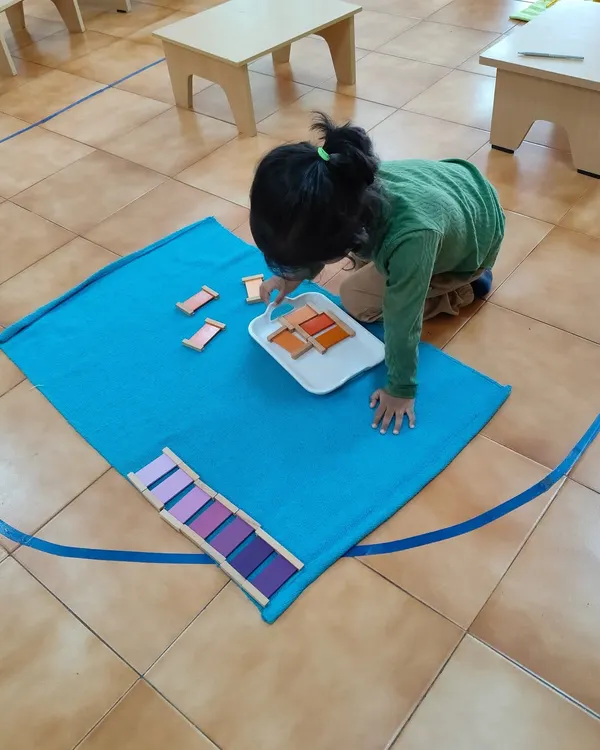
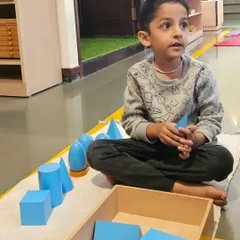
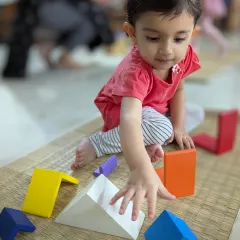
A child learns about geometric shapes not from a book, but by physically handling and sorting them. This is explorative learning in its purest form.
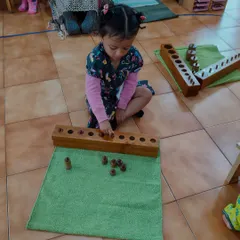
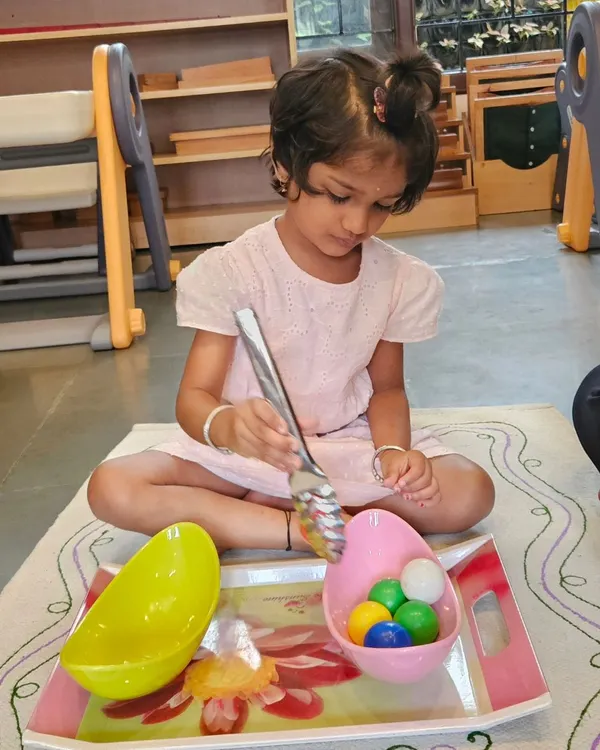
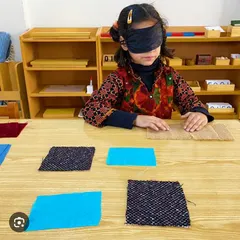
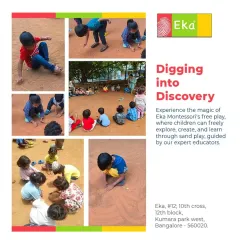
Messy hands mean a busy, learning brain. Here, a child engages in a sensory sifting activity, developing fine motor skills and an understanding of textures.
We don't just give answers; we spark wonder. This child is exploring the properties of water, a hands-on science experiment driven by her own curiosity.
This is the Chimes way. A child engages with a dressing frame, learning the practical skill of weaving and developing the concentration needed for more complex tasks.
We follow the child, and here, we don't hurry childhood. This video shows a child deeply focused on a shape-sorting activity, a perfect example of unhurried, child-led learning.
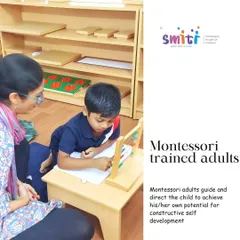
Design thinking starts early here. A child uses the classic Montessori Red Rods to create his own geometric pattern, moving beyond the initial lesson to explore his own creativity.
Through activities like creating with Long Rods, children develop spatial awareness, concentration, and creative thinking. This is math and art combined.
Watch as a child carefully constructs a maze with the Red Rods. This self-directed play builds problem-solving skills and an intuitive understanding of length and dimension.
The process of building and creating with the Red Rods continues, showing the child's sustained interest and deepening focus on his architectural design.
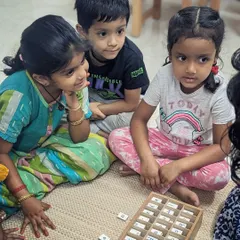
In our unhurried environment, a child finds joy and calm while working with number boards. This activity builds number recognition and sequencing skills in a tangible way.
About Learning by Doing: The Montessori Way
Instead of relying on abstract worksheets, we focus on authentic, tactile materials like Nienhuis-style red rods and number boards. Because we maintain a mixed-age classroom, you will frequently see older children demonstrating a task to a younger peer, which reinforces their own mastery while building empathy and confidence in both children.
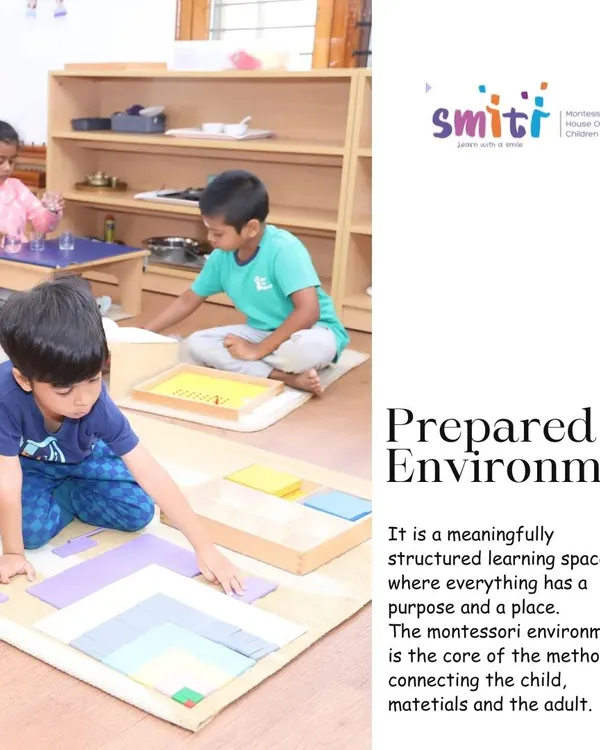
At Chimes, we don't lecture; we guide. Our 10,000 sq ft facility in Basavanagudi is designed as a 'prepared environment' where every material is accessible and purposeful.
Practical Life Skills
We start with the basics—pouring, scrubbing, buttoning, and food preparation. These aren't just chores. They build the concentration, fine motor skills, and hand-eye coordination necessary for the academic work that follows. When a child masters the skill of cleaning their own spill, they gain a profound sense of independence.
Sensorial & Math Foundations
We turn abstract concepts into concrete experiences. When a child works with Golden Beads, they aren't memorizing equations; they are physically feeling the difference between units, tens, and hundreds. This tactile interaction creates a lasting memory of how numbers function.
The Value of Unhurried Time
We follow the child. If a student decides to spend an hour focused on a shape-sorting activity or water play, we respect that flow. This is how they build deep, lasting attention spans. In a world that often rushes children to the next milestone, we provide the time and space for them to truly own their learning.
A Community of Learners
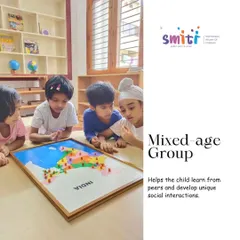
Our mixed-age group (2-6 years) is intentional. By working alongside older peers, younger children learn through observation, while older children develop leadership skills by helping others. It creates a natural, family-like ecosystem where collaboration, not competition, is the standard.
Similar work from other experts
Browse through Curated picks from other experts on mytribe
 59
59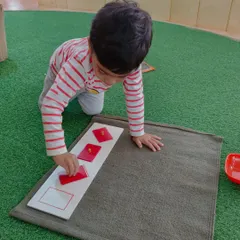
Hands-On Montessori Learning: How Children Build Real Skills
 34
34
The Montessori Method in Action
 8
8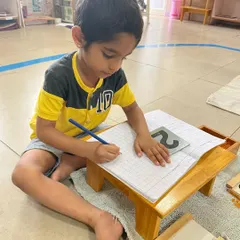
Hands-On Montessori Learning for Children

Hands-On Learning with the Montessori Method
The Montessori Method in Action
 54
54
The Montessori Method in Action
More from Afternoon Montessori Program by Chimes Montessori
More services by Chimes Montessori