The Art of Sustainable Design: Architecture Principles
Good architecture goes beyond aesthetics. It follows fundamental principles like harmony, proportion, and pattern to create spaces that breathe, look beautiful, and respect the land.
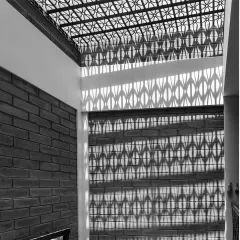
This image illustrates the principle of Pattern. The jali (screen) creates a beautiful, repeating pattern of light and shadow on the wall, transforming a simple staircase into a dynamic space.
This shows the principle of Emphasis. The circular window, set within a raw brick wall, becomes an immediate focal point, drawing the eye and framing a view of the trees outside.
An example of Contrast. The vibrant blue louvered door stands out against the neutral tones of the white wall and the earthy texture of the exposed brick arch, creating visual interest.
This window demonstrates Symmetry. The design of the jali and the window frame are mirrored, creating a sense of order and balance.
This facade illustrates Proportion. The size and placement of the gate, the brick wall, and the upper floor are carefully balanced to create a cohesive and visually pleasing composition.
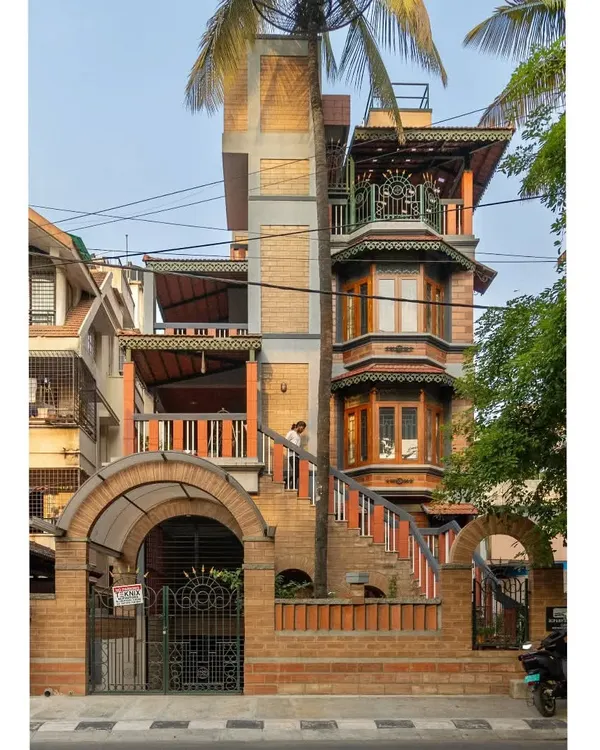
This building showcases Harmony. The repetition of the earth block material, the consistent color of the railings, and the rhythm of the staircase create a sense of unity across the entire structure.
An example of Repetition. The terracotta pots in this filler slab ceiling create a strong, rhythmic pattern that is both decorative and functional.
Harmony is achieved here through the cohesive use of white plaster, stone, and a simple, strong form.
The elements of this facade, from the brickwork to the arches and parapet, work in harmony to create a unified design.
The consistent use of materials and color in this staircase creates a harmonious visual experience.
About The Art of Sustainable Design
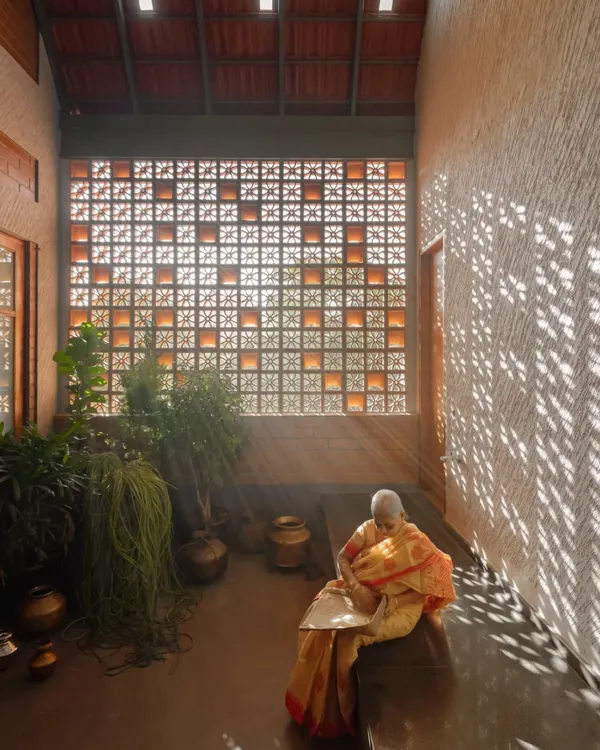
When we look at design principles like 'Pattern,' we don't just think about how a wall looks; we use elements like jali screens to naturally filter light and air. It is a decision that balances form and function—you get a stunning play of light and shadow in your living room, while the screen actively reduces heat and maintains privacy, replacing the need for conventional, energy-intensive cooling.
Architecture as a Dialogue with Nature
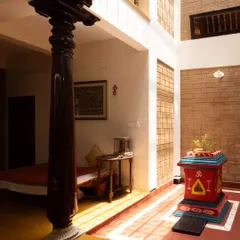
Designing a home that belongs to the tropics requires a deep understanding of geometry and material science. When I talk about 'Harmony' or 'Repetition,' I am not just referencing abstract theory. I am talking about the rhythm of a filler slab ceiling or the way our Compressed Stabilised Earth Blocks (CSEB) create a consistent, natural texture across a facade.
The Principles in Practice
- Pattern and Light: Through the use of intricate jali work, we manipulate daylight. These screens aren't just decorative; they are climate-responsive tools that break down harsh sunlight into a soft, dappled pattern, keeping interiors cool.
- Emphasis: Every home needs a focal point. Whether it's a circular window framing the trees outside or an exposed brick archway, we define spaces by guiding the eye, which helps establish a sense of perspective and scale in an otherwise open layout.
- Proportion and Scale: We believe in designing for the human scale. By balancing the height of columns with the span of our roofs, we ensure that a home feels welcoming and intimate, rather than overwhelming.
Why Vernacular Matters
My practice is built on using the earth from the site itself. By applying these design principles to vernacular materials—like Mangalore tiles, lime finishes, and stone—we create structures that are self-sufficient. We skip the plaster, avoid heavy cement, and rely on passive cooling to keep your home 3-5 degrees cooler naturally. It is about creating a space where the architecture doesn't just sit on the land; it is a part of it.
Similar work from other experts
Browse through Curated picks from other experts on mytribe
 9
9


Nature-Inspired Architectural Design Philosophy
 8
8
Featured Architectural Projects and Design Philosophy
 8
8
Sustainable Architectural Design & Nature-Inspired Interiors
 10
10
Featured Architectural Projects
 8
8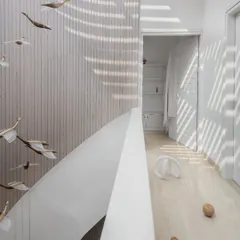
Our Architectural Journey
 8
8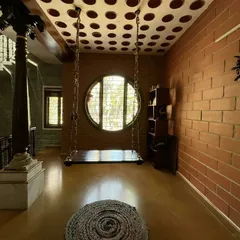
Eco-Friendly Homes That Breathe With You
More from Sustainable Architecture by Tropic Responses
More services by Tropic Responses