Mastering Advanced Taekwondo Kicks and Techniques
Ready to take your skills to the next level? I break down the mechanics of complex spinning and jumping kicks, from the tornado kick to the jumping side kick, with the same technical focus I teach in my Malad West dojang.
A step-by-step tutorial on the jumping side kick. I explain the importance of bringing the knee to the chest, turning the base leg, and striking with the heel for maximum power and correct form.
This drill is designed to build the strength and coordination needed for higher jumps and spin kicks. It involves exercises to strengthen the hips and legs for better, more powerful kicks.
I lead the class in practicing the basics of the jump back kick (Ttwieo Dwi Chagi). This is a powerful move that requires coordination, timing, and explosive strength.
A tutorial on the Axe Kick (Naeryeo Chagi). I explain the key details: bringing the thigh to the chest, keeping the knee high, and striking down with the heel for an effective technique.
A thumbnail for my YouTube tutorial on the four basic kicks for beginners. Mastering these fundamentals is the first step on the path to more advanced techniques.
Here I am demonstrating the Butterfly or Tornado Kick (Dolgae Chagi). I break down the turn, the jump, and the kick, showing how to generate momentum for this impressive spinning technique.
A tutorial for the Push Kick (Mireo Chagi) during an outdoor training session. This is a fundamental kick used for creating distance and disrupting an opponent's balance.
About Advanced Kick Tutorials
Most students struggle with high kicks because they ignore the mechanics of the base leg. Whether you are attempting a jumping side kick or a tornado kick, the power and height come from the pivot of your supporting foot, not just the kicking leg. If you do not turn that base leg, you lose your balance and your target. In my classes, we drill this specific rotation until it becomes muscle memory.
Advanced Taekwondo is not about random movement; it is about physics. When we practice the Dolgae Chagi (Tornado Kick) or Ttwieo Yeop Chagi (Jumping Side Kick), we break the move into three phases: preparation, execution, and landing.
The Anatomy of a Powerful Kick
- Base Leg Rotation: This is the most common mistake. Your base foot must pivot up to 30 degrees to open your hip. Without this, your hips remain locked, limiting your range of motion.
- The Knee Chamber: I tell my students: 'Knee to the chest first.' Many rush the kick and throw their lower leg out, which loses all power. Bringing the thigh to the chest is what generates the explosive force.
- Heel Strike: For kicks like the Naeryeo Chagi (Axe Kick), striking with the ball of the foot is a beginner error. You must use the heel to deliver force effectively.
Why Practice Matters
I use mirrors in my Malad West dojang specifically for this reason. You need to see if your toes are pointed or your back is straight. We do not just train for speed; we train for precision. My curriculum includes high-intensity conditioning to support these kicks, because without core strength, your technique will fail as soon as you get tired.
Whether you are training for a tournament or just want to perfect your Poomsae (forms), come to the dojang. We train 3 times a week, and I personally oversee the correction of every student's form.
Similar work from other experts
Browse through Curated picks from other experts on mytribe
Master Taekwondo Kicking Techniques & Drills
Taekwondo & Advanced Kicking Training
Taekwondo Drills and Technique Training
Taekwondo Training: Kicks, Forms, and Drills
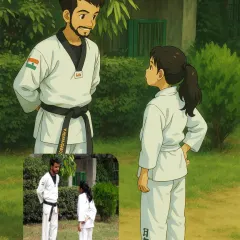
Taekwondo Training: From Basics to Black Belt
Advanced Karate Jumps and Acrobatics Training
More from Taekwondo Training by Sachin Kumar
More services by Sachin Kumar