A Bioclimatic Home Built from the Earth
See how we turned the soil under our feet into the walls of this home, using sun and wind to keep it cool naturally.
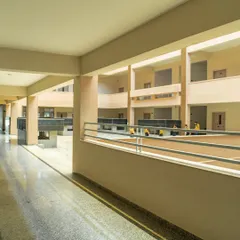
This home is a living example of bioclimatic architecture, designed to work in harmony with nature. The structure is built from Compressed Stabilised Earth Blocks (CSEB) made from the very soil of the site, minimizing our carbon footprint. This low-angle view from the basement level shows how every part of the home, including the stairways and bridges, is designed for natural light and ventilation.
About A Closer Look: The Green Home
Notice the texture of the walls in the photos. That is Compressed Stabilized Earth Block (CSEB). We manufactured these blocks right here on the site using the existing soil. This is not just a stylistic choice; it removes the need to transport thousands of kiln-fired bricks, lowers the carbon footprint, and acts as a natural insulator to keep the indoors cool during Delhi's harsh summers.
Architecture That Breathes
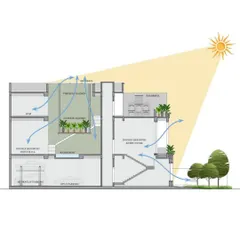
When we talk about bioclimatic design, we are not talking about complex gadgets. We are talking about basic physics. This home is oriented to leverage the sun path of its location, ensuring that light fills the spaces without letting the heat penetrate the thermal mass of the walls.
Why Earth-Sheltered Matters
You will notice certain areas of this project are partially earth-sheltered. By engaging with the ground's natural temperature, we create spaces that remain stable regardless of the external weather. It is about working with the site, not flattening it to make it convenient for the builder.
The Reality of Local Materials
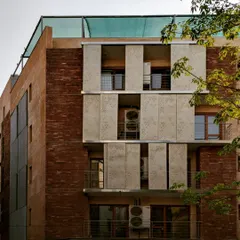
Using Delhi Quartzite stone and local bricks is a deliberate strategy to keep project costs sane. When you source materials within a few miles of your site, you are not paying for transport, breakage, or high-carbon logistics. More importantly, you get materials that belong to the landscape.
The Building Process
Building this way takes patience. You cannot rush the curing process of an earth block. You cannot force a design that ignores wind direction. This project represents a collaboration between the client and the land. Mistakes happen—sometimes a wall needs to be reset or a mix ratio adjusted—but that is the human element of creating a space that feels alive.
If you are planning a home in the Delhi NCR region and want to explore how your site's own soil can become your building material, let's talk about the feasibility of your plot.
Similar work from other experts
Browse through Curated picks from other experts on mytribe
Net-Zero & Climate-Responsive Homes
 27
27
Climate-Responsive & Sustainable Architecture
 14
14
Biophilic Architecture and Green Home Design
 14
14
Biophilic & Climate-Responsive Architectural Design
 12
12
Harmonious Living: Designing Homes for All Species
 8
8
Biophilic Architecture: Integrating Light, Air, and Nature
More from Sustainable Residential Architecture by Vinit Khanna
More services by Vinit Khanna