Inversion and Arm Balance Yoga Mastery
Turning the world upside down requires more than just strength. It is about understanding alignment, core engagement, and finding your center. I provide step-by-step guidance to help you master inversions and arm balances safely.
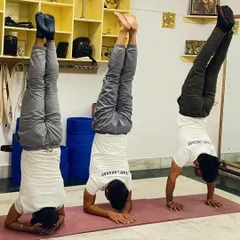
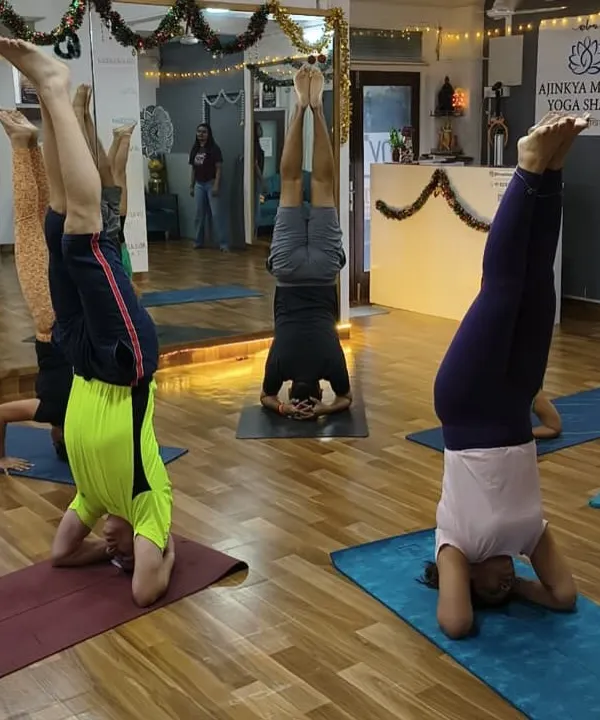
A regular class scene where students are practicing Shirshasana (headstand). I guide practitioners of all levels, whether you are just starting your inversion journey against a wall or refining your balance in the center of the room.
This is a dynamic flow from Galavasana (Flying Pigeon Pose) into a forward bend. Arm balances require a combination of strength, flexibility, and focus, which we build progressively in my classes.
Our studio is a space for everyone, from beginners to experienced teachers, to explore advanced asanas like Ashtavakrasana (Eight-Angle Pose). We focus on authentic, step-by-step learning.
Here I demonstrate a challenging vinyasa flow, transitioning from Ashtavakrasana to Eka Pada Koundinyasana and then into Gandabherundasana. This sequence builds immense upper body and core strength.
In this tutorial, I break down the intermediate level of Kakasana (Crow Pose). I explain the key techniques like activating the shoulders and shifting weight forward to help you find balance and eventually fly.
Assisting a student with Padma Bakasana (Lotus Crane Pose). This advanced arm balance requires significant hip flexibility and arm strength, and I provide the support needed to explore it safely.
Guiding a student through the transition from Tittibhasana C to B (Firefly Pose). These advanced Ashtanga postures demand deep flexibility and core control, and my hands-on adjustments help ensure correct form.
Our classes in Powai focus on building a strong foundation. Here, students are practicing inversions and arm balances, developing the strength and confidence to level up their practice.
Here I am assisting students with Taraksvasana, an advanced handstand variation. Mastering such asanas is a journey of patience and consistent practice, and I am here to guide you at every step.
A student holding a steady handstand against the wall. This is a fundamental part of our arm balancing practice, building the shoulder stability and core engagement needed for freestanding inversions.
About Inversion & Arm Balance Mastery
Getting into a handstand or Bakasana is not just about arm strength; it is about how you stack your joints and engage your core. In my classes, we use specific drills with yoga wheels and rope walls to teach you the mechanics of weight distribution. This means you do not just force your way into a pose, but learn to find the balance point where you feel light, not heavy.
Inversions and arm balances are a journey. Too many people rush into poses like Shirshasana (headstand) or Tittibhasana (firefly pose) without building the foundational core strength, often leading to wrist strain or neck discomfort. At my shala, we approach these advanced asanas differently. We break down the anatomy of each movement so you understand where your weight should shift. Whether you are at our Ghatkopar studio or the Hiranandani Gardens space in Powai, we utilize Iyengar-style rope walls and blocks to safely gain the endurance for long holds. We do not just show you the pose; we teach you the transition. If you are struggling with a jump-back or feeling unstable in your crow pose, we use targeted drills to correct your form. You will learn the science of breathing through the intensity, ensuring that even when you are upside down, your mind stays calm. We focus on proper alignment to ensure your practice leads to growth, not injury.
Similar work from other experts
Browse through Curated picks from other experts on mytribe
Advanced Inversions & Arm Balance Yoga in Paschim Vihar
Master Advanced Arm Balances & Inversions in Bengaluru
Mastering Handstands & Arm Balances: Alignment-Based Yoga
Master Advanced Inversions & Arm Balances with Expert Guidance
Master Advanced Inversions and Arm Balances in Bengaluru
 25
25
Master Your Inversions: Safe Guidance & Alignment
More from Advanced Yoga & Teacher Training by Thorat Yogashala
More services by Thorat Yogashala