Functional Yoga for Every Body
Yoga is about how it feels, not how it looks. We teach a functional approach where your unique skeletal structure guides the alignment, not an aesthetic ideal. Using props, we make every asana accessible, comfortable, and deeply grounding for your specific body type.
In this talk, I explain my core teaching principle: a functional approach over an aesthetic one. For your employees, this means the focus is on feeling good and moving safely, making the practice of yoga welcoming for absolute beginners and experienced practitioners alike.
Ancient yoga philosophy supports a comfortable and stable practice. Here, I discuss how using props like blocks is not a sign of weakness but a smart way to make poses accessible. This ensures that everyone in your team can find a version of the pose that works for their unique body.
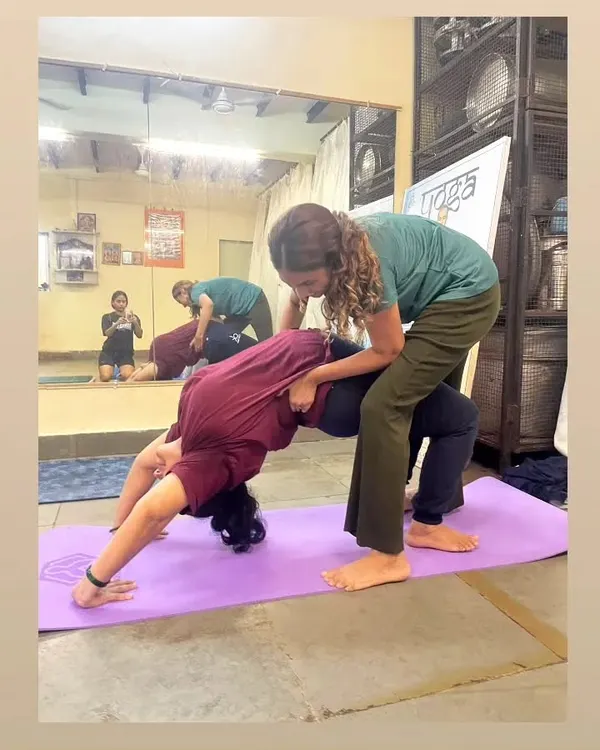
This collage perfectly illustrates why an individualized approach is so important. Each person is performing a backbend, yet their expression of the pose is different due to unique body structures. My role is to guide each person to find their own best alignment.
Even a simple adjustment can change everything. This demonstration shows various hand positions for Downward-Facing Dog. Exploring these options helps individuals find what feels best for their shoulders and wrists, preventing strain and making the practice more beneficial.
Using props is a key part of making yoga accessible. In this photo, I am using blocks in Triangle Pose (Trikonasana) to bring the floor closer, which helps maintain proper alignment and stability. This is a technique I frequently use in my classes to support all participants.
I am passionate about training other teachers in this safe and effective methodology. This is a snapshot from one of my online "Sthira Sukham Asanam" courses, where I teach the principles of a functional and individualized yoga practice.
About Our Approach: Inclusive & Functional Yoga
You don't need to force your body into a 'picture-perfect' pose to get the benefits of yoga. If a movement causes sharp joint pain or bone compression, you simply need a modification. We use props to bring the floor closer to you, ensuring you feel the stretch in your muscles, not the strain in your joints.
Finding Sthira Sukham Asanam
Most people come to yoga trying to replicate an image they saw on social media. But Patanjali’s definition of asana is Sthira Sukham Asanam—a pose that is both steady and comfortable. If you aren't stable or if you feel pain, it isn't an asana for you.
Why Your Anatomy Matters
We are all built differently. Your hip joint orientation and bone length are unique. When you force your body into a rigid, universal alignment, you often hit 'bone-on-bone' compression. This isn't a stretch; it's a mechanical roadblock that leads to injury over time.
Our Functional Approach
Our sessions focus on:
- Individualized Alignment: We assess how your body moves rather than forcing you into a standard shape.
- Prop Usage (Sopashraya): We use blocks, straps, and wall support to make poses accessible—not to make them 'easier', but to make them safer and more effective for your specific anatomy.
- Internal Focus: We guide you to feel the movement of Prana (energy) and muscle contraction, helping you develop a practice that suits your body today, not the body you think you should have.
Whether you are a beginner or an experienced practitioner, our approach ensures your yoga practice supports your health without the pressure to perform.
Similar work from other experts
Browse through Curated picks from other experts on mytribe
Accessible Yoga: Practical Modifications for Every Body
Yoga for Every Body
Yoga for Every Body: Props & Modifications
 4
4
Gentle Yoga Classes with Props in Andheri West
Accessible Yoga Techniques for Every Body
Making Yoga Accessible with Props
More from Corporate Yoga by Sayujya Yoga
More services by Sayujya Yoga