Photographing Vibrant Songbirds & Perching Birds
From the electric blues of the Indian Pitta to the brilliant yellow of the Golden Oriole, India's smaller birds are full of personality if you know where to look.
The Indian Pitta, known as 'Navrang' for its nine colors, perches beautifully on a branch, showcasing its vibrant plumage.
An Indian Roller, or 'Neelkanth', sits atop a post in Jhalana Reserve Forest, its stunning blue wing feathers on display.
A male Indian Golden Oriole, a splash of brilliant yellow against the green foliage, captured in Bhondsi Ashram.
The stunning Indian Paradise Flycatcher in its cinnamon morph, a prized sighting for any birdwatcher in Gurugram.
An intimate video of a pair of Plum-headed Parakeets sharing a moment of affection, showcasing their beautiful colors and bonding behavior.
A Red-billed Leiothrix perched gracefully, its colorful plumage making it a jewel of the forest in Sattal, Uttarakhand.
The Blue Whistling Thrush, with its deep, iridescent blue feathers, photographed in the serene environment of Sattal.
An Orange-headed Thrush against a dark background, making its bright orange head and body pop.
The large and impressive Blue-bearded Bee-eater calling from its perch in Pilibhit Tiger Reserve.
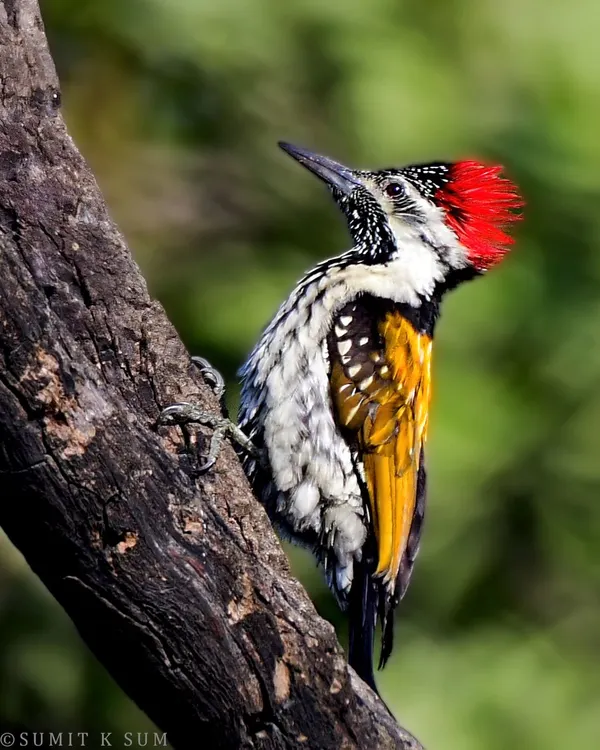
A Flameback Woodpecker with its striking red crest, clinging to the side of a tree trunk.
About Vibrant Songbirds & Perching Birds
Songbirds move fast and often stay deep in the canopy where light is scarce. During my workshops, we don't just point and shoot, we focus on anticipating their flight paths and understanding their calls so you get the shot instead of a blur of feathers.
Birding photography in places like Bhondsi Ashram or Sunder Nursery requires more than just a long lens. These birds are small, skittish, and often hidden by dense foliage. In our photography walks, I focus on the technical adjustments needed to handle these specific challenges.
Field Techniques for Small Birds
- Understanding Light: Small perching birds often prefer the shade. We practice adjusting ISO and aperture to maintain shutter speeds high enough to freeze motion without introducing excessive digital noise.
- Focusing on Behaviour: Rather than just capturing a portrait, we learn to spot the signs of feeding, nesting, or calling. This anticipation allows for better composition.
- Manual Settings: While Auto mode fails in high-contrast canopy light, we practice using Shutter Priority and Back-Button Focus. This ensures that when a bird like the Indian Roller (Neelkanth) lands, your focus is sharp and ready.
Why Join a Photo Walk?
Identifying the bird is half the battle. Whether it is a Golden Oriole or a Red-billed Leiothrix, understanding the subject allows you to predict its next move. We spend time on on-site identification, covering both scientific names and local context. We keep our groups small, usually 8-15 for general walks or 3-6 for advanced technical workshops, ensuring I have time to personally critique your framing and camera settings on the spot.
Similar work from other experts
Browse through Curated picks from other experts on mytribe
 107
107
Jewels of the Forest & Field: Vibrant Birdlife of Delhi-NCR
 23
23
Bird Photography: Vibrant Avian Portraits from Karnataka
 6
6
Avian World: Rare Indian Bird Behaviour Documentation
 28
28
Majestic Birds of India: Wildlife Photography Portfolio
 14
14
The Art of Wildlife Photography in Delhi NCR
 10
10
Feathered Friends & Winged Messengers
More from Photography Workshops & Walks by PGahlot Photography
More services by PGahlot Photography