Capturing Action: Birds in Flight & Motion
Freezing a bird in a mid-dive or perfect flight formation is not just about fast reflexes. It is about anticipation, understanding the bird's path, and knowing exactly how to handle your gear when the action kicks off.
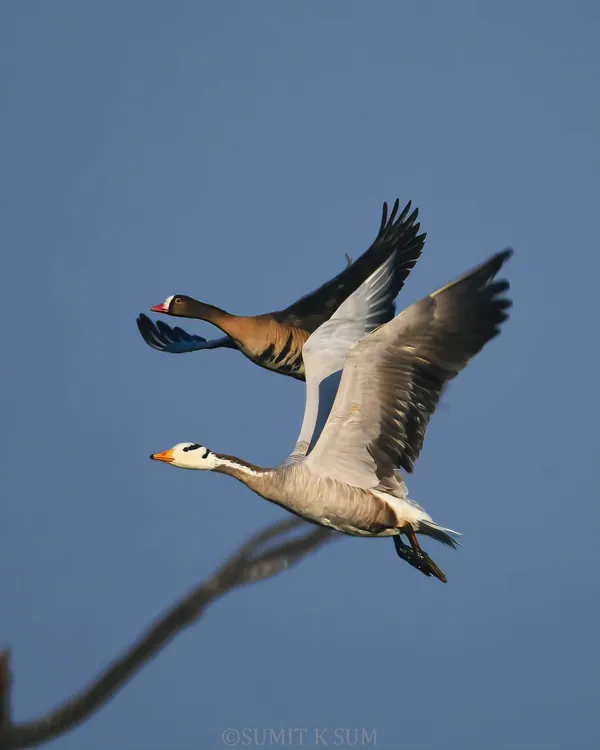
A pair of Ruddy Shelducks in perfect synchronized flight. Capturing two birds flying together like this requires tracking skills and a bit of luck.
A Marsh Harrier in a focused dive, its wings flared as it prepares to land or strike. This is a great example of capturing peak action in the wild.
A Northern Shoveler taking off from the water, with droplets splashing around it. Freezing this motion with a fast shutter speed is a key technique we practice.
A Whiskered Tern in flight, caught mid-call. This action shot captures not just movement but also sound and emotion.
A group of ducks flying in formation against a pale sky. This type of shot is great for practicing composition with multiple moving subjects.
Two Bar-tailed Godwits in flight. Their long, curved bills are distinctive even from a distance, making for a great flight silhouette.
Another frame of the Marsh Harrier's descent, showing the incredible detail in its feathers and its intense focus.
About Capturing Action: Birds in Flight & Motion
Most beginners struggle because they are afraid to push their shutter speed. When you are out in the wetlands, you need to be ready to dial up to at least 1/2000s and track the bird through the lens, not just click blindly. During my tours, I help you adjust your camera settings on the fly so you actually get the splash or the wing-spread in focus, rather than just a blurry mess.
Capturing birds in flight is the ultimate test of patience and technical skill. It is not just about having a long lens; it is about knowing how to hold it steady and predict where the subject will go. Whether we are at the Thane Creek wetlands tracking flamingos or in the forest waiting for a kingfisher to dive, the process remains the same.
You need to understand the behavior. If a duck is about to take off, it usually dips its head first. If a raptor is hunting, it hovers. Learning these small cues means you are ready to fire before the bird even moves. On my tours, we do not just walk and shoot. We find the right position where the light hits the feathers correctly, and we practice panning techniques to keep the background smooth while the subject stays razor-sharp.
I shoot with a Nikon D7500 and a 200-500mm lens, a combination that gives me the reach I need without having to get too close and disturb the wildlife. I will help you dial in your focus modes—switching from single-point to dynamic area AF—and guide you through the trial and error of getting that perfect mid-air frame. We will cover:
- Shutter speed management for different bird sizes.
- Panning and tracking to isolate the bird from the busy background.
- Light management for backlit subjects.
Join me for a session in the mangroves or wetlands of Maharashtra, and let's turn those blurry attempts into clear, frame-worthy action shots.
Similar work from other experts
Browse through Curated picks from other experts on mytribe
 26
26
Birds in Flight Photography Workshops in Delhi-NCR
 29
29
Birds in Action Photography in Mumbai
 32
32
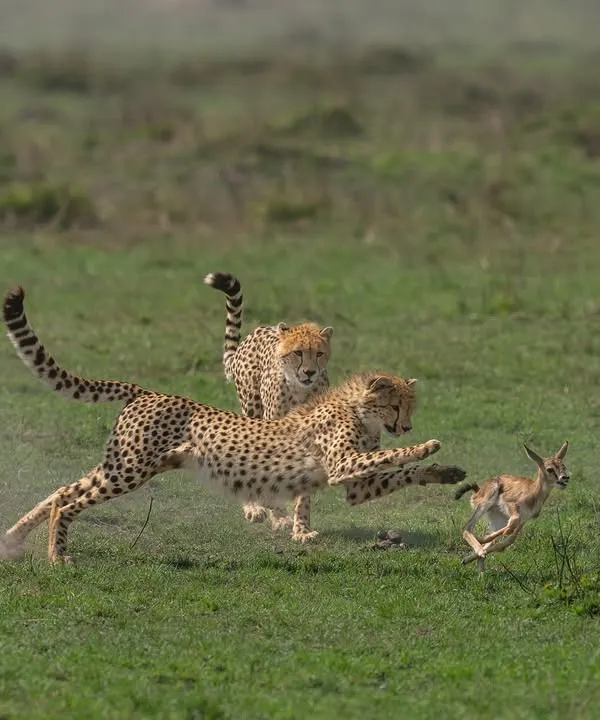
Wildlife Action Photography: Capturing High-Speed Survival
 16
16
Avian Spectacles: Bird Photography & Nature Trails
Birds of Prey and Wetland Photography
 12
12
Wildlife Photography: Capturing Raw Animal Instincts in Mumbai
More from Wildlife Photography Tours by Aashish Patil
More services by Aashish Patil