Foundational Iyengar Yoga Asanas
These are the building blocks of a stable practice. Learn the precise alignment, breath, and structural integrity required for every posture, whether standing or seated.
Parivrtta Trikonasana (Revolved Triangle Pose). This standing twist requires balance, hamstring flexibility, and spinal rotation. The block under the hand helps to keep the spine long.
Vrikshasana (Tree Pose). A classic balancing posture that builds focus and stability in the legs and hips. The key is to keep the hips level and the spine tall.
Gomukhasana (Cow Face Pose), front view. This seated pose deeply stretches the hips, shoulders, and chest. The challenge is to keep the spine erect and the shoulders back.
Paripurna Navasana (Full Boat Pose). This asana is a powerful tool for building core strength and mental endurance. The spine must remain straight, not rounded.
Adho Mukha Shvanasana (Downward-Facing Dog). This is a foundational pose that stretches and strengthens the entire body. The emphasis is on creating a long, straight line from the hands to the hips.
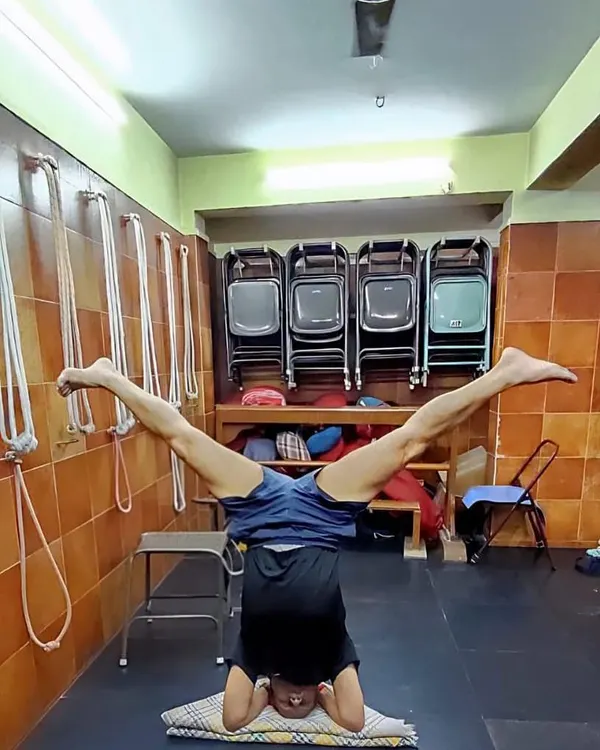
Prasarita Padottanasana (Wide-Legged Forward Bend). This is an inversion that stretches the hamstrings and inner thighs while releasing tension in the back and neck.
Ardha Chakrasana (Half Wheel Pose). A standing backbend that opens the chest and shoulders and improves spinal flexibility. It is an essential preparation for deeper backbends.
Chakrasana (Wheel Pose) or Urdhva Dhanurasana, performed against a wall. The wall provides support to walk the hands down, building strength and confidence for the full backbend.
Ardha Matsyendrasana (Half Lord of the Fishes Pose). A deep seated twist that tones the abdominal organs and increases spinal flexibility.
Kurmasana (Tortoise Pose). A deep forward bend that requires significant flexibility in the hips and hamstrings. It has a calming and introspective effect on the mind.
About Foundational Asanas
In Iyengar yoga, a foundation is not about rushing to the most complex pose. It is about learning to stack your joints correctly and maintain a steady breath, even when holding a basic standing posture. If you cannot hold your pose with stillness, you are not ready for the next level. We use blocks, chairs, and belts to teach your body the correct line, preventing injury before it starts.
Why start with the basics? Because a house with a weak foundation cannot hold its weight. When you perform Trikonasana or Adho Mukha Shvanasana, the goal is not just the shape of the body, but the intelligence of the muscles.
We do not skip steps. My classes focus on:
- Precise Alignment: Every limb must be placed with intention.
- Breath Control: Your breath dictates the duration and quality of the asana.
- Intelligent Use of Props: Many students think props are for the weak. They are wrong. Props are tools for the intelligent. Using a block in Parivrtta Trikonasana, for instance, allows you to rotate the spine without collapsing your chest.
This method is strict. I will correct you directly. You will be told to pull the rope, hold the pose, and keep your spine straight. It is a slow, methodical path, but it is the only way to build a body that remains strong and immune to the stresses of daily life. If you are looking for a quick workout, this is not it. If you are looking to learn how your body actually functions and gain genuine strength, you are in the right place.
Similar work from other experts
Browse through Curated picks from other experts on mytribe
 11
11
Authentic Iyengar Asana Practice
Mastering Yoga Asanas with Correct Alignment

Foundational Asanas for a Strong Practice
Foundational Yoga Poses and Techniques
Foundational Yoga Asanas for Real Strength and Stability
Mastering Asanas with Precision Alignment
More from Online Iyengar Yoga Classes by Madhava R
More services by Madhava R