Advanced Iyengar Yoga: Arm Balances and Inversions
Mastering advanced asanas requires more than just raw strength. It demands precise alignment, controlled breathing, and a deep understanding of your own anatomy. My classes teach you how to build this foundation safely, using props to unlock postures that may seem impossible.
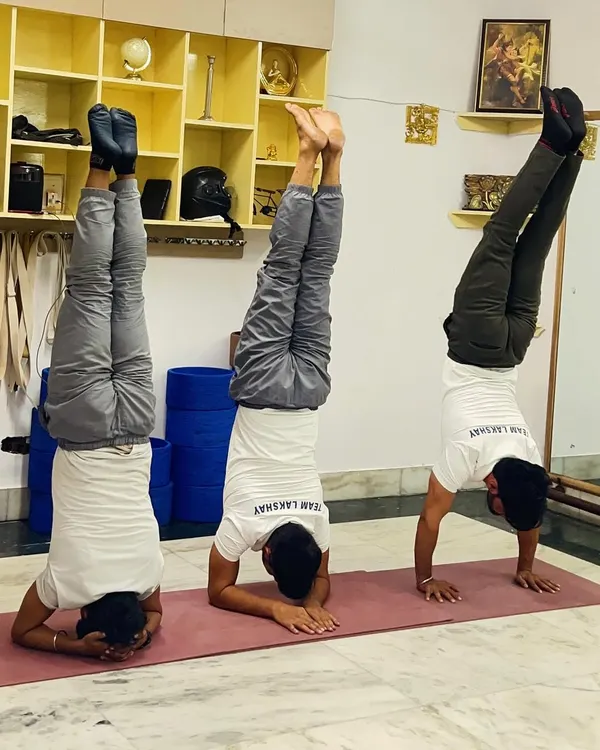
Salamba Shirshasana (Supported Headstand) against a wall. This is the classic form of the pose, building strength in the arms, shoulders, and core. The wall is used for safety as you build stability.
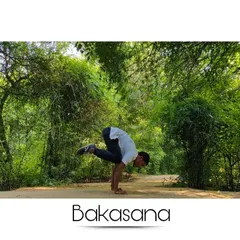
Astavakrasana (Eight-Angle Pose). An advanced arm balance that requires significant arm strength, core engagement, and hip flexibility. The body is supported entirely on the hands.
Eka Pada Galavasana (Flying Pigeon Pose). This arm balance combines a deep hip opening with the challenge of balancing on the hands. It requires both strength and flexibility.
Upavistha Konasana in Shirshasana (Wide-Angle Seated Pose in Headstand). This variation challenges your balance and core control while in an inversion.
Parivrtta Eka Pada Shirshasana (Revolved One-Legged Headstand). This twisting variation in headstand requires immense core strength and a refined sense of balance.
Ekapada Viparita Dandasana (One-Legged Inverted Staff Pose). An advanced backbend and inversion that requires tremendous strength in the back, shoulders, and legs.
Baddhakonasana in Shirshasana, supported by chairs. This demonstrates how props can be used to safely explore complex variations of advanced postures.
Viparita Shalabhasana (Inverted Locust Pose) with feet on a chair. This is a powerful back-strengthening pose that prepares the body for arm balances and deeper backbends.
About Advanced Asanas: Arm Balances and Inversions
Advanced inversions like Shirshasana or arm balances like Astavakrasana are not just displays of strength; they are an exercise in control. When you practice online with me, we do not simply jump into the pose. We use chairs, belts, and wall support to isolate the movement and correct the alignment of your spine and shoulders, ensuring you build the necessary stability before attempting the full expression of the asana. Hagga bittu hidibeku (you must hold the rope tight); it is about discipline and careful execution, not rushing to the final shape.
In the Iyengar method, advanced practice is a systematic progression. You cannot reach complex inversions without mastering the foundational standing and seated poses first. My classes are designed to bridge that gap. We focus on the intelligence of the muscles and the stability of the skeletal structure.
The Role of Props in Advanced Work
Many students think props are only for beginners. This is incorrect. In poses like Ekapada Viparita Dandasana or supported Headstand variations, chairs and bricks act as external teachers. They allow you to hold a pose longer so you can understand the internal rotation of the legs or the opening of the chest without collapsing under gravity. This is how you build true strength.
What to Expect in Live Classes
Classes are held live on Zoom with two-way video, which is non-negotiable. I need to see your posture to correct it. My feedback is direct and often blunt. If your spine is rounded or your shoulder blades are not engaged, I will point it out immediately.
Monthly Curriculum
My classes follow a structured monthly cycle:
- Week 1: Standing poses to build the heat and stability required for arm balances.
- Week 2: Forward bends and twists to prepare the hamstrings and spine.
- Week 3: Backbends that teach you how to open the thoracic spine.
- Week 4: Pranayama and restorative inversions to calm the nervous system.
This is not a space for social interaction or casual stretching. If you are here to learn the nuts and bolts of yoga and are willing to put in the effort, you will find progress.
Similar work from other experts
Browse through Curated picks from other experts on mytribe
 56
56
Advanced Asana Practice and Inversion Training
Advanced Yoga Poses & Arm Balances
 16
16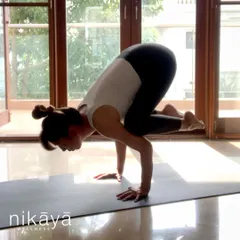
Advanced Yoga Poses & Inversion Classes
 6
6Master Advanced Asanas and Inversions Safely
Advanced Asanas & Strength Training
Advanced Yoga: Arm Balances & Inversions
More from Online Iyengar Yoga Classes by Madhava R
More services by Madhava R