Featured Iyengar Yoga Insights and Philosophy
Explore the intersection of anatomy and philosophy in our Iyengar yoga practice. We focus on the 'why' behind every movement, moving beyond simple repetitions to find intelligence in action.
I often get asked if an action in an asana is 'wrong'. Unless you are harming yourself, I believe there is no wrong, only learning. A better question is, why do we do it a certain way? This inquiry is the start of a deeper, more intelligent yoga practice.
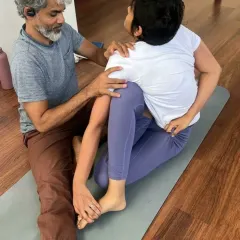
In my classes, we often work together to understand a pose from a new perspective. Here, we use a backbend bench and partner assistance to explore spinal extension safely. Notice the detailed verbal cues which are essential for translating a lived experience into a shared one.
Do you ever feel you are in a 'pranayama wasteland', just going through breathing exercises without feeling their effect? My courses are designed to help you make a re-beginning, to build a personal relationship with your breath based on the classical teachings of yoga.
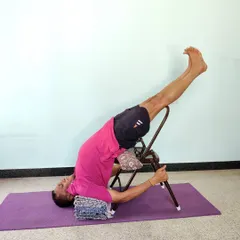
A common myth is that inversions like Sirsasana (headstand) cause high blood pressure. The body's internal systems are far more intelligent. When done correctly, inversions can actually stimulate the parasympathetic nervous system, leading to a calmer state and lower blood pressure.
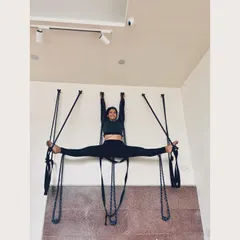
B.K.S. Iyengar said, "Action is movement with Intelligence." Using props like wall ropes allows us to find freedom and intelligence in challenging movements. Here, the ropes help deconstruct a complex pose, allowing the body to learn the action with support.
Who said reciting the Yoga Sutras has to be serious? The sound and cadence of Sanskrit can be liberating even before you understand the meaning. In my philosophy sessions, we approach these ancient texts with both reverence and a lighthearted spirit.
I began my own yoga journey in the West, but my teaching is deeply rooted in the Indian Gurukul tradition, where the teacher takes a profound responsibility for the student's learning. I bring this sense of care and commitment to every class, whether in person or online.
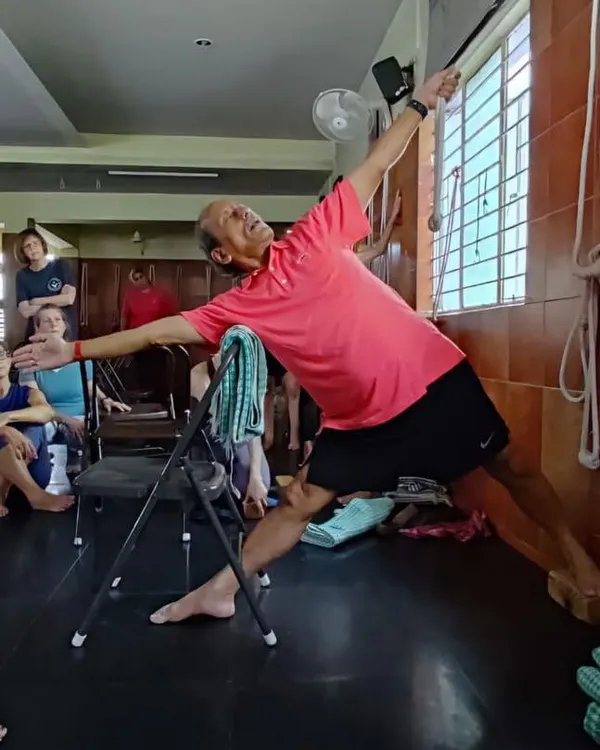
Supported asanas are not just for beginners. Using a prop like this bench in Ardha Chandrasana (Half Moon Pose) allows for a longer, more investigative hold. This helps us refine alignment and experience the therapeutic qualities of the pose more deeply.
About Featured
Our approach is rooted in the 100:1 rule—practicing a sequence 100 times before teaching it once. Whether we are using wall ropes to deconstruct a backbend or exploring the cadence of Patanjali’s Yoga Sutras, every session aims to strip away mindless habits so you can build a stable, intelligent relationship with your own body.
This curated selection represents the heart of The Practice Room. It is not about perfecting poses to show off; it is about using the body as a vessel for inquiry.
We often find students stuck in a 'pranayama wasteland'—going through the motions of breathing exercises without feeling the effect. This content is designed to help you make a re-beginning, focusing on bāhya (out-breath) and abhyantara (in-breath) with the same rigor we apply to asanas.
The Intelligence of Props
In the Iyengar method, props like metal chairs, wall ropes, and wooden bricks are not crutches for beginners. They are precision tools. By using them, we remove the interference of gravity or stiffness, allowing the brain to understand the alignment of a pose before the muscles fatigue.
Philosophy in Practice
Yoga is a vast system, yet many only engage with the asanas. We unpack Patanjali’s Yoga Sutras to understand the context of our practice. You will find sessions here on how to integrate this philosophy into modern life in Bangalore, making the transition from 'exercise' to 'inquiry.'
Whether you are a teacher looking for granular technical breakdown or a student wanting to move past 'what' to 'why', these resources are built for those who want to study, not just sweat.
Similar work from other experts
Browse through Curated picks from other experts on mytribe
 8
8
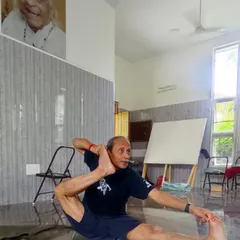
The Practice of Iyengar Yoga with Arunji
 4
4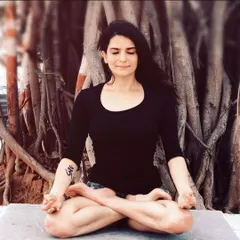
My Yoga Journey and Philosophy
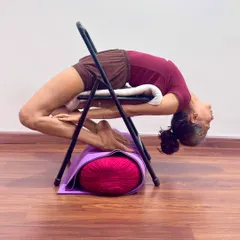
Iyengar Yoga Classes: Precision, Alignment, and Therapeutic Practice
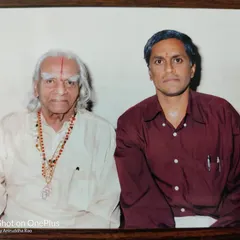
Authentic Iyengar Yoga Classes
Authentic Hatha Yoga and Philosophy in Koramangala
 8
8
Authentic Mysore-Style Ashtanga Yoga in Bangalore
More from Advanced Yoga Studies by The Practice Room
More services by The Practice Room