Iyengar Yoga Foundation and Asana Practice
Yoga is discipline. It is about understanding your body’s anatomy. In my studio, we do not chase a flow; we build the posture from the ground up, using props to ensure correct alignment for every student.
A view of my class in session. You can see students working on different asanas simultaneously, some in active poses like inversions and others in restorative postures.
A student practicing Utthita Trikonasana (Extended Triangle Pose). I am guiding her to open her chest and extend from the hip.
I am leading the class through a sequence of backbends. My instructions are direct and focus on key anatomical actions like lifting the pubic area and tucking the buttock.
I often demonstrate the poses myself to show the correct form and action. Here, I am using the wall ropes to demonstrate opening the shoulders.
We begin each session with a chant to center ourselves. This brings a sense of discipline and focus to the practice.
A student demonstrating discipline and focus in her practice, moving from Baddha Konasana to a seated forward bend.
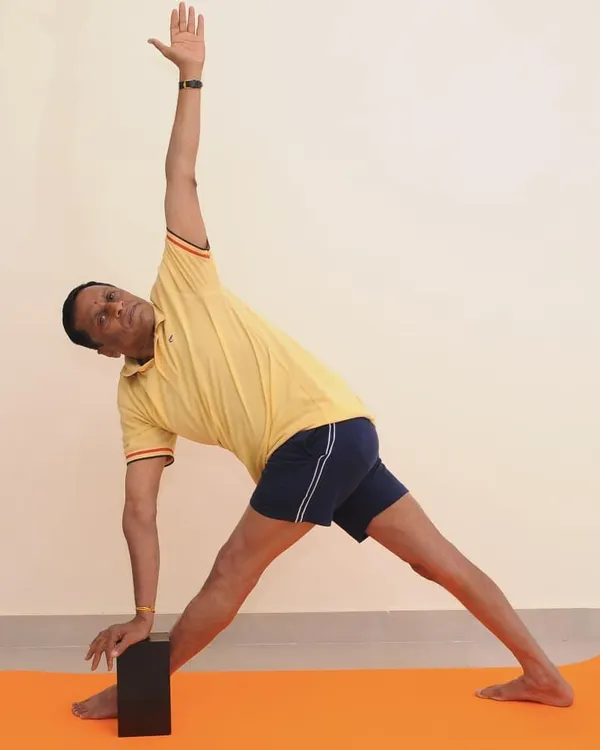
A view of the class practicing various standing and twisting poses. You can see the use of blocks to support the hand in Trikonasana.
Students practicing a seated twist, Marichyasana. The focus is on rotating the spine while keeping the sitting bones grounded.
I am demonstrating Matsyasana (Fish Pose). The key is to lift the chest high by pressing the elbows down and arching the thoracic spine.
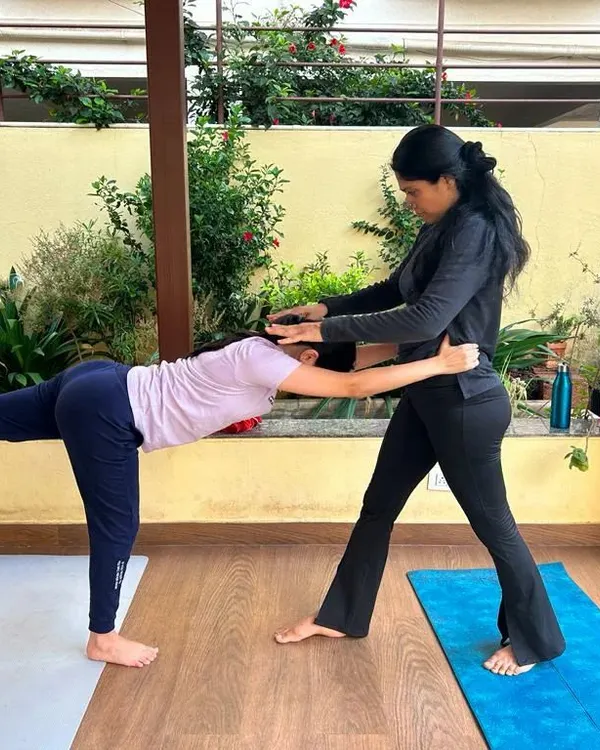
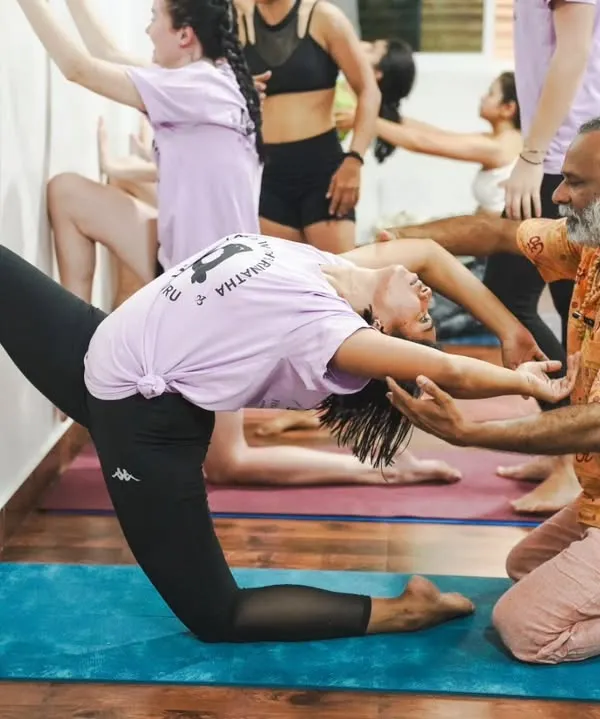
A hands-on adjustment to help a student release tension in the upper back. This direct feedback is a core part of my teaching method.
About Building the Foundation: Asana Practice
We do not just perform poses here. Whether you are using a rope wall to traction your spine or a block to find stability in Trikonasana, every prop serves a mechanical purpose. I will personally adjust your alignment to ensure the pose works for your specific skeletal structure, not just your flexibility.
In my classes, we treat yoga as a science. You won't find mindless repetition here. Instead, we use the Iyengar method to understand the 'why' behind every movement. We ask, 'Kaha pe pressure hai?' (Where is the pressure?) to ensure you are engaging the correct muscles and protecting your joints.
The Role of Props
Props like chairs, bolsters, and ropes are not shortcuts. They are tools for intelligence. When you use the rope wall (Kurunta system) for spinal traction or teak wood bricks to lift your torso, you are learning to access asanas safely even if you have injuries or stiffness. We focus heavily on biomechanics—lifting the sternum, lengthening the dorsal spine, and finding the connection of your metatarsals with the floor.
Who This Is For
This is an inclusive space. My students range from absolute beginners and people managing back pain to those looking for specialized prenatal yoga. If you have been struggling with 'correct' alignment in general classes, this is the place to refine your technique. We move through standing poses, twists, and restorative postures with 90-minute sessions that allow for deep, technical breakdowns.
Our Commitment
My classes run in fixed monthly cycles, three times a week. This consistency is essential. Whether you are in my studio at Patel Commercial Building in Andheri West or joining via our live two-way video link, you will get the same direct, anatomical instruction. Expect corrections, expect to be challenged, and expect to learn how to truly listen to your body.
Similar work from other experts
Browse through Curated picks from other experts on mytribe
 28
28
Foundational Iyengar Yoga Asanas
Iyengar Yoga: The Art of Alignment
 8
8
The Art of Alignment: Studio Yoga Classes
 17
17
Asana Lab: Mastering Yoga Postures with Precision
 68
68
Deepening Your Practice: Iyengar Yoga Asana Explorations
 76
76Hatha & Iyengar-Inspired Yoga: Precision and Alignment
More from Iyengar Yoga Classes by Iyengar Yoga