Understanding the Root Causes of Your Hair Loss
Hair loss is a symptom, not a condition. Before spending time or money on treatments, we need to identify exactly why it is happening.
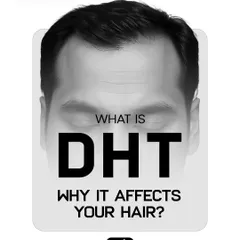
Hormones are the main cause of male pattern baldness, but do they affect transplanted hair? The hair from the back of the scalp is largely resistant to these hormones. While other factors like nutritional deficiencies or stress can cause shedding, the transplanted hair is about 95% more protected.
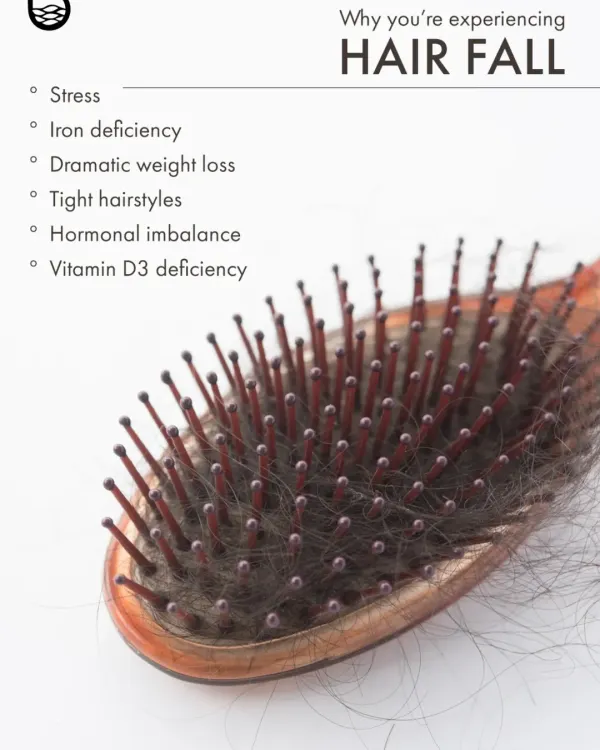
The cause of your hair loss could be as simple as an iron deficiency, which can be fixed with a single pill. You might not need PRP, oils, or special shampoos. This is why diagnosis must always come before treatment.
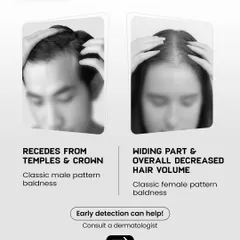
In male and female pattern baldness, hairs don't just fall out; they gradually thin and disappear. Once a hair follicle is gone, it cannot be brought back with medicines. This is why early intervention is critical to save the hair you still have.
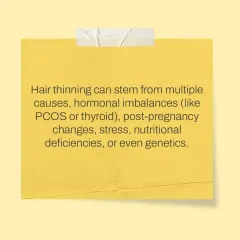
Is hair loss reversible? It depends on the cause. Hair loss from temporary factors like stress, nutritional deficiencies, or post-pregnancy hormonal shifts is often reversible. However, hair loss from genetic pattern baldness is progressive and requires ongoing management.
What are the early warning signs of hair loss in women? Seeing more than 100 hairs fall per day is a sign of excessive shedding. Another key indicator is a loss of density or a widening parting line in the central scalp area.
It's important to know the difference between hair fall, hair loss, and hair damage. Hair fall is normal shedding. Hair loss is when excessive fall leads to visible thinning. Hair damage is external breakage from heat or chemicals. Each requires a different approach.
At what age does hair loss start? Normal hair shedding, or hair fall, happens throughout our lives. Abnormal hair loss, which leads to baldness, can begin at any age depending on genetics and other factors. The key is noticing a change in volume or density.
Your hair grows in a cycle: a growth phase of 2-3 years, followed by a resting and falling phase. Shedding up to 100 hairs a day is a normal part of this cycle. It becomes a problem only when this cycle is disrupted and shedding becomes excessive.
Hair loss is a signal from your body. It is a symptom of an underlying issue, which could be genetic, hormonal, or nutritional. My job is to investigate that signal and treat the root cause for effective, long-term results.
Hair fall, hair loss, and hair damage are three different things. Hair fall is shedding, hair loss is visible thinning on the scalp, and hair damage is breakage of the hair shaft. Male pattern baldness, which I see in myself and many patients, is a form of hair loss caused by hormones.
About The "Why" Behind Hair Loss
Dekhiye, before you buy any shampoo or book a procedure, understand that hair loss is a symptom of an underlying issue. If your ferritin or iron levels are low, a simple tablet is often more effective than any costly laser therapy or PRP. My first step is always a Digital Trichoscopy to look under the scalp, so we treat the actual problem instead of wasting your time on generic fixes.
Hair Fall vs. Hair Loss vs. Hair Damage
We often use these terms interchangeably, but they mean very different things. Understanding the difference is your first step toward recovery.
- Hair Fall: This is the act of shedding. A loss of up to 100 hairs a day is a natural part of your hair’s growth cycle (growth, transition, and shedding). If you see more than that, it is 'abnormal' fall.
- Hair Loss: This is visible thinning. It happens when the hair doesn't regrow, causing your scalp to become visible. This is where we need to investigate causes like hormonal DHT sensitivity or pattern baldness.
- Hair Damage: This is an external issue. Chemical treatments, excessive heat, and rough handling break the hair shaft. It looks like thinning, but the root remains healthy.
Why Diagnosis Comes First
I have seen too many patients try oiling, biotin supplements, or expensive shampoos for months without results. That happens because they treat the symptom, not the cause.
When you visit my clinic in Saket or Punjabi Bagh, we perform a Digital Trichoscopy. We use a high-resolution dermatoscope to visualize your follicle density and hair shaft thickness in real-time. This tells us:
- Is it a nutritional deficiency (Iron, Vitamin D, or Protein)?
- Is it a hormonal issue (Androgenetic Alopecia)?
- Is it a scalp condition like psoriasis or LPP?
Setting Realistic Expectations
If the hair follicle is dead, no amount of medicine will bring it back. In those cases, we discuss transplant options. But if the follicles are just miniaturized—becoming thin and weak—that is where we can intervene with GFC, PRP, or FDA-approved medications to stabilize the fall and potentially regain density.
Do not chase celebrity results or 'fast-track' cures. Hair health is a marathon, not a sprint. We find the 'why,' and the 'how' becomes much easier to solve.
Similar work from other experts
Browse through Curated picks from other experts on mytribe
 4
4
Understanding Hair Loss: Causes, Diagnosis & Real Solutions
Identifying the Root Causes of Your Hair Loss
Diagnosing the Real Cause of Your Hair Loss
 6
6
Diagnostic Approach to Hair Loss
Finding the Root Cause of Hair Loss
Understanding Your Hair Loss: Diagnostic Medical Care
More from Hair Loss Consultations by Dr. Jangid
More services by Dr. Jangid