Diagnostic Approach to Hair Loss
Hair loss often signals an internal imbalance rather than a surface issue. I use a diagnostic-first approach to uncover the triggers—from hormonal shifts to nutritional gaps—so we can design a treatment plan that actually works for your biology.
Seeing excessive hair on your brush can be alarming, but it often points to an underlying issue. I focus on identifying the root cause, whether it's stress, nutritional deficiencies like low iron, or hormonal imbalances, to create an effective treatment plan.
Hair thinning is a complex issue with multiple potential causes. My process always begins with a thorough assessment to understand the specific factors affecting you, ensuring that the subsequent treatment is correctly targeted for the best results.
Hair thinning is rarely caused by a single factor. My diagnostic process investigates internal triggers such as hormonal changes from PCOS or thyroid issues, post-pregnancy effects, stress levels, and potential nutritional gaps.
A healthy scalp is the foundation for healthy hair. Chronic dandruff, product buildup, and inflammation can block follicles and inhibit growth, which is why my treatment plans always include strategies to restore scalp health.
At my clinic, every hair loss treatment plan starts with a detailed assessment of both internal and external factors. Based on this root cause analysis, I recommend targeted therapies like PRP, Mesotherapy, or medical-grade hair boosters.
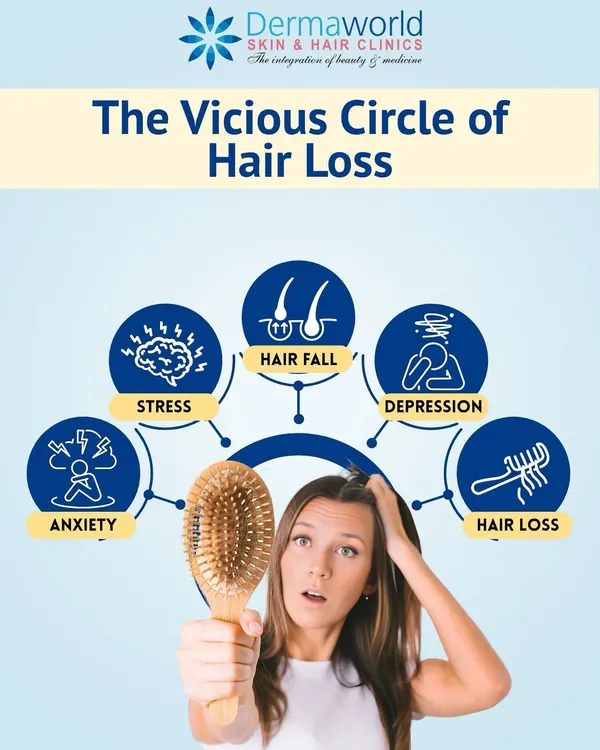
It is medically established that chronic stress impacts your entire body, including your hair and skin. Stress can increase insulin resistance, leading to hormonal imbalances that may cause hair loss, acne, and pigmentation.
About Our Diagnostic Approach to Hair Loss
Before recommending a single treatment, I conduct an internal health audit. This means we look beyond your scalp to review medical markers like iron, Vitamin D3, and thyroid levels. Most patients find that addressing these internal triggers is the specific difference between temporary regrowth and long-term hair stability.
When you lose hair, the instinct is often to swap shampoos or start over-the-counter supplements. In my experience at Dermatologie, these steps rarely solve the problem because they do not address the biological reason for the shedding. Hair loss is usually a symptom of an underlying issue, not the disease itself.
My diagnostic process is designed to move from symptom management to root cause resolution. During your consultation in my Safdarjung Enclave clinic, we start with a dermoscopic scalp analysis. This allows us to see follicular viability and density at a microscopic level, moving past what is visible to the naked eye.
However, the scalp is only half the picture. Because hair growth is an energy-intensive process, your body often shuts it down when resources are low. We look at three primary areas:
- Hormonal Markers: Checking for PCOS or thyroid irregularities that disrupt the hair growth cycle.
- Nutrient Profiling: Correcting deficiencies in iron (ferritin) and Vitamin D3 that are common in Delhi’s urban population.
- Lifestyle & Stress Mapping: Analyzing how cortisol spikes and sleep cycles are impacting your follicular health.
Once we have this data, we do not apply a one-size-fits-all plan. Whether you need medical-grade mesotherapy to stimulate dormant follicles or a targeted prescription to balance hormones, your protocol is built entirely around your specific lab results and scalp health.
Similar work from other experts
Browse through Curated picks from other experts on mytribe
Diagnosing the Real Cause of Your Hair Loss
Understanding the Root Causes of Your Hair Loss
The Science Behind Effective Hair Loss Treatment
 4
4
Understanding Hair Loss: Causes, Diagnosis & Real Solutions
Finding the Root Cause of Hair Loss
Understanding Your Hair Loss: Diagnostic Medical Care
More from Hair Restoration & Scalp Health by Ankita Pant