Treating Special Hair and Scalp Conditions in Delhi
Hair loss isn't always just genetic. Whether you are dealing with autoimmune conditions like alopecia, chronic scalp psoriasis, or hair loss from burn injuries, we focus on identifying the root cause before suggesting any treatment.
Can scalp conditions cause permanent hair loss? It depends. Superficial conditions like dandruff or even psoriasis usually don't. However, infections like folliculitis or certain autoimmune conditions that affect the deeper skin layers can lead to permanent hair loss.
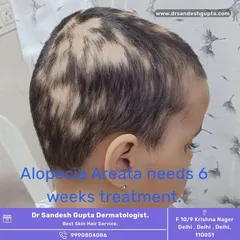
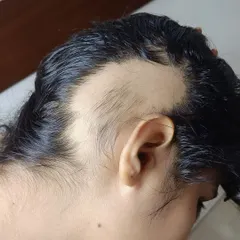
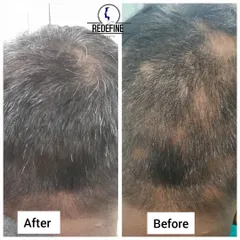
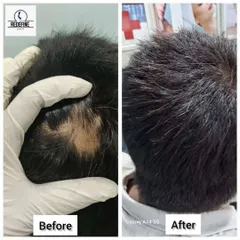
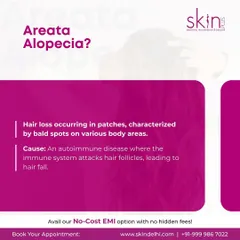
Is hair loss from Alopecia Areata permanent? No, it is typically a temporary and reversible condition. It's an autoimmune issue where the body attacks its own hair follicles, but the follicles themselves are not destroyed, so regrowth is possible with treatment.
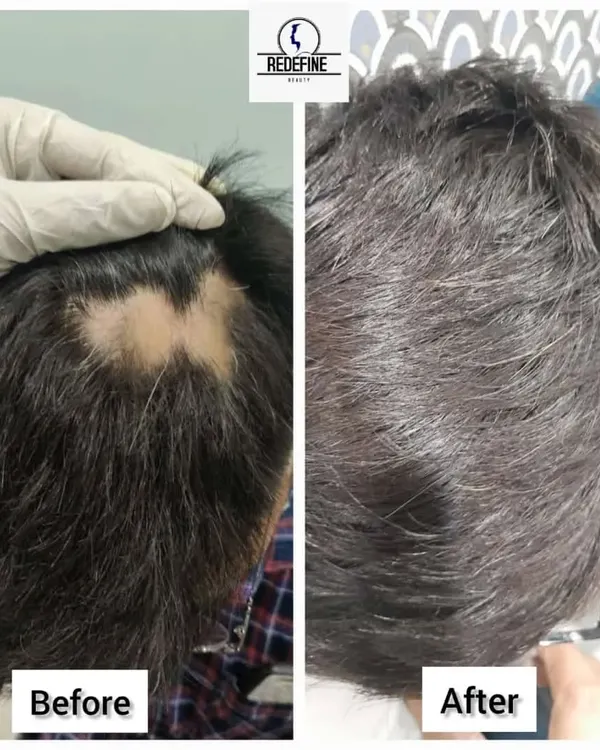
Alopecia Areata is an autoimmune condition causing patchy hair loss. For small patches, it can often resolve on its own. For more extensive cases, we use treatments to suppress the local immune response and encourage regrowth.
A hair transplant can be performed on patients with scalp psoriasis, but only if the condition is well-controlled. Psoriasis is a superficial skin disease, while hair roots are deeper, so a transplant is possible with careful planning.
Is a hair transplant possible on a burnt scalp? Yes, it is possible. However, the results may be compromised because burn scars have reduced blood supply and thinner skin. While we can achieve coverage, density might be lower than on a healthy scalp.
About Treating Special Hair & Scalp Conditions
Many patients assume that a scalp condition automatically rules out a hair transplant, but that is rarely the case. If you have active scalp psoriasis, the procedure is possible—provided the condition is well-controlled first. We always prioritize scalp health over surgical speed. If your scalp is inflamed, we treat that inflammation before even discussing graft counts, because safety and a healthy recipient area are non-negotiable for a natural-looking result.
Diagnosis Before Treatment
Hair loss is a symptom, not just a standalone problem. When you come in with a special condition, we don't just look at the missing hair. We use digital trichoscopy to visualize the scalp's health, distinguishing between superficial issues like dandruff and deep-layer autoimmune responses.
Managing Autoimmune Conditions
Conditions like Alopecia Areata often cause panic because of the sudden, patchy hair loss. The good news is that this is usually temporary. It is an autoimmune response where the body's immune system temporarily affects the hair follicles. In most cases, these follicles are not destroyed, meaning regrowth is possible with the right medical suppression of the immune response. You do not always need invasive treatments; often, a focused medical management plan is enough to kickstart recovery.
Hair Restoration with Complications
- Scalp Psoriasis: A common worry is whether psoriasis prevents a transplant. It does not. Psoriasis affects the upper layers of the skin, while hair roots sit deeper. We can perform transplants safely once your psoriasis is in remission and the skin is stable.
- Burn Injuries: Scars from burns have less blood supply and thinner skin compared to healthy scalp tissue. While a transplant is possible, the results may be less dense than on a healthy scalp. We set realistic expectations from the start so you know exactly what to expect from the coverage.
Our approach is grounded in dermatology. If you have been told 'no' elsewhere due to a skin condition, it might be worth getting a second, specialized opinion.
Similar work from other experts
Browse through Curated picks from other experts on mytribe
Expert Hair & Scalp Health Consultation
 7
7
Alopecia and Patchy Hair Loss Treatments in Greater Noida
 16
16
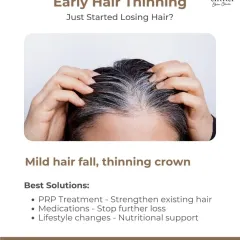
Hair Loss & Scalp Health Solutions
The Science Behind Effective Hair Loss Treatment
 4
4
Understanding Hair Loss: Causes, Diagnosis & Real Solutions
 4
4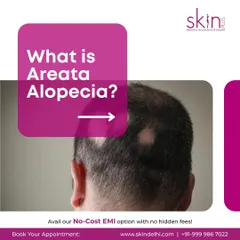
Advanced Hair Loss Treatments and Transplants in Delhi
More from Hair Loss Consultations by Dr. Jangid
More services by Dr. Jangid