Bharatanatyam Arangetram Debuts
The Arangetram is more than a stage debut. It is the culmination of years of riyaaz and the sacred moment a student transforms into an artist.
A student's arangetram is a reflection of the teacher's work. This image captures the grace and confidence of my shishya Anvita Jain, showcasing the intricate hand gestures or mudras that are fundamental to Bharatanatyam storytelling.
The poise and focused gaze of a dancer during her arangetram tells a story of dedication. This moment from Anvita Jain's debut highlights the strong lines and expressive posture that we cultivate through years of practice.
The aramandi, or half-seated posture, is foundational to Bharatanatyam. Here, my student demonstrates the perfect form and balance required, a result of countless hours of training for her arangetram.
The dance is always an offering to the divine. This photograph beautifully captures the spiritual connection, with the dancer in the background and the idol of Lord Nataraja in the foreground, symbolizing the source of our art form.
A dynamic pose from Anvita Jain's arangetram, showcasing the blend of strength, flexibility, and artistry that defines a skilled Bharatanatyam dancer. This is a moment of pure, uninhibited expression.
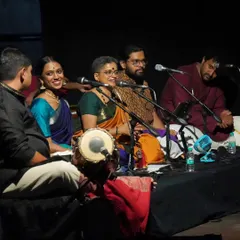
An arangetram is a profound moment for both the student and the guru. Here, my disciple Anvita Jain performs her debut, supported by the live orchestra that is the heartbeat of every recital. Seeing a student blossom into an artist is the greatest validation of our guru-shishya tradition.
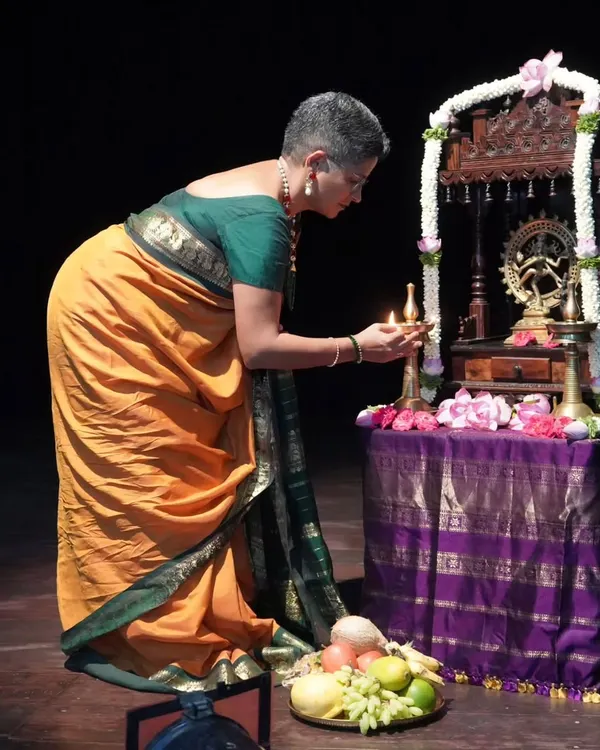
The stage setting for an arangetram is carefully considered to create a divine ambiance. The traditional lamp and the idol of Lord Nataraja bless the space before the performance begins at the Chinmaya Mission Auditorium.
The transformation into a performer begins backstage. Here, the intricate process of applying stage makeup for my student Anvita Jain is underway, preparing her for her arangetram.
As a guru, I am deeply involved in every aspect of the arangetram, including conducting the nattuvangam during rehearsals. This is a candid moment from the music session for Anvita Jain's performance.
The Gejjai Puja is a sacred ritual we perform before the arangetram, where we seek blessings for the dancer's ankle bells (gejjai). It is a beautiful ceremony that bonds the family and the guru in prayer for the young artist.
About Arangetrams: The Guru's Pride
An Arangetram is a test of preparation, not just performance. When I guide a disciple through this milestone, we start months in advance with the Gejjai Puja, where we seek blessings for the ankle bells. This process ensures that by the time the dancer steps onto the stage, the intricate footwork, abhinaya, and the dialogue with the live orchestra are deeply internalized, not just memorized.
For me, the Arangetram is the quiet, powerful intersection of discipline and soul. It is not a singular event but a long-form conversation between teacher and shishya. I approach each Arangetram as a rigorous academic and artistic challenge. We do not focus on costumes and superficial presentation alone. Instead, I insist on mastering the full Margam, ensuring that the student understands the philosophy behind every mudra.
The technical preparation is extensive. We work on the physical stamina required for a 75 to 90-minute solo recital, the precision of the aramandi, and the depth of abhinaya required to narrate complex stories from the Ramayana or the works of Kalidasa. I often see students struggle with the emotional weight of a piece until they realize that dance is an offering, not a display.
Logistically, we carefully arrange the environment. From coordinating the five-piece live orchestra to ensuring the lighting highlights the dancer's facial expressions, we create a sacred space at venues like the Chinmaya Mission Auditorium. The Arangetram is my pedagogy put to the ultimate test. It answers a fundamental question: can we pass the torch of tradition to a new generation, even if they have no prior reference to South Indian languages or culture? The answer, as I see with each blooming artist, is a resounding yes.
Similar work from other experts
Browse through Curated picks from other experts on mytribe
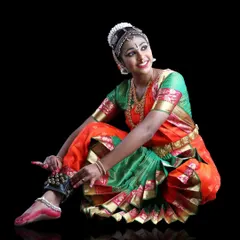
Celebrating Bharatanatyam Milestones: Arangetram Memories
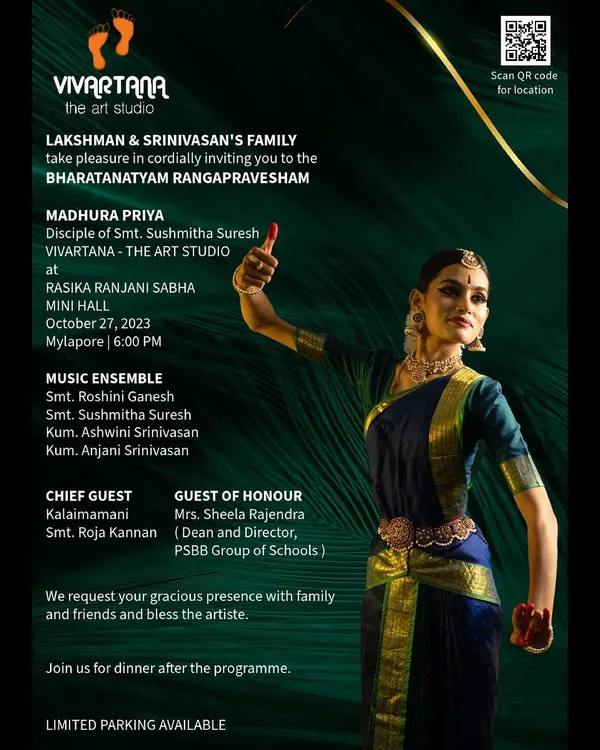 13
13
Bharatanatyam Student Journeys and Arangetram Debuts
Arangetram: A Dancer's Sacred Debut
 32
32
Bharatanatyam Student Recitals & Performances by Ambalam Foundation
Bharatanatyam Student Arangetrams and Debuts
 13
13
Bharatanatyam Student Performances and Arangetrams in Delhi
More from Bharatanatyam Performances by Geeta Chandran
More services by Geeta Chandran