Landmark Constitutional & National Security Cases
Constitutional cases require more than just legal knowledge. They demand a deep understanding of our country's balance of power. If you are seeking representation for matters of national importance, let us examine the legal feasibility of your case.
My name listed in the Supreme Court's record of proceedings for the Article 370 case. It was a privilege to be an Advocate on Record in a matter of such profound constitutional and national significance.
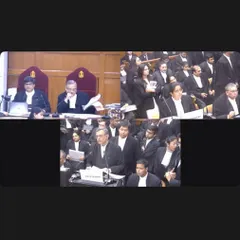
A view from the live proceedings of the Article 370 hearing in the Supreme Court. These historic arguments examined the constitutional validity of the abrogation and its impact on Jammu & Kashmir.
In this interview, I discuss the critical constitutional principle of separation of powers. I argue that judicial overreach into the domain of the legislature is a serious concern, and each institution must respect its constitutional boundaries for the country to function smoothly.
Serving as a panelist for a webinar by the Global Kashmiri Pandit Diaspora on International Human Rights Day. We discussed the long-standing issue of human rights violations and the quest for justice for the minorities of Kashmir.
A screenshot of the live webinar broadcast of the Article 370 Supreme Court hearing. The extensive coverage highlights the immense public and legal interest in this case.
Another frame from the Supreme Court's live feed of the Article 370 arguments, showing the intense legal debate that took place.
The constitutional bench of the Supreme Court hearing arguments during the marathon hearings on Article 370.
The first page of the Supreme Court's record of proceedings for the judgment in the Article 370 case, a historic day for India.
Another page from the appearance slip in the Article 370 case, highlighting the large number of legal counsels involved in this constitutional matter.
About Landmark Constitutional & National Security Cases
When you approach the Supreme Court for a constitutional matter, the first hurdle is often Locus Standi. Judges need to see why your case is not just private interest, but one with broader public impact. My focus is on the feasibility audit, mapping your case against Article 32 or 226 merits before we even draft the petition, to ensure we are not dismissed on technical grounds.
Law is a delicate balance. Whether it is challenging administrative overreach or protecting fundamental rights, the strategy must be airtight. My practice is built on interpreting the constitution, not just citing it.
I strongly believe that the Parliament makes the laws and the Court interprets them. When one institution enters another's domain, the constitutional framework suffers. This principle guides how I draft writ petitions. My team, my 'Devils', and I work to ensure that every document, from the Synopsis and List of Dates to the final Paperbook, reflects this rigorous standard.
My experience representing Youth4PanunKashmir and the Global Kashmiri Pandit Diaspora in the Article 370 hearings taught me that these cases require more than just legal arguments. It is about understanding the historical context and the nationalist perspective. We look at administrative proofs, lab reports, and government representations to build a case that the Bench can immediately grasp.
I do not take on every case that comes through the door. I look for the constitutional trigger. If you have a matter involving environmental norms, administrative inaction, or service law issues, we need to assess the factual matrix first. My goal is to keep our institutions functioning as they should, ensuring that your path to justice is both timely and constitutionally sound.
Similar work from other experts
Browse through Curated picks from other experts on mytribe
 15
15
Supreme Court Litigation and Legal Representation
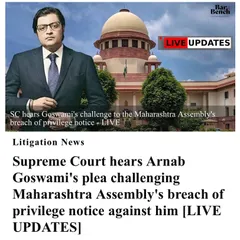
High-Stakes Constitutional & Fundamental Rights Litigation
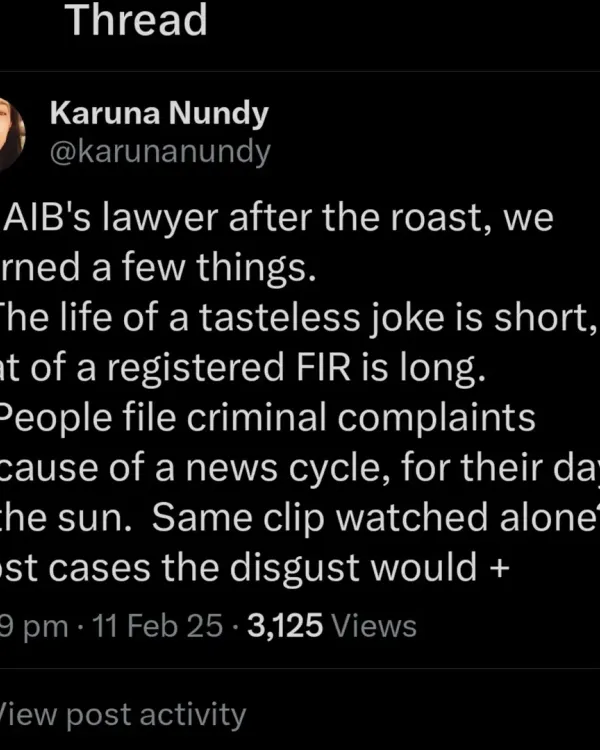 8
8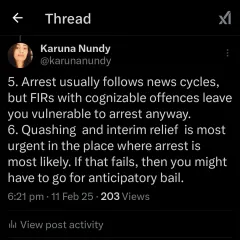
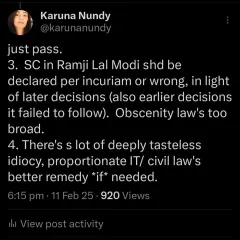
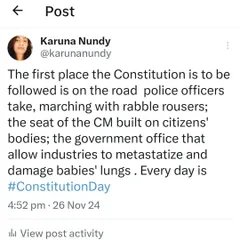
Constitutional Law and Free Speech Advocacy

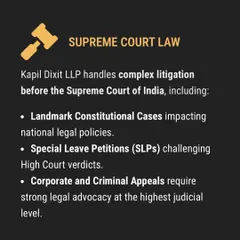
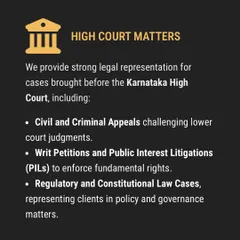
High Court and Supreme Court Legal Representation
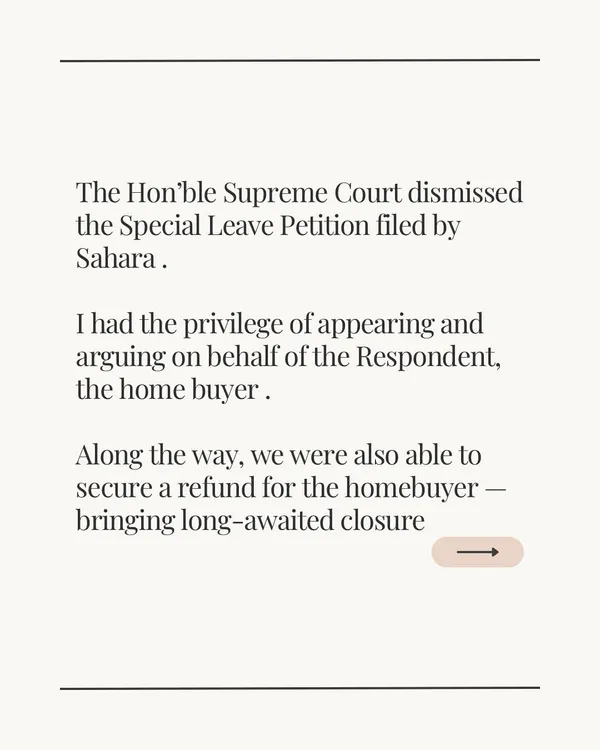 16
16

Supreme Court Representation & Litigation Services
Strategic Legal Counsel for High-Stakes Litigation
More from Public Interest Law by Siddharth Praveen Acharya
More services by Siddharth Praveen Acharya