Bharatanatyam Foundations: Mastering the Basics
A strong foundation is everything in Indian classical dance. We focus on perfecting your Aramandi, Adavus, and body alignment, ensuring you build your skills on solid, technically correct ground.
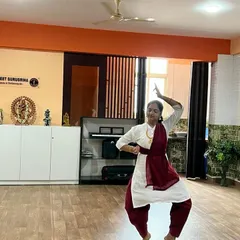
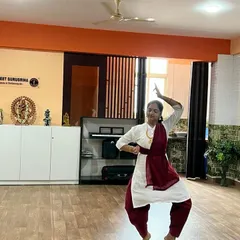
Working on the Aramandi, or half-seating posture, is fundamental to our training. I am demonstrating the correct alignment and muscle engagement needed to hold this core Bharatanatyam stance with strength and stability.
I am explaining the importance of strong thighs and maintaining the correct Aramandi posture during foundation-level training. Building this strength is essential for executing advanced adavus and long choreographies without compromising form.
Here, I am breaking down the technique for Bharatanatyam walks, or Nadai. We focus on ensuring each step is powerful and grounded, hitting the hip correctly to create the distinct, graceful gait of a classical dancer.
This video shows a class focused on Tishram, one of the five core Jathis (rhythmic patterns). I am guiding students on how to embody the three-count rhythm in their walks, developing their internal sense of timing and beat.
I am explaining how we use geometric lines to help students self-correct their Adavus. Understanding the parallel lines and angles in a posture like the seventh Nattadavu helps dancers clean up their movements and achieve precision.
A session focused on the basic corrections for the 7th Nattadavu. It is very important to teach kids the correct angles and lines from the beginning so they can build a strong technical foundation for their dance journey.
Correcting the Natyarambh posture is critical for beginners. In this clip, I am working with students to ensure their arms are held strong and their posture is aligned, avoiding common mistakes like dropping the elbows.
A class focused on Adavu alignment and poses. Here, our guru Jisha helps a student understand the correct lines and balance required for a leg extension, ensuring the posture is both graceful and technically sound.
We are working on footwork corrections with our beginner's batch. I am demonstrating how to place the foot correctly on the heel with the toe facing up to achieve the right pressure and form for this specific step.
A Kudditta Mettu session where I am giving tips and corrections. I am showing students how to maintain their balance and execute the side-to-side movement with the correct hand gestures and body alignment.
About Bharatanatyam Foundations: Mastering the Basics
Here, we don’t rush. Whether it’s your first week or you are refining a specific step, expect me to pause you, correct your shoulder alignment, and ensure your Aramandi is steady. We practice on wooden floors with a strict focus on geometric lines—if a posture looks crooked in the mirror, we fix it until your body understands the correct angle. It is challenging work, but this is how you build the stamina to dance without injury.
Building a Technical Base
In Bharatanatyam, your body is your primary instrument. If you learn the Adavus (basic steps) incorrectly, those wrong habits settle in, and fixing them later is twice as hard. We do not just teach steps; we build a technical base. My goal is to ensure you feel confident and comfortable in your own skin while dancing.
Our Core Focus Areas
-
Aramandi (Half-Seating): This is the heart of Bharatanatyam. We spend significant time ensuring your knees are spread, your back is straight, and your core is engaged. This prevents you from collapsing during long routines and prepares your legs for the rigorous demands of classical repertoire.
-
Geometric Precision: We use the studio mirror as your primary teacher. Every hand gesture (Mudra) and foot movement is treated as a geometric line. If your arm is not parallel to the floor or your elbow drops, we correct it on the spot. Precision here creates grace on stage later.
-
Rhythm & Breath: You will learn to decode complex Jathis, syncing your movement with the Tala. We teach you how to breathe while holding strong postures, which is the secret to dancing for long durations without fatigue.
The Learning Path
Whether you are an adult beginner or enrolling your child, our batches are kept small. This ensures you get hands-on physical corrections, not just visual demonstrations. We follow the Akhil Bhartiya Gandharva University syllabus, meaning your hard work in the studio can lead to formal certification. If you are ready to put in the work, I am ready to teach.
Similar work from other experts
Browse through Curated picks from other experts on mytribe
Authentic Bharatanatyam Training & Technique
Bharatanatyam Classes: Traditional Margam Training
The Art of Bharatanatyam
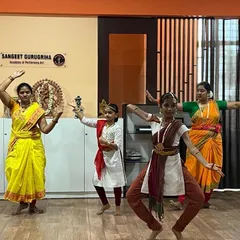
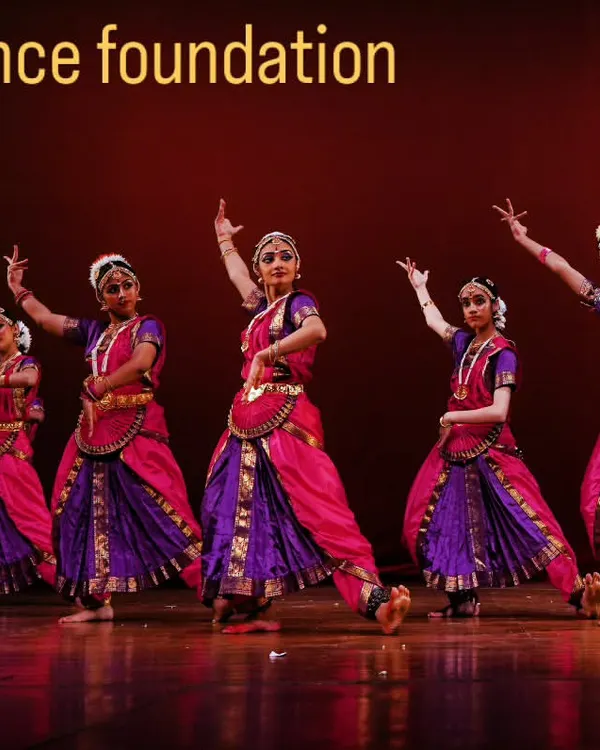
Bharatanatyam classes focused on traditional styles and technique
 34
34
Authentic Bharatanatyam Training in Indirapuram
Bharatanatyam Training & Studio Practice
More from Indian Dance Training by Abhibhava Art Academy