Courtroom Craft: From FIR to Final Arguments
20 years of Delhi High Court experience, broken down into simple, actionable steps. Learn the practical logic behind courtroom procedures, from filing an FIR to presenting your final argument.
For offenses with a sentence of 7 years or less, the police cannot make an automatic arrest. The Supreme Court's Arnesh Kumar judgment mandates a Section 41A CrPC notice first, requiring the accused to join the investigation. I explain this crucial safeguard against mechanical arrests.
Framing charges in a criminal case is like framing issues in a civil suit. It's the formal process of defining the exact allegations the prosecution must prove. This step clarifies the scope of the trial and sets the stage for all subsequent proceedings.
In cross-examination, if a witness presents an invoice but denies creating it, its credibility isn't automatically lost. You must put a specific suggestion to the witness that the invoice is fabricated or forged. Without this, the document may be considered admitted.
A recent Delhi High Court judgment reinforces a critical right for the accused. If the arresting officer fails to clearly write down the grounds for arrest in the arrest memo, it can become a valid ground for the accused to be granted bail.
When filing for anticipatory bail, it's crucial that the vakalatnama and affidavit are signed by the accused. If they are unavailable, a close blood relative can do so. Failing this technical requirement can lead to the dismissal of the bail application.
When police file a closure report, the complainant has the right to challenge it by filing a Protest Petition. The court must issue a notice to the complainant, giving them an opportunity to argue for further investigation or for the court to take cognizance of the offense directly.
Can you file a crime report anywhere in India? Yes. The Zero FIR system is a crucial reform that allows victims to report a crime at any police station, regardless of jurisdiction, ensuring that immediate action can be taken without procedural delays.
Knowledge is power. This graphic provides my contact information for anyone seeking more insights on legal reforms like the Zero FIR system and other practical aspects of Indian law. Follow my channels to stay informed and empowered.
This infographic breaks down how a Zero FIR works. It starts with filing at any police station, which assigns a '0' number. The case is then transferred to the correct jurisdiction for re-numbering and a full investigation, simplifying the reporting process for victims.
The new Bharatiya Nagarik Suraksha Sanhita (BNSS) has formally incorporated the Zero FIR system into law. This move aims to streamline criminal investigations and address the jurisdictional challenges that previously caused significant delays in delivering justice.
About Courtroom Craft: From FIR to Final Arguments
Many lawyers spend years copying templates without understanding the 'why' behind the procedure. Whether you are dealing with a Section 41A CrPC notice or framing charges, the difference between a winning strategy and a dismissed petition is often a small procedural detail you missed. I don’t just teach the theory; I show you the mechanics of the court—how to actually handle a witness during cross-examination or when to file a protest petition effectively.
Litigation is not just about citing sections; it is about logic, facts, and the confidence to stand your ground. In this cluster, I demystify the entire legal journey, giving you the tools to practice without the fear that most freshers face.
The Anatomy of a Case
From the moment an FIR is registered, the clock starts ticking. We break down the phases:
- The Initial Stage: Understanding the difference between a complaint and an FIR, the nuance of Zero FIRs, and when to expect a Section 41A notice instead of an arrest.
- The Middle Game: This is where cases are won or lost. We look at the technicalities of Anticipatory Bail, the importance of the Vakalatnama, and how to draft a Protest Petition if the police file an unsatisfactory closure report.
- The Trial: This is where my '5-block foundation'—Parties, Property, Place, Time, and Document—comes into play. We cover how to frame charges and, more importantly, how to conduct a cross-examination where you actually force the truth out, rather than just asking generic questions.
Why Practical Training Matters
Law schools teach you to read books; they don't teach you how to handle a judge who is in a rush or a police officer who is playing games with jurisdiction. My goal is to share the 'jugaad' and tactical skills I have gathered over 1500+ cases. Whether it is handling sensitive in-camera proceedings or ensuring your evidence is admissible, these insights are designed to make you courtroom-ready.
If you are a student or a young lawyer, stop relying on templates. Learn to build your case from scratch. If you are a litigant, this content will help you understand what your lawyer is actually doing for you.
Similar work from other experts
Browse through Curated picks from other experts on mytribe
Know Your Rights: Police & Court Procedures
 43
43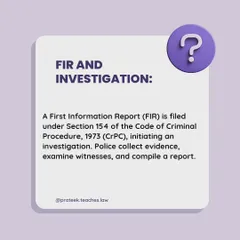
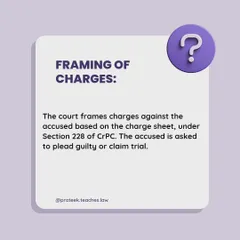
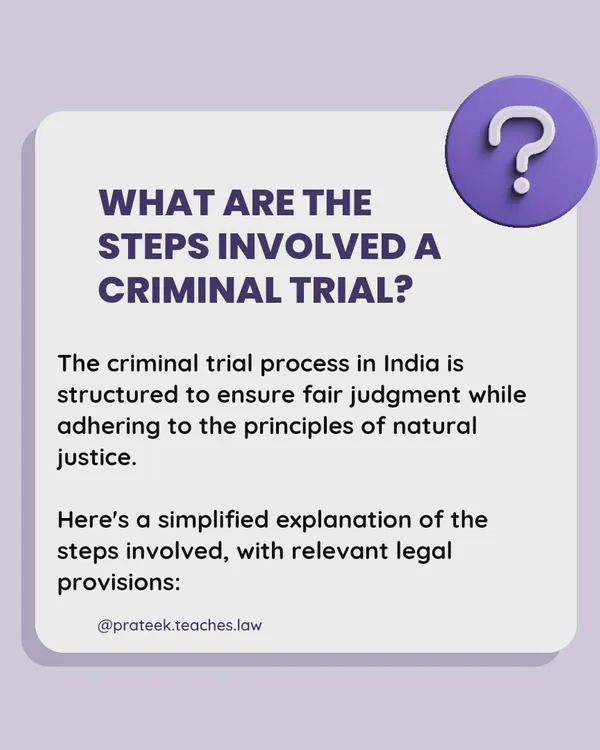
Understanding Criminal Proceedings in India
Understanding Criminal Law & Court Procedure
Navigating Criminal Law in India
Real Courtroom Proceedings and Legal Arguments
Practical Courtroom Craft for Aspiring Lawyers
More from Practical Legal Training & Coaching by Sharad Bansal
More services by Sharad Bansal