Understanding Criminal Proceedings in India
A criminal case can be an intimidating experience. I break down the CrPC procedures step by step, from FIRs to court trials, so you understand exactly what is happening in your case.
This is a simplified introduction to the stages of a criminal trial in India. The process is structured to ensure fairness and adherence to the principles of natural justice.
The process begins with a First Information Report (FIR) under Section 154 of the CrPC. This initiates a police investigation where evidence is collected and witnesses are examined.
After the investigation, police file a charge sheet under Section 173 of the CrPC. This document details the evidence collected against the accused person.
Based on the charge sheet, the court frames charges against the accused under Section 228 of the CrPC. The accused is then asked to plead guilty or not guilty.
If the accused pleads not guilty, the trial proceeds. A guilty plea may lead to an immediate conviction based on that plea alone, as per Section 241 of the CrPC.
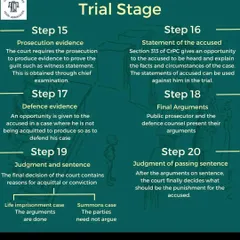
The prosecution presents its case first by examining its witnesses. The defense then has the right to cross-examine these witnesses under Sections 231-233 of the CrPC.
The defense is given the opportunity to present its own evidence and witnesses. The prosecution then cross-examines the defense witnesses as per Section 233 of the CrPC.
Both the prosecution and defense present their final arguments to the court. Section 314 of the CrPC outlines this stage, where each side summarizes their case and evidence.
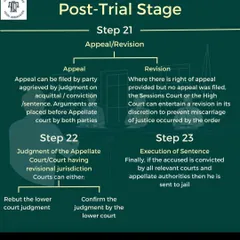
The judge considers all evidence and arguments to deliver a verdict. If the verdict is guilty, sentencing follows based on legal guidelines and judicial discretion.
A Private Criminal Complaint (PCR) under Section 200 of the CrPC allows you to initiate criminal proceedings directly before a Magistrate, bypassing the police.
About Understanding Criminal Proceedings
Many people assume police action is the only route to justice, but you have the legal right to file a Private Criminal Complaint directly with a Magistrate if the police are unresponsive or refuse to file an FIR. My process involves drafting your specific complaint, preparing your sworn statement under oath, and guiding you through the initial court hearing to ensure the Magistrate takes cognizance of your matter effectively.
Navigating the Criminal Justice System
Indian criminal proceedings operate under a strict framework, primarily defined by the Code of Criminal Procedure (CrPC). Whether you are a complainant or the accused, knowing the lifecycle of a case is the first step toward effective representation.
The Standard Trial Workflow
Most criminal cases follow a predictable path. It begins with the filing of an FIR under Section 154 of the CrPC, which triggers a police investigation. This leads to the collection of evidence and, eventually, the filing of a charge sheet under Section 173. The court then frames charges. At this stage, the accused must plead guilty or claim a trial. If you are facing trial, the process includes:
- Prosecution Evidence: The state presents its case and witnesses.
- Cross-Examination: Your defense team challenges the prosecution's evidence under Sections 231-233.
- Final Arguments: Both sides summarize their position before the judge delivers a verdict.
Direct Access to Courts: Private Complaints
If the police do not act, you are not helpless. Section 200 of the CrPC allows for a Private Criminal Complaint (PCR). This bypasses the police and puts your case directly before the Magistrate. This route requires precise drafting, as the Magistrate must be convinced there is a prima facie case before they issue a summons to the accused. I assist clients in drafting these complaints and preparing for the mandatory sworn statement to increase the likelihood of the court taking cognizance.
Bail and Liberty
If you are facing an FIR, securing bail is the immediate priority. I analyze the FIR to identify procedural lapses, such as Section 41A violations, and draft bail petitions that clearly argue against flight risk or evidence tampering. My approach focuses on technical legal defense to secure your liberty while the case proceeds.
Similar work from other experts
Browse through Curated picks from other experts on mytribe
Know Your Rights: Police & Court Procedures
Understanding Criminal Law & Court Procedure
Know Your Legal Rights: A Guide to Police, Crime & Daily Issues
Know Your Rights: Legal Explainers for Real-Life Situations
 15
15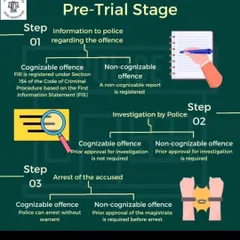
Demystifying the Legal Process
 4
4
Legal Defense and Navigating Criminal Proceedings
More from Specialized Legal Procedures by Prateek Chandramouli
More services by Prateek Chandramouli