Residential Projects: Spaces Defined by Light and Material
Architecture that dissolves the boundary between interior living and the landscape, creating homes that breathe, change, and hold light.
A view of the Artist Residency at Farm8, a project featured in The Architect's Diary. The design, nestled in nature, uses organic materials like bamboo screens and fire bricks to create a grounded sense of belonging for the artists who work here.
A collage showcasing different facets of the Artist Residency at Farm8. It highlights the interplay between the raw interior spaces, the semi-enclosed courtyards, the lightweight steel structure, and the building's harmonious relationship with the surrounding water and greenery.
The exterior of the Artist Residency at Farm8, where operable bamboo screens form the building's skin. These panels can be opened to completely merge the interior studio with the surrounding garden, creating a truly inside-out living and working experience.
Two interior perspectives of the Artist Residency. The design uses a simple palette of concrete, brick, and a steel roof structure, with floor-to-ceiling glass walls that dissolve the boundary between the room and the landscape, making the garden the main backdrop.
A night-time rendering of Residence B in South Extension, Delhi. This view shows the abstract interpretation of a traditional courtyard, with stacked volumes creating a complex interplay of solid and transparent elements that glow from within.
A rendering of the central courtyard for Residence G in New Delhi. The design features a series of open courts that punctuate a large verandah, connecting the various living spaces of the home along the landscape and creating 'islands of light'.
An exterior view of Residence G, showing how the sculptural living units appear to float above the ground-floor verandah. The design extends the landscape across both floors, creating a continuous flow between the built form and the natural environment.
The steel structure of Residence S in New Delhi during construction. This image reveals the skeleton of the building, a cantilevered form that lifts the main living spaces off the ground to enhance the connection with the garden below.
Another work-in-progress shot of Residence S, showing the layered steel roof structure. This design creates deep verandahs and covered pavilions that are in constant conversation with the surrounding landscape and trees.
The facade of a house in Panchsheel, New Delhi, where the building's skin is crafted from exposed brick and steel. The design integrates essential services and mechanical units into the architectural expression, making them a deliberate part of the aesthetic.
About Residential Projects: Spaces for Living
When we design your residence, we begin with a rigorous analysis of sun-path and wind direction rather than a floor plan. We prioritize climate-responsive massing, integrating floating volumes and courtyards that act as 'islands of light.' This approach ensures your living space remains thermally comfortable, effectively blurring the distinction between your indoor comfort and the surrounding greenery.
Our residential architecture is an iterative process. We believe a home should function as a series of pavilions or volumes, where the layout is dictated by how you move through the space during the day. We utilize a distinct palette—exposed brick, raw steel, and concrete—to strip away the unnecessary and highlight the structural skeleton of the building.
Our Approach to Residential Design
- Porous Spatial Planning: We avoid the closed-box apartment model. By designing verandas, courtyards, and double-height volumes, we invite the landscape into the room. This creates a visual and physical continuity that makes smaller footprints feel expansive.
- Material Honesty: We do not conceal the structural logic of a house. You will see exposed brickwork, steel exoskeleton joinery, and MEP layouts treated as aesthetic elements. This reduces maintenance over time and gives the building an authentic, evolving character.
- Climate Responsiveness: Every project involves technical planning for wind catchers and thermal buoyancy vents. We design adjustable facades and brise-soleil (sun-shading) structures to control light infiltration, which significantly reduces the need for artificial cooling.
- Technical Documentation: Beyond aesthetics, we provide comprehensive documentation for all our projects. This includes over 60 custom working drawings, ensuring that the structural integration of heavy cantilevers or lightweight steel frames is executed with precision.
Whether you are building a farmhouse or renovating an urban residence, our focus remains on creating a living experience that is both functional and atmospheric.
Similar work from other experts
Browse through Curated picks from other experts on mytribe
 27
27
Signature Residential Projects Built for Culture and Climate
 24
24
Indoor-Outdoor Integration in Modern Residential Architecture
 32
32
Creating Residential Sanctuaries That Feel Like Home
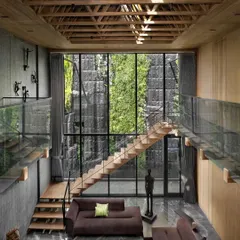
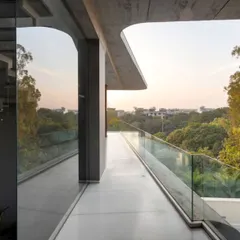
Indoor-Outdoor Sanctuaries: Blurring Boundaries with Nature
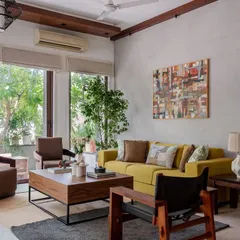
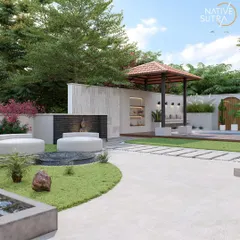
Indoor-Outdoor Sanctuaries: Nature-Infused Living Designs
 22
22
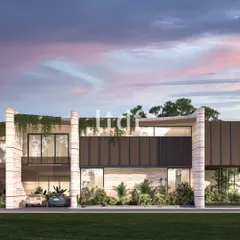
Modern Residential Sanctuaries by LTDF
More from Architectural Design by Studio Array
More services by Studio Array