The Art of Bharatanatyam: Technique and Storytelling
Explore the foundational beauty of Bharatanatyam. From the rhythmic precision of Talam to the emotive depths of Abhinaya, see how we break down the complexities of classical dance for every student.
This is the second part of my Talam Series, where we practice more advanced rhythmic drills. These exercises in Adi Talam help build speed, precision, and confidence in Nattuvangam.
A demonstration of reciting a Jathi, a complex rhythmic composition. This particular one was composed for a Varnam I choreographed, and it showcases the musicality that underpins the dance.
Here I am reciting a Trikala Jathi, which means it is performed in three distinct speeds. This is a challenging but essential part of a dancer's training, building their control over rhythm and tempo.
Talam Tuesdays. Another Jathi recitation from my Mathe Varnam choreography. The rhythmic syllables, or 'sollukattus', form the backbone of the dance, guiding the dancer's footwork.
Bharatanatyam uses beautiful similes to describe movements. In this video, I demonstrate the concept of "hair like a river," showing how even the smallest gesture can be filled with poetry and grace.
The 'Soochi' hasta or mudra is a hand gesture we use frequently in daily life. This video shows how classical dance gestures are connected to our everyday expressions, from pointing to thinking.
Another example of mudras in daily life, this time featuring the 'Shikhara' hasta. From drinking water to ringing a bell, this hand gesture is more common than you might think.
A fun and creative portrayal of the Navarasas, the nine core emotions in Indian classical dance. My students and I use masks and abhinaya to depict everything from love (Shringara) to peace (Shanta).
A moment of abhinaya, or expression. Here, I am portraying a character lost in the memory of her beloved, a common theme in the romantic poetry of Bharatanatyam.
This pose is from a piece where I interpreted the poetry of Sarojini Naidu through Bharatanatyam. The posture and gaze convey a sense of longing and dissatisfaction, as described in her poem.
About The Art of Bharatanatyam
I believe in building a foundation that respects the body and the art form equally. In my classes, we emphasize the technical rigour of the Kalakshetra style—focusing on geometric precision in Adavus and Araimandi—while conducting all physical sessions on professional sprung wooden flooring to protect your joints from impact. You don't just learn steps; you learn how to connect rhythm to your own expression.
Bharatanatyam is a conversation between rhythm, body, and emotion. In my studio, we demystify this ancient dialogue through a structured curriculum that accommodates everyone from absolute beginners to those prepping for an Arangetram.
The Technical Foundation
Every class begins with a methodical approach to technique. We spend dedicated time on Talam (rhythm) and Jathis (rhythmic sequences), ensuring you understand the mathematics behind the footwork before attempting to speed it up. Whether we are drilling Adavus or perfecting the geometry of hand gestures—like the 'Soochi' or 'Shikhara' Mudras used in daily life—the focus is on alignment and grace.
The Language of Emotion (Abhinaya)
Dance isn't just movement; it's storytelling. We dedicate significant time to Abhinaya, the art of expression. Through the Navarasas, we explore the range of human emotion, from Shanta (peace) to Raudra (anger). I teach students how to use facial expressions and subtle gestures to convey narratives, whether we are interpreting poetry or depicting mythological stories. This makes the dance feel alive and personal, rather than just a series of rote movements.
Flexible Learning Paths
My goal is to make classical dance accessible. My physical studios in Gurugram and Vasant Kunj offer a shared space for camaraderie and learning. If you are learning from home, my online program is designed for small groups (max 6), allowing me to provide real-time vocal feedback and posture correction via video, just as I would in a physical classroom. Every student gets practice aids, including audio tracks for Talam and theory notes, to support their growth outside the studio hours.
Similar work from other experts
Browse through Curated picks from other experts on mytribe
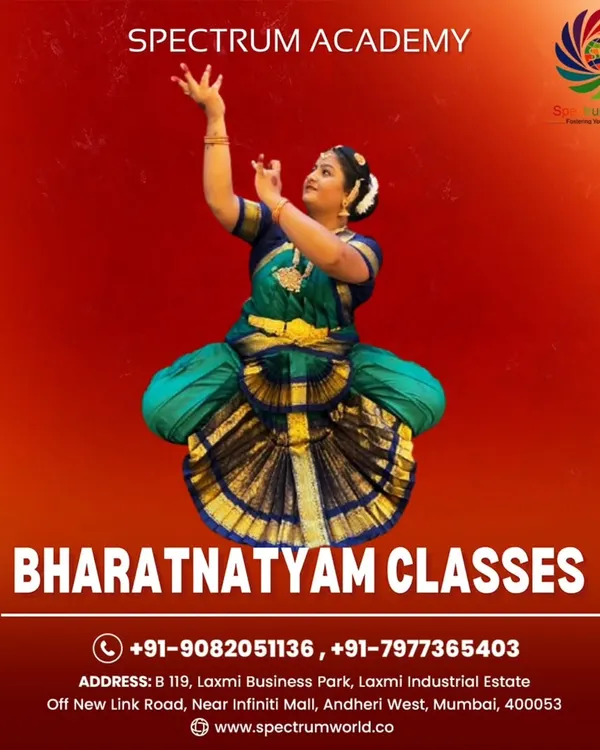
Bharatnatyam Classes: Master Adavus and Technique in Noida
 4
4
Professional Bharatnatyam Dance Classes in Mandi House
 5
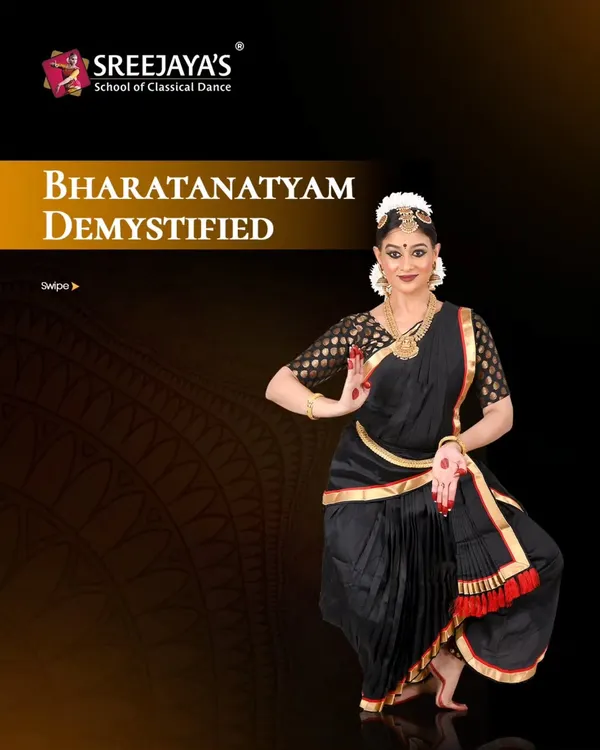
5Bharatnatyam & Semi-Classical Dance Classes
 50
50
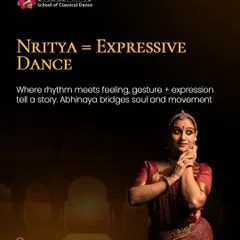
Understanding Bharatanatyam: A Journey into Classical Dance
Bharatanatyam Classes: Traditional Margam Training
Mastering Abhinaya: The Heart of Bharatanatyam Storytelling
More from Bharatanatyam Dance Classes by Shreyasi Gopinath
More services by Shreyasi Gopinath