18 Days: The Mahabharata Saga Dance Production
Witness the Mahabharata come alive through this large-scale dance drama, where traditional Kathak, original compositions, and modern stage technology converge.
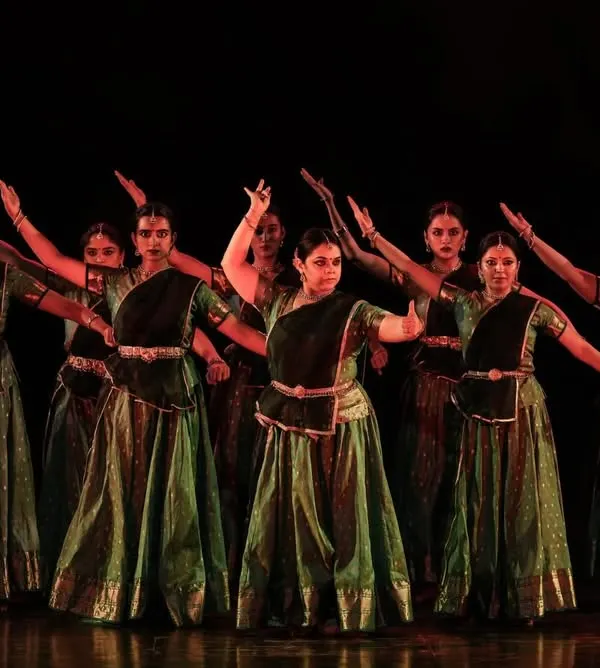
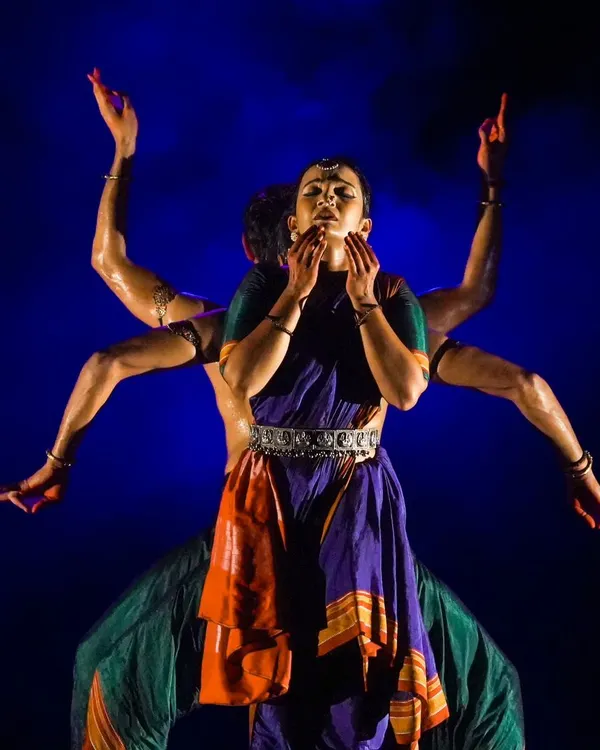
A powerful formation from '18 Days', where the ensemble cast moves as one. The choreography here is designed to show the scale and discipline of the armies, using synchronized movement to build dramatic tension.
This scene between Krishna and Arjuna is a pivotal moment in '18 Days'. The choreography and costuming are designed to reflect their divine and human connection, telling a story of guidance and devotion through expressive gestures.
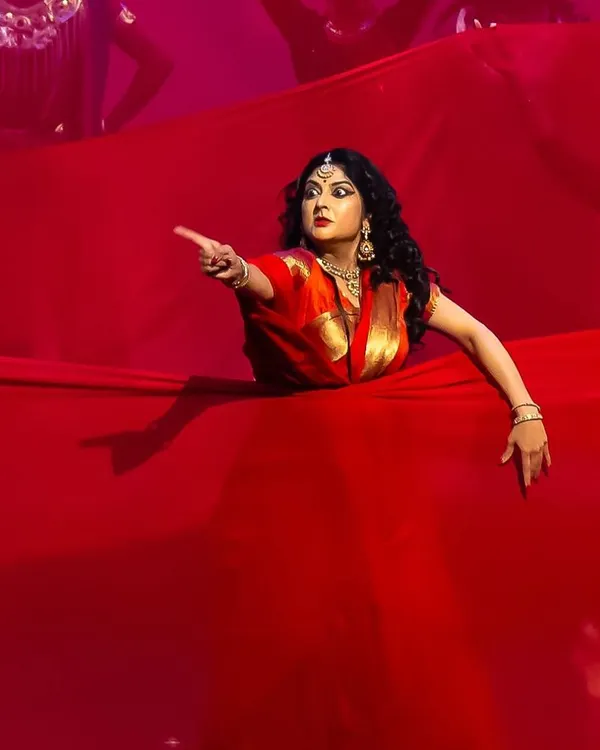
In this dramatic scene, I portray Krishna confronting Karna about his choices. The dialogue and choreography explore the complexities of dharma, using the theatrical format to delve into the philosophical questions at the heart of the Mahabharata.
Portraying the dynamic between Krishna and the cunning Shakuni required careful choreographic choices. Here, the contrast in their postures and expressions tells a story of dharma versus adharma, a central theme of the production.
In this conversation with filmmaker Vivek Agnihotri, we discuss the creative vision behind '18 Days'. I explain how we blend traditional Natya, which includes dance, theatre, and music, with modern interpretations to make the epic accessible.
Music is the soul of the show. I explain to Vivek Agnihotri how I composed the music for '18 Days', using a dissonant nine-and-a-half beat cycle for the character of Shakuni to create a feeling of crookedness, and a soothing raga for Krishna to represent dharma.
Veteran actor and director Prakash Belawadi shares his perspective on '18 Days'. I was honored to hear him describe it as a production that takes our tradition into the future by amalgamating dance, music, and technical wizardry.
It was a proud moment to hear MP Tejasvi Surya speak about '18 Days'. He highlights the production's technical expertise, grand costumes, and its core message of dharma, recognizing it as a celebration of Indian culture.
Actor Upendra Rao's reaction to the show was incredibly encouraging. He spoke of being transported by the performance and appreciated the dedication of the artists in creating an unforgettable experience without the cinematic luxury of retakes.
Esteemed critic Ashish Khokar described '18 Days' as a complete work of art, unlike anything seen in decades. His view that the show is a compulsory watch for young India was a profound validation of our mission.
About 18 Days: The Mahabharata Saga
This production is an exercise in intentional dissonance. For the character of Shakuni, I composed the music in a nine-and-a-half beat cycle, specifically designed to irritate the listener and mirror his crooked nature. When Krishna enters the scene, the rhythm shifts to a soothing raga, reinforcing the path of dharma. Every beat on this stage serves a narrative purpose.
My work on '18 Days' is built on the philosophy of Natya—the union of dance, theatre, and music. Unlike a traditional recital, this is a 60-90 minute immersive experience that requires a synchronization of multiple disciplines.
The Anatomy of the Production
- Technical Wizardry: We integrate 3D visual effects and precise lighting cues to move beyond the limitations of a standard stage. The goal is to make the technology invisible so the audience remains focused on the epic narrative.
- Musical Composition: I compose from scratch, blending Carnatic and Hindustani sensibilities. We move away from synthesized MIDI, opting for live recordings with A-grade session musicians to ensure the sound has depth and weight.
- Dharma in Movement: Choreography here isn't just about technical footwork. It is about character development—portraying the complex duality of figures like Karna and the divine grace of Krishna.
We bring this production to venues across India, adapting the scale to fit different theatrical spaces. Whether it is a historical site or a modern auditorium, the objective remains the same: to create a space where the audience feels the rasa, or the aesthetic bliss, of the story.
Similar work from other experts
Browse through Curated picks from other experts on mytribe
Grand Indian Dance Musicals and Epic Stage Productions
 13
13
The Wheel of Choices: Epic Bharatanatyam Dance Drama
 7
7KALKI: Grand Theme-Based Dance Production
 20
20Kathak Stage Productions & Dance Dramas
 29
29
Grand Stage Productions for Indian Events
 57
57
Theatrical Bharatanatyam Productions from Concept to Stage
More from Choreography & Music Composition by Sharat Prabhath
More services by Sharat Prabhath