Debunking Youth Strength Training Myths in Bangalore
Stop relying on outdated advice. We use sports science to separate fact from fiction regarding your child's athletic development and injury prevention.
As a parent, it is hard to know what to believe about youth training. This section addresses the three most common myths I hear, providing you with science-backed facts to make informed decisions for your child.
Myth: Strength training is unsafe for kids. Fact: With proper technique, supervision, and age-appropriate programming, it is one of the safest and most beneficial things a young athlete can do.
Myth: It stunts growth. Fact: There is no scientific evidence that proper strength training negatively affects growth plates. In fact, it enhances bone density and supports healthy overall development.
Myth: Kids should wait until puberty to start lifting. Fact: Children can and should start learning movement mechanics and body control long before puberty. We focus on technique with scaled intensity.
Myth: Strength training is only for boys. Fact: Girls benefit just as much. It improves performance, significantly reduces injury risk (especially ACL injuries), and builds confidence on and off the field.
Myth: Sports practice alone is enough. Fact: Sport-specific practice does not build foundational strength. Targeted training is what improves sprint speed, jump height, and reduces injury risk.
Myth: "Pain equals gain." Fact: For a young athlete, pain is a signal of potential injury or overload, not progress. I teach kids to listen to their bodies and train smart.
Myth: "Early specialization ensures success." Fact: The opposite is true. Multi-sport participation builds more adaptable, coordinated, and injury-resistant athletes in the long run.
This video directly confronts common myths about youth strength and conditioning. See how my young athletes thrive in a program that focuses on safe, effective training to build confidence and manage stress.
Let's clear up the confusion around strength training for young athletes. This video introduces the common myths we will debunk, from stunting growth to gender biases, showing that our approach is based on science, not outdated beliefs.
About Debunking Youth Training Myths
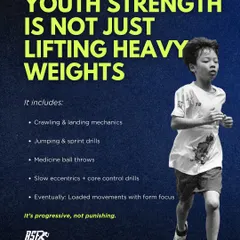
If you are hesitant about starting your child on a strength program, you are not alone. Many parents worry about growth plate injuries or physical burnout, but clinical data suggests that the risks associated with inactivity and poor movement mechanics are far greater. At Rapid Sport Fitness, we do not simply put kids under heavy weights. We treat strength training as a skill to be learned, focusing on movement patterns, body control, and coordination. This builds a resilient foundation that helps children avoid sport-specific injuries as they grow, making them more adaptable athletes in the long term.
The most common concern I hear from parents is that strength training stunts growth or damages developing joints. This is a myth. When designed with age-appropriate programming and proper supervision, strength work does not interfere with bone growth. Instead, it increases bone density and improves neuromuscular efficiency. We see these positive outcomes daily at our Koramangala and Jayamahal centers.
Why the Approach Matters
- Mechanics over load: We start with bodyweight exercises and focus on technique. We use reaction lights, balance beams, and PVC pipes to teach the brain how to move before we add any resistance.
- Gender-inclusive development: We often hear that strength training is for boys or that it is too intense for girls. This is incorrect. Targeted training is vital for girls, particularly for ACL injury prevention, which is statistically more common in female athletes. Building strength helps them control their movements during high-impact sports.
- Managing the growth spurt: During adolescent growth spurts, a child's bones often lengthen faster than their muscles can adapt, leading to coordination drops and injury spikes. We monitor these phases closely. We adjust training volume and intensity so that the athlete remains protected while continuing to build the capacity they need for their specific sport.
The Science of Performance
Sports practice alone is not enough to build a well-rounded athlete. While soccer or cricket practice builds skill for that specific game, it does not address the foundational imbalances that lead to overuse injuries. We use movement screening (FMS) and strength testing to identify these leaks early. By fixing these mechanics now, we ensure your child is not just playing today, but building a body that can handle the demands of competition for years to come. Whether you are prepping for a school team or just want your child to be active, our programs are built to provide a safe, smart, and effective path forward.
Similar work from other experts
Browse through Curated picks from other experts on mytribe

Specialized Strength & Conditioning for Young Athletes
 62
62


Practical Parenting Resources for Active Kids
Youth Strength & Conditioning
Junior Athlete Strength and Conditioning
Youth Athletic Development Programs in Bangalore
Strength and Conditioning for Young Athletes
More from Youth Athlete Development by Rapid Sport Fitness