Mastering the Asanas: Alignment and Safe Technique
Yoga is not about holding a perfect pose, but about how you feel while you are in it. Here, we focus on safe, mindful alignment that respects your body's unique rhythm.
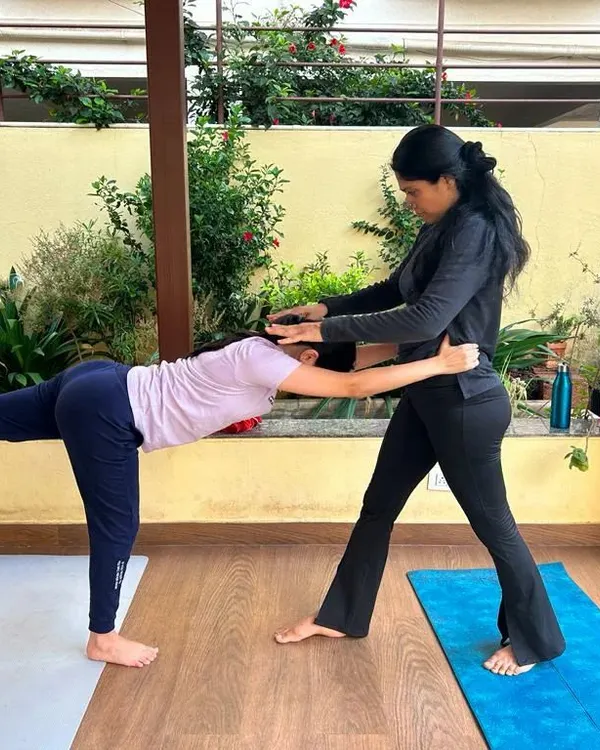
My approach to teaching is centered on safe and mindful alignment. In this clip, I guide a student through the nuances of Ashwasanchalanasana (Equestrian Pose), focusing on how small adjustments, like coming onto the fingertips, can lift the chest and deepen the posture correctly.
Namaste. Let's break down the classical Parvatasana (Mountain Pose). I guide students to lift their sitting bones, press their heels down, and keep their neck in line with the spine, creating a strong, stable foundation.
The journey to Sirsasana (Headstand) is built on a foundation of safety and proper technique. I demonstrate how to use wall support to build strength and confidence, breaking down each step from hand placement to the final, graceful lift.
Proper alignment is the key to a safe and effective practice. In this adjustment and alignment class, students use blocks to fine tune their Parvatasana, ensuring their foundation is strong and their spine is long.
Gentle, precise adjustments are a core part of my teaching. Here, I am helping a student find stability in a plank variation, reminding her "eradu ottige ettabedi ondondhe," or "one by one," to encourage mindful movement.
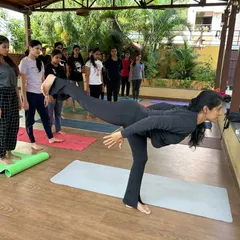
The body benefits from movement, and the mind benefits from stillness. Here, students are moving through a sequence of standing poses, and I am providing an adjustment to help a student deepen their Parsvottanasana (Pyramid Pose).
Guiding students through the sequence of Surya Namaskar (Sun Salutation). I call out each asana by its Sanskrit name, from Padahastasana to Bhujangasana, to help students learn the flow and rhythm of this foundational practice.
Building the strength and balance required for Bakasana (Crow Pose). Students use blocks to elevate their feet, making the arm balance more accessible as they learn to engage their core and trust their foundation.
Assisting a student with Sirsasana (Headstand) in one of our evening classes. My role is to provide support and guidance, helping them find the balance and confidence to hold the inversion safely.
Students practicing Dhanurasana (Bow Pose) in unison. This powerful backbend opens the chest and strengthens the entire back of the body. I guide them to hold the pose with steady breath.
About Mastering the Asanas: Alignment & Technique
Alignment is not just about the external shape of a pose; it is about finding the foundation that keeps you safe. When we practice postures like Ashwasanchalanasana, I often advise students to come onto their fingertips instead of the palms. This small adjustment shifts the weight, prevents you from collapsing into your shoulders, and allows your chest to lift naturally. We constantly use props like wall ropes, blocks, and bolsters to help you find this kind of opening without straining your joints.
At Pragalbha Studios in Sahakar Nagar, we believe that every body is different, so your yoga practice should be too. Many people come to us believing they need to 'nail' a pose to be doing it right. I tell them that the only thing you need to 'nail' is your breathing. When your breath is steady, your alignment follows.
Our Approach to Alignment
Our methodology is built on a simple premise: work with your anatomy, not against it.
- Technical Cues: We use specific verbal cues to help you engage the right muscles. You might hear me say, "eradu ottige ettabedi ondondhe" (don't lift both together, one by one) to ensure you are moving with control rather than momentum.
- Prop-Based Learning: We are not shy about using support. Whether it is a block for your Parvatasana or wall ropes to safely deepen a backbend, props are your best friend. They create space, allowing you to find the correct stretch without compromising your spine or knees.
- Breath-Centered Flow: In our Hatha and Vinyasa classes, the breath dictates the movement. If you find yourself holding your breath, it is a sign that your body is under stress. We work on finding the edge of your comfort zone where you can breathe deeply and hold comfortably.
Why This Matters
Most injuries in yoga happen when we push for a shape that our body is not ready for. By focusing on alignment, we ensure that you can practice for years, not just for a season. Whether you are working on your first Sirsasana with the support of a wall or perfecting your Surya Namaskar, the goal is to build strength and awareness that you can carry off the mat and into your daily life.
Similar work from other experts
Browse through Curated picks from other experts on mytribe
 8
8
The Art of Alignment: Studio Yoga Classes
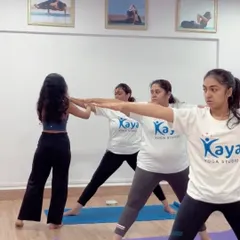
Master Yoga Alignment With Hands-On Support
Hands-On Yoga Instruction for Precise Alignment
Yoga Alignment and Hands-On Adjustments
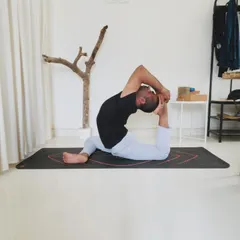
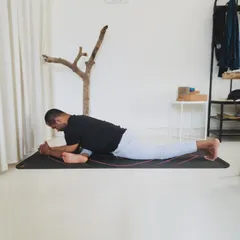
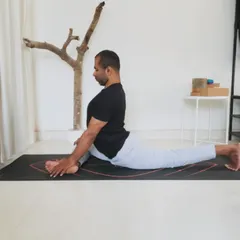
Master Your Asana Practice: Step-by-Step Tutorials
Hands-On Yoga Alignment Classes in Jayanagar
More from Yoga Teacher Training by Pragalbha Yoga
More services by Pragalbha Yoga