Behind the Scenes: Our Ceramic Pottery Process
Step inside our studio to see how raw clay becomes art. Explore the patience, techniques, and firing that shape every piece we make.
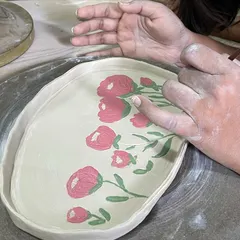
This is where it all begins, with a simple, smooth plate ready for decoration. A single piece like this can take hours to paint and carve, not including the time to make the plate, glaze it, and fire it.
The first layer of color is applied. This plate is being prepared for sgraffito, where I will carve away parts of the black slip to reveal the design.
The sgraffito process in action. I am carefully carving the veins of the leaves, a delicate process that requires a steady hand.
A close up of the texture created by sgraffito. You can see how the carved lines add depth and detail to the painted leaves.
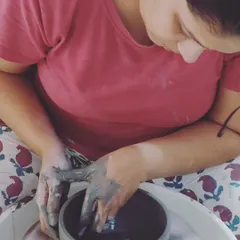
A student in my studio working on her sgraffito plate. It's wonderful to see others fall in love with this meditative and rewarding ceramic technique.
A satisfying video of the sgraffito process. I'm using a fine tool to carve away the white slip, revealing the colorful underglaze on this leafy plate.
The relaxing process of hand-painting a ceramic butterfly. I carefully apply layers of color to bring the piece to life before it gets glazed and fired.
Here I am hand-building a little Christmas gnome. Each part, from the body to the pointy hat and nose, is shaped by hand before being joined together.
Creating some of my quirky owl figures. This video shows the unpainted clay forms, with details like the eyes and wings carefully sculpted and attached.
Playing with fire. Here I am using a blowtorch on alcohol inks to create interesting and unpredictable patterns on my ceramic pieces.
About The Artisan's Process: Behind the Scenes
Sgraffito isn't a quick paint job. We paint a layer of dark slip over the base, then patiently carve through it to reveal the colors underneath. It takes hours of steady focus, and if the clay is too dry or the tool slips, we start over. It is a slow, meditative process that defines the depth you see in our final pieces.
When you pick up one of our pieces, you are holding hours of work. We believe the story of the making is just as important as the object itself. Our process starts with simple clay, but every step—wedging, shaping, painting, and firing—is done by hand. We never use molds, which is why you will see small variations in size and shape that prove these are not machine-made items.
The Sgraffito Technique
You will often see us using Sgraffito. It is a surface decoration technique where we apply a colored slip to the clay, allow it to set, and then carve away portions to create intricate patterns. It requires precision. One wrong move can ruin the surface, so it keeps us grounded and present throughout the day.
Why We Do It
There is a special connection formed when someone chooses to bring a handmade object into their home. Whether it is a functional mug or a decorative wall plate, these items bring a touch of human warmth that mass-produced products lack. We are based in Nagashetty Halli, and we love sharing this space with people who want to learn the craft themselves through our small-batch workshops. If you appreciate the imperfect beauty of handmade ceramics, you are in the right place.
Similar work from other experts
Browse through Curated picks from other experts on mytribe
The Making Of: From Clay to Creation
Behind the Scenes of My Handmade Pottery
Behind the Scenes: My Pottery Process
 27
27
The Art of Pottery: Process and Technique
The Art of Hand-Building: Behind the Scenes in My Studio
The Potter’s Process: A Behind-the-Scenes Look
More from Sale of Readymade Ceramic Products by Oriri Studio
More services by Oriri Studio