Sangat: The Art of Musical Accompaniment
Music is a dialogue, and 'Sangat' is how we listen. Whether accompanying a vocalist, a dancer, or an instrumentalist, I teach you how to weave your rhythm into the melody, creating something greater than the sum of its parts.
A beautiful rehearsal with Kartikeya Vashist on flute and Akshay Anant on sitar. This trio format is a great example of how different instruments can weave together in Indian classical music.
Here I am performing a tabla solo segment during a Kathak dance performance. Understanding the rhythmic needs of a dancer is a special skill that I cover in my accompaniment lessons.
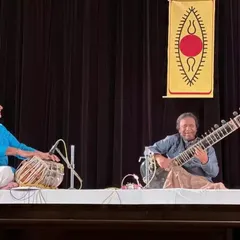
A 'Jugalbandi', or musical dialogue, with my Guru and a fellow student. This question-and-answer format is a fun and challenging way to sharpen your rhythmic skills.
Playing a beautiful composition together with my Guruji. Learning to play in unison is as important as playing solo.
A clip from a concert accompanying Mohit Kumar on the flute. The role of the tabla player here is to provide a steady rhythmic foundation for the main artist to explore the raga.
An evening riyaaz session playing Raga Puriya Dhanashree in Ektaal with Kartikeya bhaiya on flute. Practice sessions like these are where we build musical chemistry.
Another informal musical session. These moments of spontaneous creation are often the most rewarding.
Sharing the stage with the legendary maestro Pt. Ajay Prasanna on flute. Accompanying a master is the greatest learning experience.
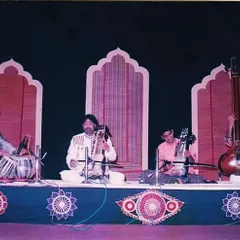
A wider view of the stage with Pt. Ajay Prasanna and Rameez bhai on tabla. This was a 'jugalbandi' between pakhavaj and tabla.
Performing in a large rhythm ensemble with Pt. Ram Kumar Mishra. You can see multiple percussion instruments on stage, including tabla, pakhavaj, and mridangam.
About Sangat: The Art of Accompaniment
Accompanying is not just keeping time; it is anticipating the main artist's next move. In my sessions, we focus on 'Sangat'—learning how to breathe with the melody, support the phrasing of a Kathak dancer, or provide a steady foundation for a vocalist. You will learn to record your practice sessions and analyze your listening skills, which is the only way to truly master the balance between showing your skill and holding space for the main artist.
Mastering the Art of Sangat
In Indian Classical Music, a performer is rarely alone. The true challenge isn't just playing a perfect composition; it is knowing when to play and, more importantly, when to stop. This is 'Sangat'—the supportive art of accompaniment. Whether you are a student aspiring to accompany a classical vocalist, a sitar player, or a Kathak dancer, your role is to elevate the performance without overpowering it.
What We Cover in Accompaniment Training
- Listening Skills: We work extensively on 'Kaan-taiya' (the listening ear). Before your fingers hit the Tabla, you need to understand the melodic phrasing of the lead artist.
- Dynamics and Texture: You will learn to vary your stroke intensity. A ghazal performance at a large auditorium requires a vastly different touch than an intimate baithak (sitting concert).
- Jugalbandi Dynamics: I teach you how to engage in a 'sawal-jawab' (question-answer) dialogue. This is where you learn to improvise, trade rhythmic ideas, and bring the audience into the conversation.
- Genre Adaptability: We cover the specific needs of various forms, from the deep, grounded sounds required for Dhrupad or Kathak, to the lighter, cleaner strokes needed for semi-classical and fusion genres.
Why Practice 'Sangat'?
You can spend years practicing solo, but ensemble playing is where your musicianship is tested. It forces you to listen, adjust, and respond in real-time. We will practice with melodic loops and actual recordings of vocalists and instrumentalists. If you are preparing for exams or planning to perform professionally in Delhi NCR, this training bridges the gap between technical proficiency and musical maturity. We don't just learn notes; we learn to connect. Let's make your rhythm a conversation.
Similar work from other experts
Browse through Curated picks from other experts on mytribe
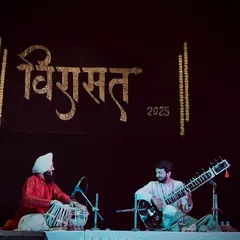
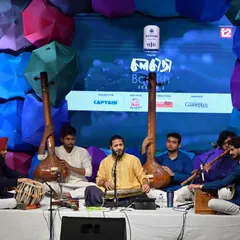
Tabla Accompaniment & Jugalbandi Performances
The Art of Sangat: Tabla Accompaniment for Instrumentalists
Sangat: The Art of Tabla Accompaniment
Jugalbandi and Classical Sitar Accompaniment
Master Tabla Rhythms with Live Kathak Accompaniment
Classical Tabla Accompaniment & Jugalbandi
More from Tabla & Pakhavaj Instruction by Divyanshu Kumar
More services by Divyanshu Kumar