Institutional and Community Architecture Projects
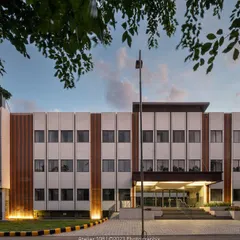
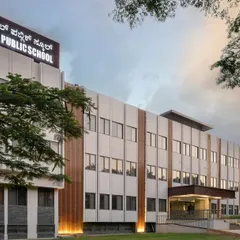
I design public spaces where architecture fosters community. From serene temple complexes to modern educational campuses, I focus on creating environments that bring people together.
The Shiva Temple Complex in Hubli, which received a runner-up award from the Institute of Indian Interior Designers (IIID). The design creates a grand public space with stepped lawns and pillared walkways for community gatherings.
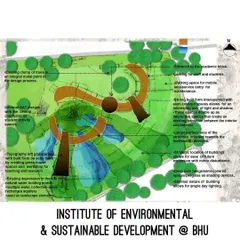
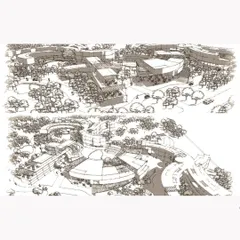
A 3D walkthrough of an international residential college I designed. The campus is organized around central courtyards and green spaces, creating a community of learning that is integrated with nature and encourages interaction between students.
About Institutional & Community Architecture
When designing public or institutional spaces, my priority is the flow of people. For projects like the Shiva Temple complex, we did not just focus on the main shrine, but engineered the pillared walkways and stepped lawns to manage large crowds and foster community gatherings. If you are planning an educational or public building, my approach is to prioritize how the layout facilitates human interaction rather than just how the facade looks from the road.
Public architecture requires a different kind of empathy. Whether it is a school or a place of worship, the building itself becomes a silent participant in the community’s life. My work in this sector follows the same 'Design to Delivery' philosophy as my residential projects.
Educational Campuses
For the international residential college project, the design is structured around central courtyards. This creates a 'community of learning' where students are constantly encouraged to interact with nature and each other, rather than being confined to rigid classrooms. By focusing on light and ventilation, these spaces remain active and inviting throughout the day.
Places of Worship
The Shiva Temple complex in Hubli serves as an example of blending modern structural needs with traditional heritage. By introducing wide, pillared walkways and tiered seating, the space transitions from a quiet place for individual prayer to a bustling area for public festivals.
The Process
It all starts with hand-drawn sketches to map the flow of people. We look at site orientation, sun path, and local material availability. For large-scale projects, I emphasize zoning—separating public zones from private, and ensuring the infrastructure can handle high footfall without losing the sense of serenity.
Similar work from other experts
Browse through Curated picks from other experts on mytribe
 52
52
Institutional Architecture for Healing and Learning Spaces
 37
37
Institutional and Community Architecture Projects
 8
8
Public & Cultural Architecture
 7
7
Public and Institutional Architecture Design
 6
6
Designing for Education & Community: Spaces for Learning
 17
17
Institutional and Campus Architecture
More from Architectural Design by 4site Architects
More services by 4site Architects